-
by sayum
26 August 2026 9:49 AM







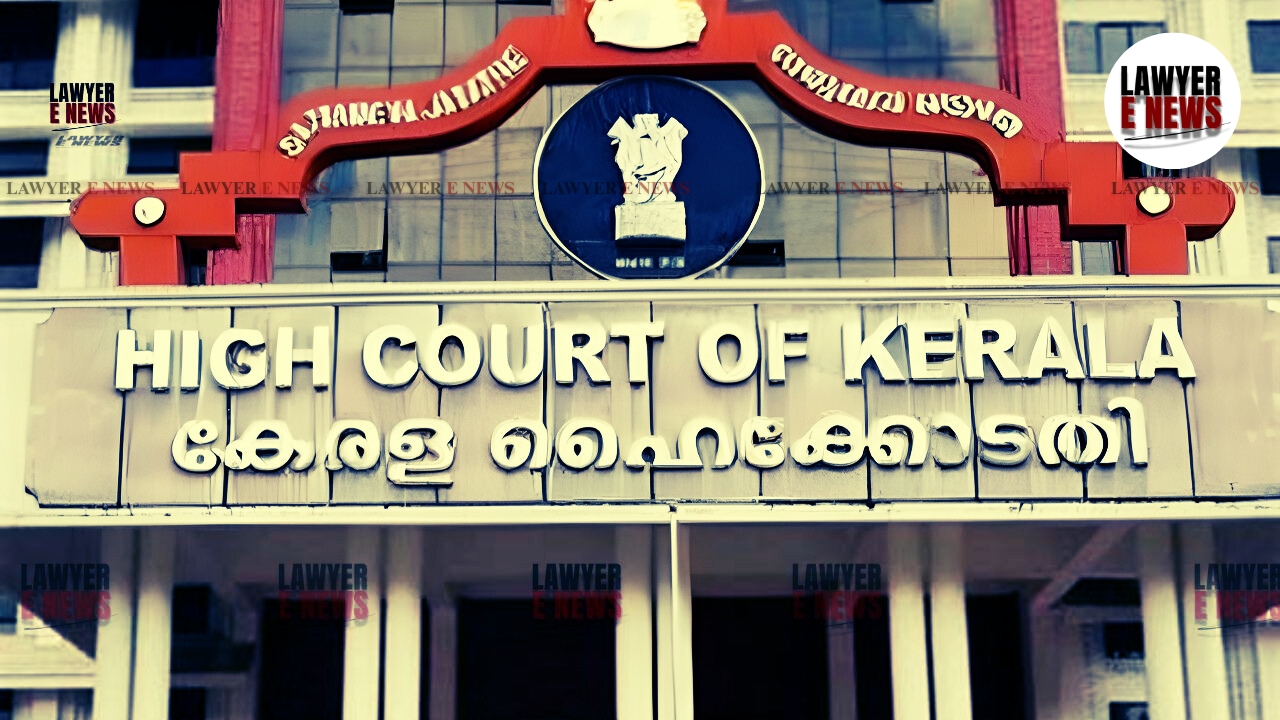
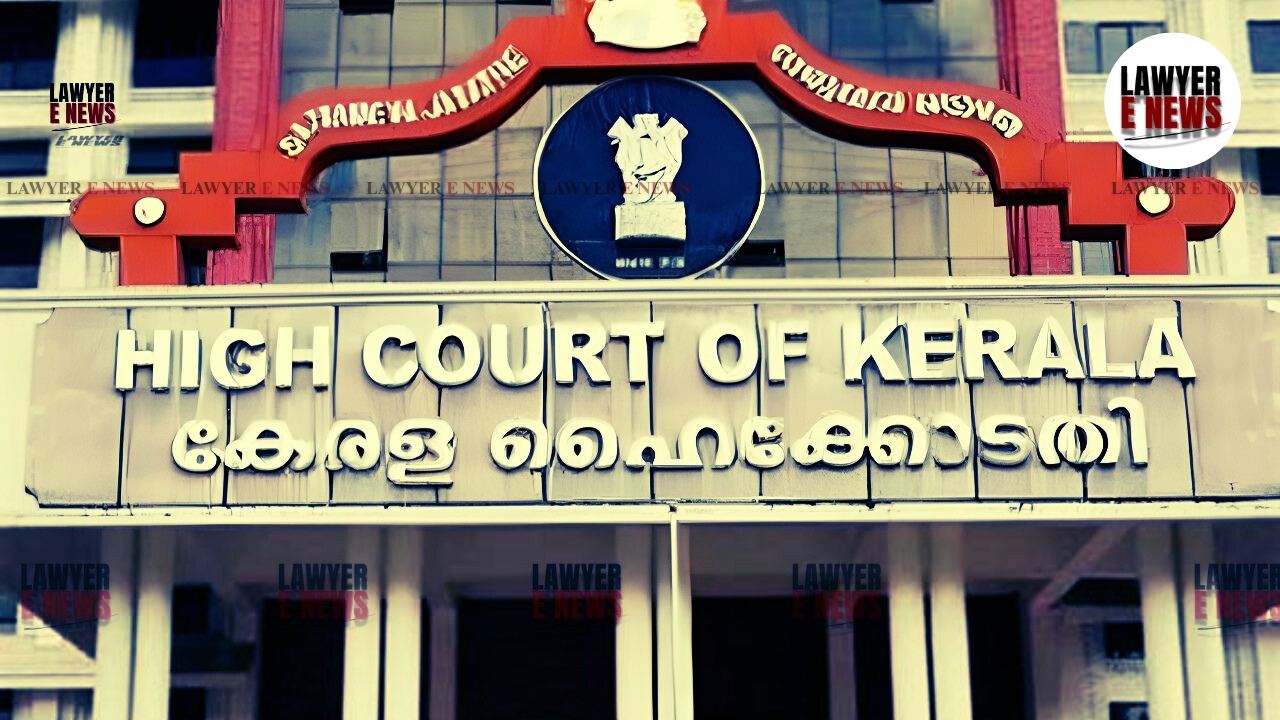
“Threat under Section 503 IPC is not confined to verbal intimidation — any act capable of creating a reasonable apprehension of injury or death can amount to criminal intimidation”, In a significant judgment reiterating the scope of criminal intimidation under Indian penal law, the High Court of Kerala declined to quash criminal proceedings against an accused who allegedly drove his car towards a pedestrian with the intent to instil fear of death.
Justice C.S. Dias ruled that the incident, as alleged in the FIR and supported by the final report, "prima facie discloses the commission of a cognizable offence under Section 506 IPC" and cannot be quashed in exercise of the High Court's inherent powers under Section 482 CrPC.
The Court emphasized that threats under Section 503 IPC are not limited to verbal abuse or direct statements but extend to “any conduct that instils reasonable apprehension of injury or death”, especially when coupled with previous animosity and supporting eyewitness testimony.
Driving a Car at Victim With Intent to Intimidate Amounts to Threat of Death, Satisfies Ingredients of Criminal Intimidation
The incident arose from an FIR lodged on 25.09.2019 by the de facto complainant (second respondent), who alleged that while on his morning walk along Valavazhi Road, the accused drove a speeding car directly at him, forcing him to jump aside to save his life. The accused allegedly took a sharp turn and drove away immediately thereafter. The FIR cited prior animosity due to pending litigation between the parties and stated that the complainant, a heart patient, was hospitalized following the incident. An eyewitness named Vijayan was also present.
The final report submitted by the police confirmed that the accused had driven the car bearing registration No. KL-63-C-779 “with an intention to instil fear in the mind of the second respondent, causing a fear of death to him”.
Dismissing the accused’s contention that the incident did not satisfy the elements of criminal intimidation, the Court clarified:
“Going by the principles laid down by the Hon’ble Supreme Court and the specific allegations in the FIR and the final report, prima facie, I find that the petitioner had driven the car towards the second respondent with an intention to criminally intimidate him.”
The petitioner had relied on precedents such as Madhushree Datta v. State of Karnataka and Vijayakumar v. State of Kerala, to argue that the allegations amounted to no more than a civil dispute and lacked the ingredients of criminal intimidation.
However, Justice Dias drew a critical distinction:
“The petitioner’s reliance on precedents involving civil disputes is misplaced in the present factual scenario. This case involves a physical act allegedly intended to cause alarm, backed by motive and an eyewitness account.”
High Court Emphasizes Limited Scope of Section 482 CrPC — No Mini-Trials at Preliminary Stage
Reiterating settled law on the scope of inherent powers under Section 482 CrPC, the Court emphasized that judicial interference at the pre-trial stage is warranted only when “allegations, even if accepted at face value, do not constitute any offence”.
Citing a string of authoritative judgments including State of Haryana v. Bhajan Lal, CBI v. Aryan Singh, and Rajiv Thapar v. Madan Lal Kapoor, the Court held:
“The High Court, while exercising jurisdiction under Section 482 of the Code, should not embark upon a 'mini-trial' or weigh the sufficiency of evidence, which falls within the domain of the Trial Court.”
Accordingly, the Court refused to adjudicate on the strength of the evidence or delve into contested facts, holding that such determinations lie within the exclusive competence of the Trial Court after full evidence is led.
Liberty Reserved to Accused to Seek Discharge or Raise Defences Before Trial Court
Although dismissing the quash petition, the Court expressly preserved the liberty of the accused to seek discharge or raise all available legal defences before the Trial Court:
“I dismiss the Crl.M.C., but by reserving the right of the petitioner to raise all his contentions before the Trial Court, including filing an application for discharge, if the charge has not been framed to date. The Trial Court is directed to consider the application/defence untrammelled by any observation made in this order.”
This direction ensures that the accused is not prejudiced at the stage of framing of charge or trial, and that his legal remedies remain intact despite the rejection of the quash petition.
The Kerala High Court’s refusal to quash the criminal proceedings in this case highlights the judiciary’s caution against premature interference in criminal trials, particularly where prima facie evidence of criminal intimidation exists based on overt physical conduct. The judgment clarifies that non-verbal acts like driving a vehicle towards a person with intent to cause fear of death can fall squarely within the scope of Section 503 IPC, and thereby attract penal consequences under Section 506 IPC.
By distinguishing the present case from those involving mere verbal disputes or civil conflicts, the Court reinforced the principle that intentional acts inducing fear and supported by circumstantial factors warrant a full-fledged trial.
Date of Decision: 04/02/2026