-
by sayum
26 August 2026 8:37 AM







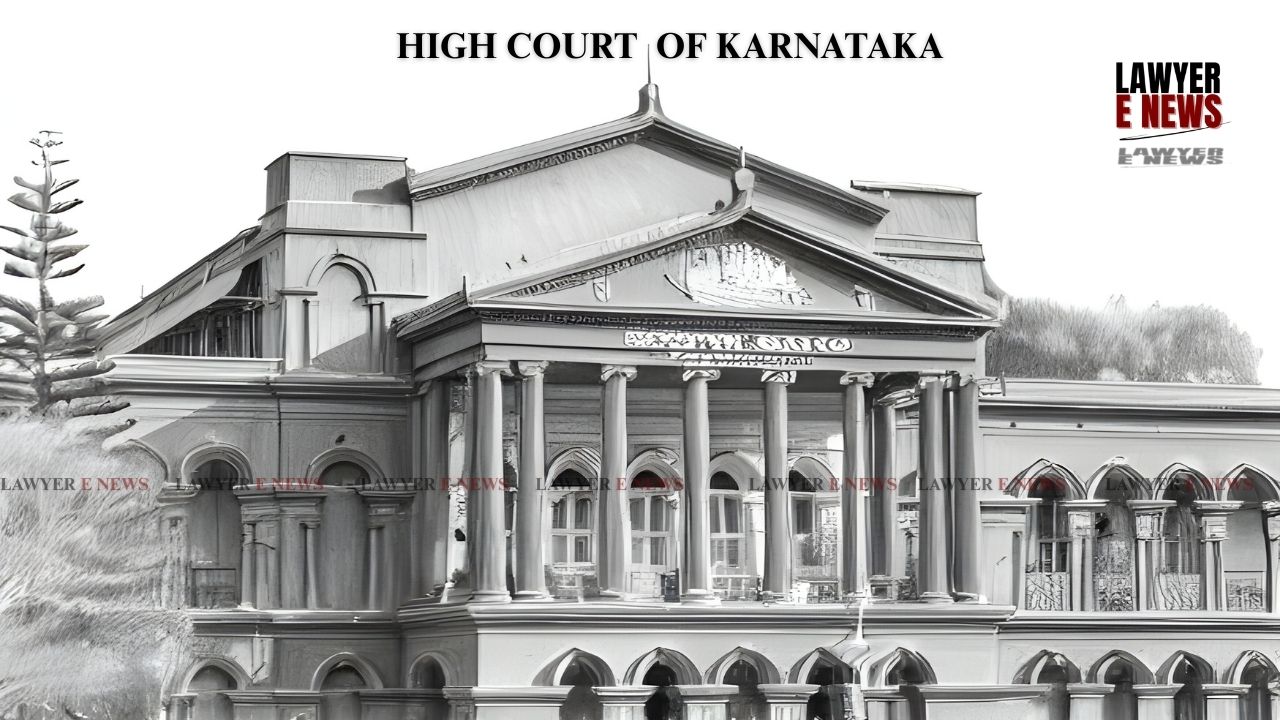
“Reasonable Regulation Is Permissible, But Not Total Prohibition”, In a significant ruling balancing democratic freedoms with regulatory concerns, the Karnataka High Court has held that a blanket rejection of permission to use loudspeakers for a public awareness campaign amounts to arbitrariness when reasonable conditions could adequately address public order and noise concerns.
Justice B. M. Shyam Prasad set aside the endorsement issued by the Assistant Commissioner of Police rejecting permission to use loudspeakers mounted on two autorickshaws for an awareness campaign relating to a proposed general strike.
The Court observed that a campaign to create awareness is “a facet of any democratic process” and cannot be unreasonably restricted under the guise of administrative discretion.
Police Reject Permission Citing Sensitive Zones
The petitioners, a Trade Union and its President, had sought permission to use two autorickshaws fitted with loudspeakers in Malleshwaram, Bengaluru, to create awareness about a protest organised by the Union.
The Assistant Commissioner of Police rejected the application on the ground that the Sub-Division contained educational institutions, hospitals, no-honking zones, and areas inhabited by senior citizens and unwell persons.
Challenging this endorsement under Articles 226 and 227 of the Constitution, the petitioners contended that the outright rejection was arbitrary and that similar permissions had been granted in other Sub-Divisions subject to safeguards.
“Administrative Discretion Must Be Reasonable”
The High Court examined the permissions granted by other Assistant Commissioners of Police and noted that similar campaigns had been allowed subject to conditions regulating noise, traffic, and content.
Justice Prasad observed that the impugned endorsement bore “the colour of an unreasonableness” because the authority failed to consider whether its concerns could be addressed through imposition of reasonable conditions instead of outright denial.
The Court emphasized that while regulating loudspeakers falls within police powers, such power must be exercised in a manner consistent with constitutional freedoms.
“Awareness Campaign Is a Facet of Democratic Process”
The Court categorically held that an awareness campaign regarding a protest is part of democratic expression and cannot be curtailed without adequate justification.
“A campaign to create awareness [a facet of any democratic process] cannot be restricted unreasonably.”
The Court found that the respondent had not examined comparable circumstances in other Sub-Divisions nor explored regulatory safeguards before rejecting the application.
Balancing Public Order and Noise Regulation
Recognising the legitimate concerns relating to public order and compliance with the Noise Pollution (Regulation and Control) Rules, 2000, the Court directed that permission be granted subject to strict safeguards.
The petitioners were directed to ensure that:
The Court thus reaffirmed that while reasonable regulation is permissible, a total prohibition without considering conditions is legally unsustainable.
The writ petition was disposed of with a direction to the second respondent to permit the petitioners to use two autorickshaws with loudspeakers on 12.02.2026 subject to the enumerated conditions.
Liberty was reserved to the petitioners to produce a certified copy of the order to secure immediate compliance.
The ruling underscores a constitutional principle: administrative convenience cannot override democratic expression. Regulation of public expression must be proportionate and reasoned, not reflexive or absolute.
Date of Decision: 11 February 2026