-
by sayum
26 August 2026 8:37 AM








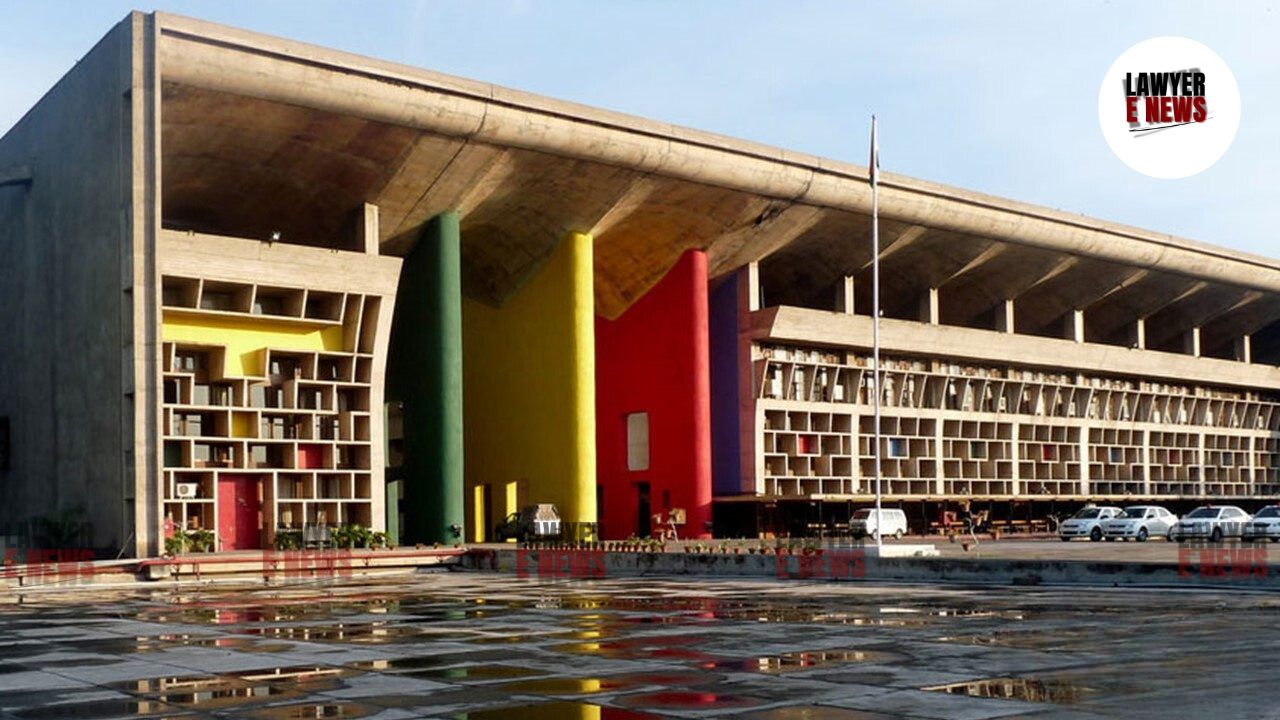
“Once Findings Rest on Some Material Evidence, Re-Appreciation Is Impermissible Under Article 226”, High Court of Punjab and Haryana delivered a significant ruling reiterating the narrow scope of judicial review in departmental proceedings. Deciding a writ petition under Articles 226 and 227 of the Constitution of India, Justice Harpreet Singh Brar upheld the dismissal of a bank employee accused of unauthorized transactions, observing that the High Court “cannot assume the character of an appellate authority” in disciplinary matters.
The Court refused to interfere with the dismissal order dated 25.06.2025, holding that the petitioner was afforded ample opportunity during the enquiry and that the findings were based on substantial documentary evidence. The writ petition was dismissed as devoid of merit.
The petitioner, Gourav Dhawal, was a confirmed Customer Service Associate (Office Assistant) with Punjab Gramin Bank. A chargesheet dated 20.06.2024 was issued to him alleging misconduct involving unethical and dishonest activities, including:
“transferring accounts from ‘inoperative category’ to ‘operative category’ without obtaining request form/consent documents or updation of KYC documents,”
and facilitating withdrawals where signatures did not match official records. The allegations further included withdrawals from 09 deceased account-holders and unauthorized withdrawals from 67 accounts.
Parallelly, FIR No. 105 dated 21.06.2024 was registered under Sections 420, 465, and 467 IPC at Police Station Dharamkot, District Moga, on identical allegations.
An enquiry was conducted, and on 28.02.2025, the Enquiry Officer submitted a report holding the charges proved. After issuing a show cause notice and granting personal hearing, the disciplinary authority passed an order of dismissal on 25.06.2025.
Aggrieved, the petitioner approached the High Court seeking quashing of the chargesheet, enquiry report, dismissal order, and the entire disciplinary proceedings conducted during the pendency of the criminal case.
Scope of Judicial Review in Departmental Proceedings
The primary question before the Court was whether the High Court, in exercise of its powers under Articles 226/227, could re-appreciate evidence or examine the adequacy of findings recorded by the Enquiry Officer.
Justice Brar emphatically reiterated the settled law:
“Such review cannot assume the character of an appeal, nor does it permit re-assessment of the merits of decision.”
The Court clarified that judicial review is confined to examining whether:
“the enquiry has been conducted by a competent authority, in accordance with the prescribed procedure, and in compliance with the principles of natural justice.”
Relying on Union of India v. P. Gunasekaran (2015) 2 SCC 610, the Court quoted:
“In disciplinary proceedings, the High Court is not and cannot act as a second court of first appeal… The High Court, in exercise of its powers under Articles 226/227 of the Constitution of India, shall not venture into reappreciation of the evidence.”
The Court further emphasized that once findings rest on “some material evidence,” interference is impermissible.
Alleged Violation of Natural Justice: A “Ploy to Delay”?
The petitioner argued that he was denied adequate opportunity to defend himself and that the Enquiry Officer failed to allow defence evidence.
However, the record revealed that the petitioner had sought 319 documents (MD-1 to MD-319) along with a list of witnesses. The Court viewed this as:
“a ploy to delay the disciplinary proceedings.”
Crucially, the disciplinary authority’s appraisal recorded that the petitioner declined to cross-examine management witnesses and voluntarily closed his defence. The Court reproduced the exchange:
“EO to CO: Sir Do you want to submit any other document or witness etc.
CO to EO: No Sir I have not to say anything except above statement given by me orally and pen drive. I want to close my defense side as I have nothing to say further.”
In light of this, the Court held that a plea of violation of natural justice was unsustainable when the employee himself declined to exercise available opportunities.
“From the above, it is clear that the charged employee was provided with sufficient and justified opportunities to defend his case, but the charged employee never showed his interest in defending his case or cross-examining the witnesses.”
Perversity of Findings: When Can Courts Interfere?
The petitioner also alleged that the findings were perverse.
Referring to S.R. Tewari v. Union of India (2013) 6 SCC 602, the Court reiterated that a finding is perverse only when it:
“ignores or excludes relevant material or takes into consideration irrelevant/inadmissible material,”
or where the conclusion “so outrageously defies logic as to suffer from the vice of irrationality.”
In the present case, the Enquiry Officer examined more than 300 documents and recorded detailed findings regarding unauthorized activation of inoperative accounts and mismatched signatures.
The Court concluded:
“If there is some evidence on record which is acceptable and which could be relied upon, the conclusions would not be treated as perverse and the findings would not be interfered with.”
No evidence of malpractice, gross irregularity, or patent illegality was demonstrated.
Concurrent Criminal and Departmental Proceedings
Another contention was that the enquiry should not have concluded during the pendency of the criminal case arising from identical facts.
Rejecting this submission, the Court reaffirmed the well-settled distinction between standards of proof in criminal trials and departmental enquiries. The pendency of a criminal case does not automatically bar disciplinary proceedings, as:
the standard of proof in a departmental enquiry is “preponderance of probability,” whereas in criminal law it is “proof beyond reasonable doubt.”
Thus, simultaneous continuation of both proceedings was held legally permissible.
The High Court found no perversity, procedural illegality, or violation of natural justice in the dismissal order. The disciplinary authority had adhered to statutory procedure and provided full opportunity of hearing.
The writ petition was dismissed, with the Court holding that judicial review under Article 226 cannot be transformed into an appellate scrutiny of factual findings in departmental enquiries.
In doing so, the judgment reinforces a crucial service law principle: once procedural fairness and evidentiary foundation are established, High Courts must exercise restraint and respect the disciplinary authority’s domain.
Date of Decision: 04.02.2026