-
by sayum
05 August 2026 9:31 AM







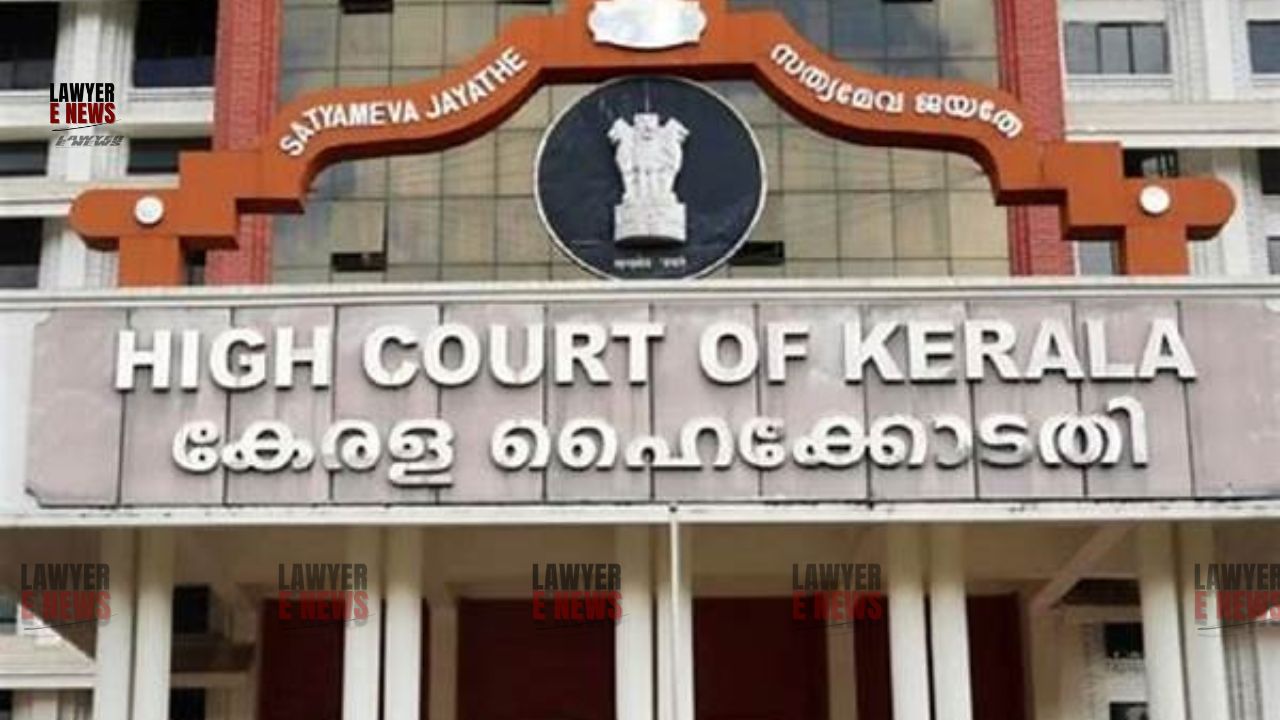
“Once a Mortgage, Always a Mortgage—Right to Redeem Lives Until Lawful Extinguishment”: In a transformative judgment, the Kerala High Court decisively overturned concurrent findings of the Trial Court and the First Appellate Court which had dismissed a redemption suit, invalidated a registered gift deed, and allowed a counter-claim based on a belated challenge. Justice Easwaran S., in a judgment of meticulous legal reasoning, ruled that the right to redeem a usufructuary mortgage remains alive unless extinguished by a decree or an act of parties as contemplated under Section 60 of the Transfer of Property Act, 1882.
The High Court categorically rejected the reasoning of the lower courts, stating, “In the absence of any suit for foreclosure, going by the principle—once a mortgage, always a mortgage—the right to redeem the mortgage continues until a decree for sale is passed or the property is sold in execution of a final decree.” This judicial correction reaffirms that redemption rights in usufructuary mortgages survive beyond statutory limitation unless extinguished through lawful means.
Redemption Rights Survive Despite Passage of Time and Assignment of Mortgage
The origin of the dispute lay in the redemption of an usufructuary mortgage executed in 1969 by late Sadasivan in favour of Raghavan Pillai. The Trial Court and First Appellate Court had both ruled that the suit for redemption filed in 2004 was time-barred. Justice Easwaran, however, meticulously traced the legal trajectory of redemption rights under Article 61 of the Limitation Act, 1963 and Section 60 of the Transfer of Property Act, 1882. Notably, the Court held:
“The period of limitation starts only from the date on which the right to redeem accrues. Moreover, Ext.A4 assignment deed executed in 1986 constituted a valid acknowledgment, thus reviving the period of redemption.”
The Court decisively relied on the Supreme Court’s authoritative pronouncement in Singh Ram v. Sheo Ram, (2014) 9 SCC 185, that usufructuary mortgage redemption rights are not extinguished by mere lapse of time but survive until lawfully foreclosed.
Gift Deed Upheld: Registrar’s Attestation with Animus Satisfies Section 123 T.P. Act
A crucial point of contention was the validity of a 1976 registered gift deed (Ext.A3) executed by Sadasivan in favour of his daughter (2nd plaintiff). Both lower courts had annulled the deed for alleged lack of attestation by two witnesses. The High Court, however, ruled that the Registrar (PW2), who had signed the document with necessary animus, fulfilled the attestation requirement under Section 123 of the Transfer of Property Act, 1882.
Justice Easwaran underscored:
“The courts below ignored the clear admission by PW2 that he signed as a witness with sufficient animus. The gift deed being registered, with no denial by the executant during his lifetime, is valid and effective.”
Moreover, invoking the proviso to Section 68 of the Indian Evidence Act, 1872, the Court clarified that the defendants could not question execution without denial by the executant, which had not occurred.
Counter-Claim Rejected as a Misuse of Legal Procedure
Significantly, the Court set aside the lower court’s decree allowing the counter-claim of the defendants which challenged the gift deed after more than 25 years. Justice Easwaran clarified the law under Order VIII Rule 6A of the Civil Procedure Code, 1908:
“A counter-claim must relate to a cause of action accruing before or after filing of the suit and must concern the suit property or cause of action. Here, the counter-claim was based on a different property and an extinguished cause of action, making it legally untenable.”
The Court observed that the silence of the defendants from 1976 to 2004, combined with the operation of constructive notice via registration, rendered the counter-claim invalid.
Injunction Denied: Plaintiff in Injunction Suit Not Entitled to Exclusive Possession
In light of the validated gift deed and the sustained right of redemption, the Court dismissed the injunction suit filed by Ani (respondent), ruling that he could not claim exclusive possession of the entire property.
“Once the plaintiffs are entitled to redemption and partition, the injunction in OS No. 216/2004 must necessarily fail,” the Court concluded.
Comprehensive Correction of Erroneous Lower Court Findings
The Kerala High Court allowed the appeals, decreed the redemption suit OS No. 441/2004, set aside the counter-claim and injunction decree, and awarded costs in favour of the appellants. Justice Easwaran emphasized the importance of adhering to statutory rights over technical dismissals:
“Both the Trial Court and the First Appellate Court committed egregious errors in law and fact. The statutory rights of the plaintiffs stand affirmed.”
This landmark judgment reinforces the supremacy of substantive rights in property law, particularly emphasizing that redemption of mortgage cannot be defeated by technical bars of limitation and that registered instruments carry a strong presumption of validity.
Date of Decision: 4th July 2025