-
by sayum
24 August 2026 3:22 PM







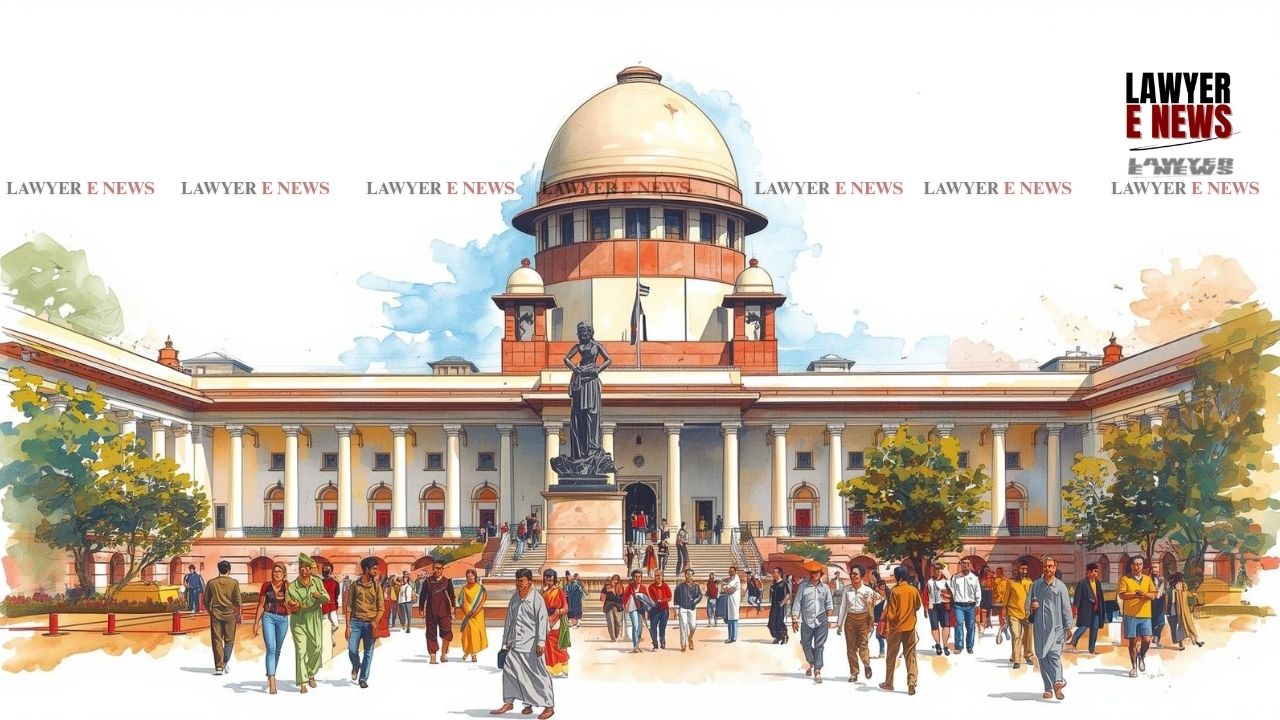
“This Court Consciously Directs That Stray Dogs Once Removed From Institutional Areas Shall Not Be Returned to the Same Location” In a remarkable exercise of constitutional power, the Supreme Court of India delivered a landmark ruling in Suo Motu Writ Petition (Civil) No. 5 of 2025, titled “In Re: City Hounded by Strays – Kids Pay Price”, holding that the “unchecked menace of stray dogs in institutional and public spaces across the country” is not merely a municipal failure but a direct constitutional breach of Article 21, which guarantees the right to life and personal safety.
Delivering the verdict, a bench comprising Justice Vikram Nath, Justice Sandeep Mehta, and Justice N.V. Anjaria declared: “The recurrence of dog bite incidents, particularly within institutional spaces meant for learning, healing, and recreation, reflects not only administrative apathy but also a systemic failure to secure these premises from preventable hazards.”
The Court's sweeping directions have now effectively redefined how civic authorities and State governments must approach the enforcement of the Animal Birth Control (Dogs) Rules, 2023 in conjunction with their constitutional obligations under Article 21 of the Constitution and the Prevention of Cruelty to Animals Act, 1960.
“No Citizen, Least of All a Child, Can Be Expected to Coexist with a Life-Threatening Risk in Schools, Hospitals, or Railway Stations”
The case originated from the Supreme Court’s suo motu cognizance of disturbing news reports highlighting fatal and serious stray dog attacks across the country, including in schools, hospitals, sports venues, bus depots and railway platforms. The petition was clubbed with related matters, including SLP (Civil) No. 14763 of 2024, W.P. (C) No. 784 of 2025, and contempt petitions regarding earlier non-compliance.
Referring to Article 21 of the Constitution, the Court observed: “This Court cannot remain unmindful of the preventable nature of these attacks, which not only reflect administrative indifference but also undermine the constitutional guarantee of the right to life and safety.” It added that “institutional zones are not public parks or open feeding zones – they are spaces of learning, healing, and transit – and their integrity must be preserved.”
The Court underscored the gravity of the issue by pointing to multiple real-life incidents: a child mauled inside a school in Wayanad, patients attacked at Chennai’s Institute of Mental Health, and foreign coaches bitten during an international sporting event in Delhi.
“We Have Consciously Directed That the Stray Dogs Picked Up from Institutional Areas Shall Not Be Released Back to the Same Location”
Departing from the standard Capture–Sterilise–Vaccinate–Release (CSVR) model enshrined under the ABC Rules, 2023, the Court issued a categorical prohibition against returning sterilised dogs to institutional campuses such as schools, hospitals, bus stands, railway stations and stadia.
The bench firmly held: “Permitting the same would frustrate the very effect of the directions issued to liberate such institutional areas from the presence of stray dogs.”
This ruling marks a doctrinal shift from earlier jurisprudence that largely emphasized a non-culling, post-sterilisation release approach. The Court has now carved out a specific exception to this rule, recognising that institutional spaces must be treated as “sensitive zones requiring zero tolerance to animal threats”.
“Lethargy in Compliance Will Not Be Tolerated – Constitutional Accountability Must Not Wait for Blood to Be Spilled”
The Court came down heavily on the lacklustre response from States and Union Territories in complying with earlier directions issued in August 2025. It took on record a detailed compliance report filed by Amicus Curiae Shri Gaurav Agrawal, noting that the affidavits filed by various States revealed “grave deficiencies and shortcomings” and that the “lethargy shall be viewed seriously.”
Referring to ongoing violations, the Court warned: “Any reported non-compliance of the above directions shall be viewed very seriously and may invite penalties, including but not limited to the initiation of suo motu contempt proceedings against the erring officials.”
To ensure enforceability, the Court directed the Chief Secretaries of all States and Union Territories, along with the Chairperson of the National Highways Authority of India and relevant Central Ministries, to file affidavits of compliance within 8 weeks, clearly detailing the preventive and protective measures adopted.
“Public Health Cannot Wait for SOPs – Safety Measures Must Precede Tragedies”
While issuing interim relief and enforceable directions, the Court also recognised the need for a long-term administrative roadmap. It directed the Animal Welfare Board of India to issue Standard Operating Procedures (SOPs) within four weeks for the prevention of dog-bite incidents in all institutional zones—public and private.
The Court noted: “Despite the statutory framework of the Animal Birth Control Rules and existing municipal bye-laws, practical outcomes have remained suboptimal… The persistence of the problem calls for a holistic and coordinated approach involving municipal corporations, public health authorities, and institutional management.”
In this context, the Court linked poor waste management and negligent perimeter control as structural enablers of the stray menace, holding that “absence of fencing, edible waste, and administrative inaction create a perfect storm for repeated intrusions.”
“Stray Dog Menace is Not Just a Public Nuisance – It Has Now Become a Constitutional Crisis”
The Court’s expansive legal reasoning transforms the stray dog crisis from a municipal nuisance into a constitutional wrong. It draws a straight line from the presence of strays in public spaces to violation of the right to life, directing the State to act not out of policy preference, but constitutional necessity.
“The State and its instrumentalities bear an affirmative obligation to ensure that no citizen—least of all children, elderly people, and patients—are exposed to preventable injury or disease within public premises,” the judgment stated.
Directions Issued Under Binding Constitutional Authority
Among the enforceable legal directions issued by the Supreme Court are:
The Way Forward: From Policy Drift to Constitutional Discipline
In conclusion, this judgment marks a watershed moment in the intersection of animal control law, public health, and constitutional governance. The Supreme Court has not merely directed policy correction—it has imposed constitutional discipline on the State.
By rooting the conversation around Article 21 and public accountability, the Court has affirmed: “The right to life cannot be left vulnerable to street-level hazards and bureaucratic inaction.” The ruling sets a high watermark for future interventions in cases where public safety is jeopardised by administrative indifference.
Date of Decision: November 7, 2025