-
by sayum
28 August 2026 2:11 PM







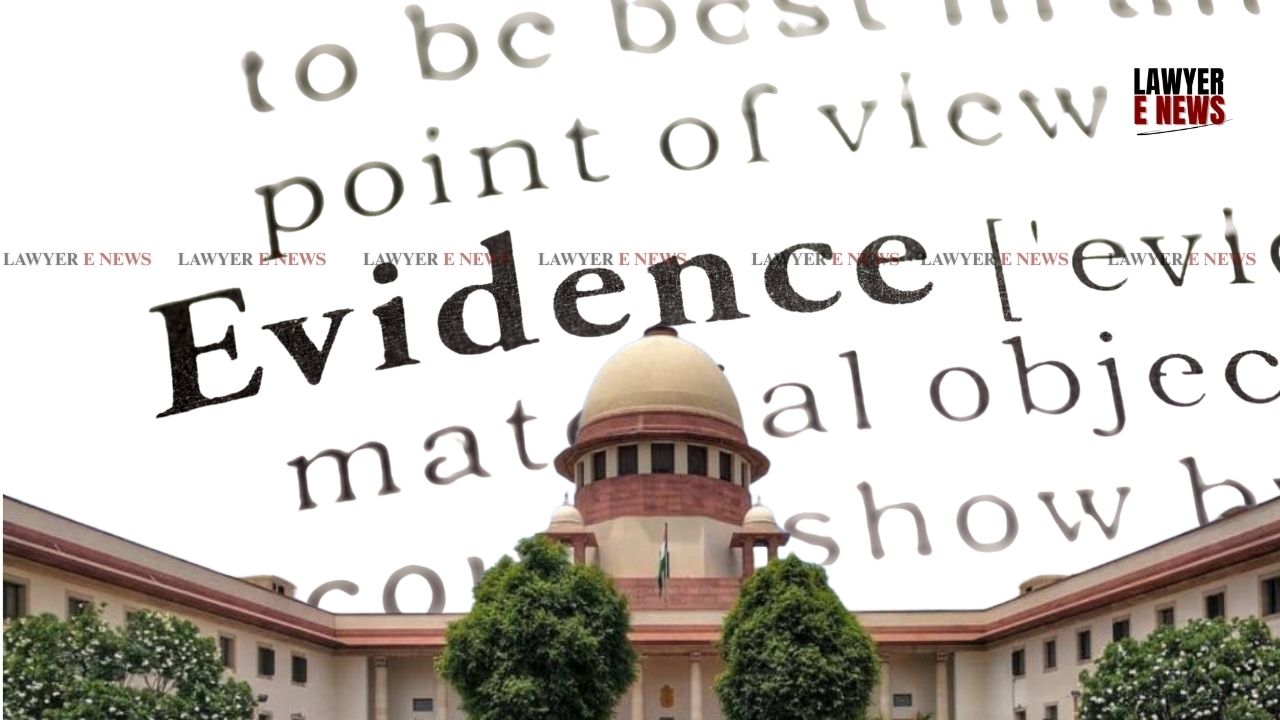
"The attempt to secure a decree behind the back of the true owner is a circumstance that cannot be lightly brushed aside", In a ruling that exposes and firmly condemns an attempt to wrest title over government land through a carefully orchestrated ex parte decree, the Supreme Court on March 9, 2026 dismissed appeals filed by claimants who had built their entire ownership case on a 1984 decree obtained without impleading the Union of India — the true owner of the land — and then sought to supplement that flawed foundation with fresh evidence at the appellate stage.
A Bench of Justice Vikram Nath and Justice Sandeep Mehta held that additional evidence under Order XLI Rule 27 CPC cannot be introduced to cure the inherent defects of a title claim that was fundamentally flawed from its inception, and expressed strong disapproval of the unscrupulous conduct of the appellants and their predecessors.
The appellant-plaintiffs claimed ownership of land bearing Survey No. 2029, Murar, Gwalior, asserting it to be ancestral property held continuously for over fifty years. Their entire claim rested on a 1984 ex parte decree obtained by their predecessors in a suit filed against the State of Madhya Pradesh — critically, without impleading the Union of India, which had been the lawful owner of the suit land since 1953 by virtue of a decision of the Union Government and a Gazette Notification issued by the erstwhile State of Madhya Bharat in 1954. The trial court, relying on this decree and the revenue mutations that followed from it, decreed the appellants' suit in 1996. The Union of India appealed, and the High Court reversed the decree. At the appellate stage, the appellants sought to introduce certified copies of the General Land Register to show the land was recorded as private property. The High Court rejected the application. The appellants challenged both orders before the Supreme Court.
The substantive question was whether additional evidence in the form of General Land Register entries could be permitted at the appellate stage to fill the inherent gaps in a title claim founded on a decree that was never binding on the respondents, and whether such a claim could be sustained in the absence of any independent title evidence or any plea of adverse possession.
On the Ex Parte Decree Being Non-Est Against the Union of India
The Court affirmed the High Court's foundational finding with unequivocal clarity. The 1984 ex parte decree had been obtained by the appellants' predecessors in a suit filed only against the State of Madhya Pradesh. The Union of India — the entity in whom the suit land had vested since 1953 — was never impleaded and was never heard. A decree passed in the absence of the true owner is simply not binding on it, and no legal sanctity whatsoever could attach to revenue mutations made on the strength of such a decree.
"The said decree was not binding upon the respondent-defendants, as they had not been impleaded as parties to those proceedings. Consequently, no legal sanctity could be attached to any subsequent entries made in the revenue records on the strength of the said decree."
Once this finding was returned, the appellants' claim stood entirely without foundation. The burden shifted squarely to them to independently establish their title through cogent title deeds and witness evidence. They produced neither.
On the Impermissibility of Plugging Gaps at the Appellate Stage
The appellants sought to introduce General Land Register entries at the appellate stage, claiming these entries showed the suit land was recorded as private land. The Court rejected this endeavour as wholly impermissible in law. The appellants had been fully aware from the very inception of the litigation that the Union of India had not been impleaded in the earlier suit. Having consciously founded their claim on a decree that was non-est against the respondents, they could not be permitted to shore up that fundamentally deficient case by producing additional material after the trial had concluded.
"It was impermissible for the appellant-plaintiffs to seek to introduce additional evidence at the appellate stage to cure the inherent defects in their case. A suit for declaration of title required adduction of best and complete evidence at trial, where such evidence could be produced as of right."
The Court further held that even assuming the GLR entries had been admitted, they would have had no impact on the outcome. Mere recording of land as private land in the General Land Register cannot, without more, discharge the burden of proving ownership — particularly where there are no foundational pleadings to support the inference sought to be drawn. No plea of adverse possession had ever been raised against the Union of India, and the attempt to rely on GLR entries in the absence of such pleading was equally impermissible.
"Mere recording of the land in suit as private land in the GLR does not in any manner benefit the appellants' claim of ownership."
On the Title of the Union of India
The Court accepted the respondents' consistent case that the suit land had vested in the Union of India pursuant to a decision dated July 17, 1953, fortified by the Gazette Notification of November 4, 1954 issued by the erstwhile State of Madhya Bharat, both of which recognised that the suit land vested in the Union with title, ownership and possession. Against this documented chain of title, the appellants had produced nothing — no title deeds, no documents of inheritance, no evidence establishing how or when their forefathers allegedly came into possession of the land.
On Disapproval of Unscrupulous Conduct
The Court reserved its sharpest observations for the conduct of the appellants and their predecessors. It noted that the 1984 ex parte decree had been secured without impleading the true owner — a circumstance that could not be lightly brushed aside. Even more significantly, the Court observed that appellant No. 1, Gobind Singh, was employed in the office of the Commissioner at the relevant time. The close proximity between the passing of the ex parte decree and the expeditious mutation of revenue entries in the appellants' favour cast a deep shadow over the bona fides of the entire proceedings.
"The proximity of events, namely, the passing of an ex parte decree followed by the expeditious mutation of revenue entries in favour of the appellant-plaintiffs, casts a shadow over the bona fides of the proceedings."
"Once the trial had concluded and the decree was under challenge in appeal, the appellants could not be permitted to fill the gaps in their case by seeking to adduce further material to fortify a claim that was fundamentally flawed."
Dismissing the appeals, the Supreme Court affirmed both the reversal of the title decree and the rejection of the additional evidence application. The judgment serves as a strong warning against litigants who attempt to manufacture title through ex parte decrees obtained behind the back of the true owner, and against the misuse of Order XLI Rule 27 CPC as an instrument to patch up a case that should never have been brought in the form it was.
Date of Decision: March 9, 2026