
-
by sayum
26 August 2026 1:49 PM







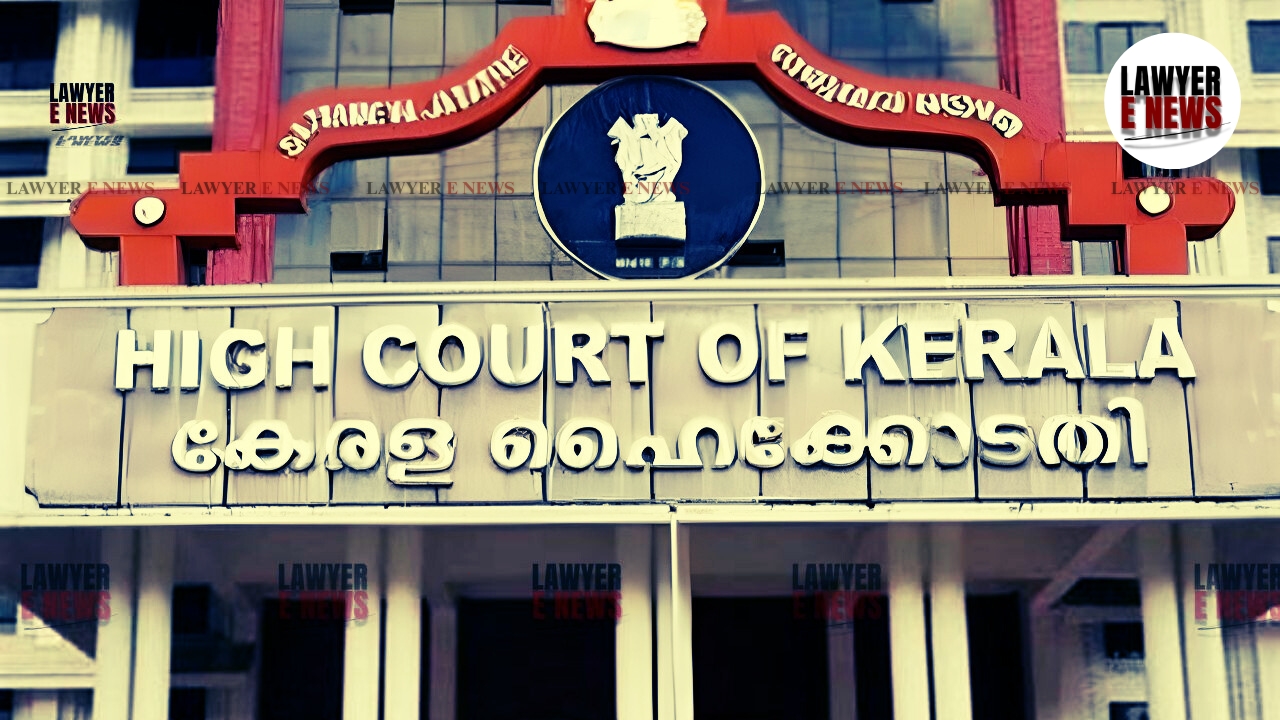
"Section 499 IPC Makes No Distinction Between A Defamatory Publication Made For The First Time And A Redisplay of Defamatory Material Already In Another Media", High Court of Kerala at Ernakulam has dismissed a petition filed by a film-sector publication and its editorial staff seeking to quash defamation proceedings, holding that republishing on their website the highly derogatory statements originally posted by another person on a Facebook group constitutes a distinct and independent offence of criminal defamation under Section 500 IPC — and that prior circulation in the public domain provides no absolution whatsoever.
Justice G. Girish, rejecting both contentions raised by the petitioners, held that the content republished was prima facie highly defamatory and that specific allegations of direct involvement rendered the editorial staff fully liable.
The complainant, a film actor and director with three decades of experience, alleged that following a difference of opinion with the first accused over the arrest of a prominent film actor for rape, the first accused posted highly derogatory statements against him in a Facebook group called 'People TV Debate Forum'. These statements were then picked up and redisplayed on their website by Accused Nos.2 to 4 — the publication Vellinakshathram, its Editor-in-Chief, and its Editor. The complainant filed a private complaint and the Judicial First Class Magistrate Court-V, Thiruvananthapuram, took cognisance and issued summons for trial under Section 500 IPC. Accused Nos.2 to 4 approached the High Court under Section 482 CrPC to quash the proceedings.
Whether redisplaying defamatory content already in the public domain constitutes a fresh offence under Section 500 IPC; whether the content published was prima facie defamatory; and whether editorial staff can be held liable in the absence of an automatic presumption against editors.
Court's Observations and Judgment
The petitioners' primary defence was that since the derogatory statements had already been published by the first accused on a Facebook group and were thus in the public domain, their mere act of redisplaying the same could not constitute a fresh offence of defamation. The Court rejected this argument emphatically, pointing to the plain text of Section 499 IPC which, the Court noted, draws no distinction whatsoever between an original defamatory publication and a subsequent republication of the same material through a different platform.
"The fact that the words so published were already there in the public domain does not absolve the criminal liability of the accused, who ventured to publish those derogatory words again by redisplaying the publication already made through another media."
The Court further held that the only route of escape from criminal liability for republication was if the act fell within one of the seven exceptions enumerated under Section 499 IPC — none of which the petitioners had claimed or demonstrated applied to their conduct.
The petitioners also relied on two earlier Kerala High Court decisions. In Malayalam Communications Limited v. K.C. Venugopal, the issue had concerned the telecast of statements made at a press conference — facts entirely distinct from deliberate republication of targeted personal attacks. In Mammen Mathew v. K. Bhaskaran Master, the dictum was that mere reporting of particulars of a complaint does not amount to imputing its truth or intending to harm reputation. The Court distinguished both, holding that neither precedent was applicable to the deliberate redisplay of highly personalised and abusive content.
"The dictum laid down in the aforesaid cases is not precisely related to the point argued by the petitioners — those decisions are not relevant to the facts and circumstances of this case."
On the question of whether the published content was defamatory, the Court undertook a careful examination of the actual words republished by the petitioners. The imputations included that the complainant begged film roles from an accused rapist, stole a credit card while working at a gas station in Chicago, was "a cheap fourth-rate person of perverted mind," and several other grossly abusive characterisations. The Court found that these words were plainly calculated to lower the moral and intellectual character of the complainant in the estimation of right-thinking members of society.
"It is not possible to say that the aforesaid words used against the complainant were not defamatory — the petitioners, by quoting the above words in their website, have committed the act of publishing those words of highly defamatory contents, capable of harming the reputation of the complainant."
The sworn statement of the complainant recorded under Section 200 CrPC further revealed that his friends and well-wishers had called him after reading the publication and expressed that they had formed a negative impression of his character — direct evidence, the Court noted, that reputational harm had actually occurred.
On editorial liability, the petitioners cited the Supreme Court's ruling in Jaideep Bose v. M/s. Bid and Hammer Auctioneers Pvt. Ltd. for the proposition that editorial directors cannot be automatically presumed liable for defamation without specific allegations of direct involvement. The Court acknowledged the dictum but held it inapplicable, noting that it had been rendered in the entirely different context of Sections 5 and 7 of the Registration of Books Act, 1867. More critically, the Court found that in the present case, the complainant had made specific allegations against each of the petitioners about their role in consciously choosing to publish the derogatory material on their website, motivated by the influence of the first accused and without any good faith.
"There are specific allegations levelled by the complainant against the petitioners about their act of publishing the derogatory words of the first accused in their website to defame the complainant — the petitioners cannot be heard to say that the offence under Section 500 IPC is not brought out from the facts and circumstances of the case."
The Kerala High Court dismissed the petition, holding that the criminal defamation proceedings before the Judicial First Class Magistrate Court-V, Thiruvananthapuram in CC No.825/2018 shall continue. The ruling is a significant affirmation that in the age of digital media, republication of defamatory content — however widely it may have already circulated — constitutes an independent criminal act, and that media organisations cannot shield themselves from liability by pointing to a prior publication on social media.
Date of Decision: 09 March 2026





