
-
by sayum
26 August 2026 1:49 PM







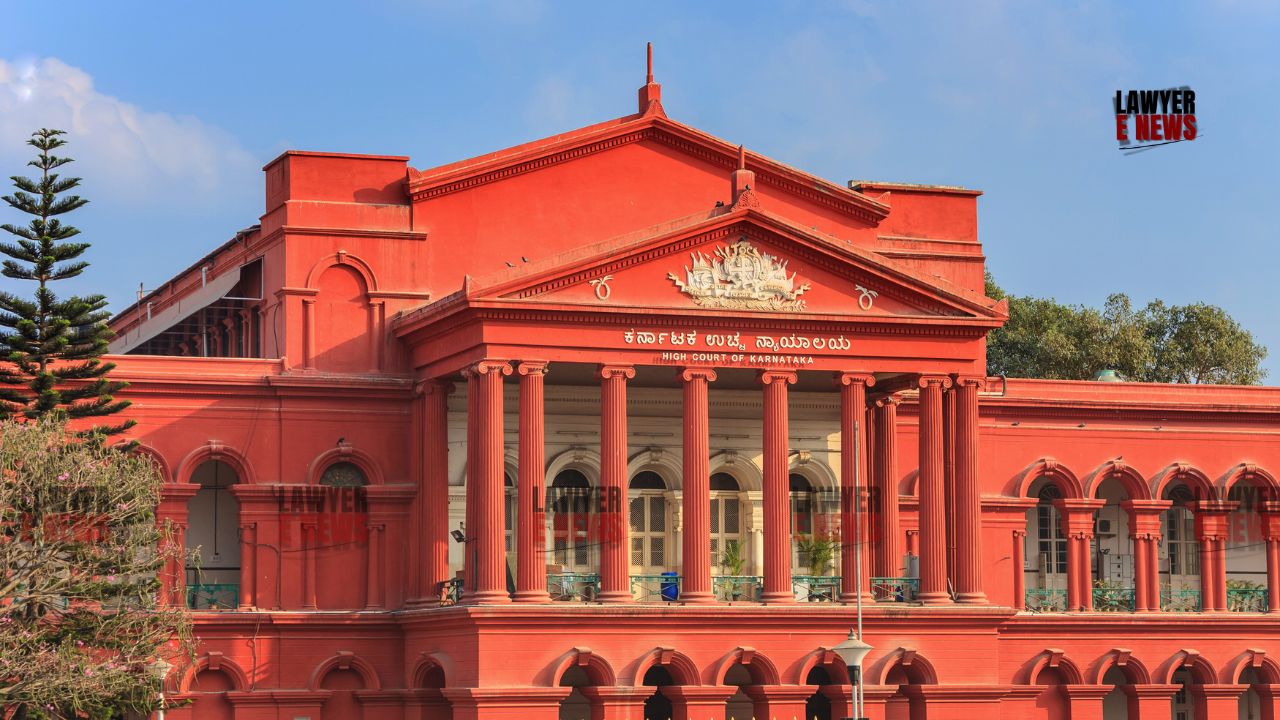
“Departmental Enquiry Travelled Only On The Periphery; Criminal Prosecution Must Proceed On Full Evidentiary Record”, In a significant ruling clarifying the limitations of using departmental exoneration to quash criminal proceedings under the Prevention of Corruption Act, the Karnataka High Court on January 30, 2026, refused to interfere with the ongoing prosecution of a Police Sub-Inspector (PSI) in a Lokayukta trap case. The Court held that mere exoneration in a disciplinary enquiry—particularly when key witnesses were not examined—does not render criminal prosecution an abuse of process.
Petitioner, a PSI arraigned as Accused No.3, sought to quash the criminal case under Section 482 CrPC. The charges stemmed from a 2019 trap operation in which tainted money was recovered from another accused, but the petitioner was subsequently implicated during investigation based on alleged conversations suggesting her involvement in periodic bribe demands.
“This is not a case where the evidence in the departmental enquiry is identical to the evidence in the criminal trial… the departmental enquiry, in the peculiar facts of this case, has travelled only on the periphery of the alleged demand or acceptance.” – Justice M. Nagaprasanna [Para 11]
PSI Added as Accused Based on Post-FIR Investigation; Seeks Quashment Citing Exoneration
The petitioner, not originally named in the FIR, was arraigned as Accused No.3 following an investigation that recorded alleged telephonic conversations between her and the complainant, a lorry driver involved in sand transport. While the Lokayukta police recovered ₹17,500 in tainted notes from Accused No.1 during a trap, it was the recorded context and conversations that led to the PSI being named in the charge sheet and Spl.C.C.No.217/2023.
Arguing before the Court, the petitioner’s counsel relied heavily on departmental proceedings, which ended in her favor. It was contended that:
Reliance was placed on landmark decisions including Ashoo Surendranath Tewari v. DSP, EOW, CBI, P.S. Rajya v. State of Bihar, and Radheshyam Kejriwal v. State of W.B., where courts had quashed prosecutions after departmental exoneration on merits.
Departmental Enquiry and Criminal Trial Not Coextensive in Scope or Witness Examination
The Lokayukta, opposing the petition, highlighted that only 6 out of 27 prosecution witnesses proposed in the criminal case were examined during departmental proceedings. Crucial witnesses—including forensic experts, spot sketch reporters, nodal telecom officers, and investigating officers—had not been examined at all in the internal enquiry.
“CW-7 who is the spot sketch reporter is a material witness. CW-8 is the chemical examiner… Since the conversations have happened between the petitioner and the complainant, the nodal officers of both BSNL and Airtel and the investigating officer are necessary to be examined.” [Para 11]
Justice Nagaprasanna emphasized that criminal prosecution cannot be short-circuited based on departmental findings when the evidentiary record is substantially wider in the former. The Court relied on the recent Supreme Court decision in Karnataka Lokayukta, Bagalkote District v. Chandrashekar, 2026 SCC OnLine SC 13, which clarified that:
“In all circumstances, the principle that once an employee is exonerated in a departmental enquiry, the criminal trial would automatically vanish, is not accepted.” [Para 10]
Exoneration Must Be on Merits, with Identical Evidence
The Court analyzed the competing precedents of Ashoo Surendranath Tewari and Radheshyam Kejriwal—both advocating quashment post-exoneration—and reconciled them with Chandrashekar and Ajay Kumar Tyagi, which underscore that each case must turn on whether the departmental proceedings actually traversed the full evidentiary landscape.
“The Apex Court in Chandrashekar clearly held that it was rendering its order in the peculiar facts of the case… it is necessary to notice the facts obtaining in the case at hand and a comparative chart of the witnesses.” [Para 10]
In the present case, the High Court found the departmental enquiry lacked evidentiary depth and failed to examine critical aspects, especially the trap evidence and technical corroborations such as FSL reports and call records.
Demand of Bribe Allegedly Periodic and Contextual – Full Trial Necessary
The Court also referred to specific allegations in the charge sheet that the bribe was not a one-time demand, but part of an alleged recurring arrangement for the smooth functioning of a sand transportation business.
“A demand was placed for ₹50,000 to be paid for movement of lorries… not for once, but every 15 days. The complainant is said to have paid ₹32,500 and the remaining ₹17,500 was found in the pre-trap mahazar.” [Para 12]
Such contextual allegations, the Court held, required detailed evidence and were not amenable to adjudication under Section 482 CrPC.
Quashing Refused – Petitioner Directed to Face Trial
Ultimately, the High Court declined to quash the proceedings, holding:
“This Court would not exercise its jurisdiction under Section 482 of the CrPC and obliterate the proceedings. It is for the petitioner to come out clean in a full-blown trial.” [Para 12]
The criminal petition was accordingly dismissed, and the proceedings in Spl.C.C.No.217/2023 will continue before the Special Court.
Date of Decision: January 30, 2026





