
-
by sayum
26 August 2026 1:49 PM







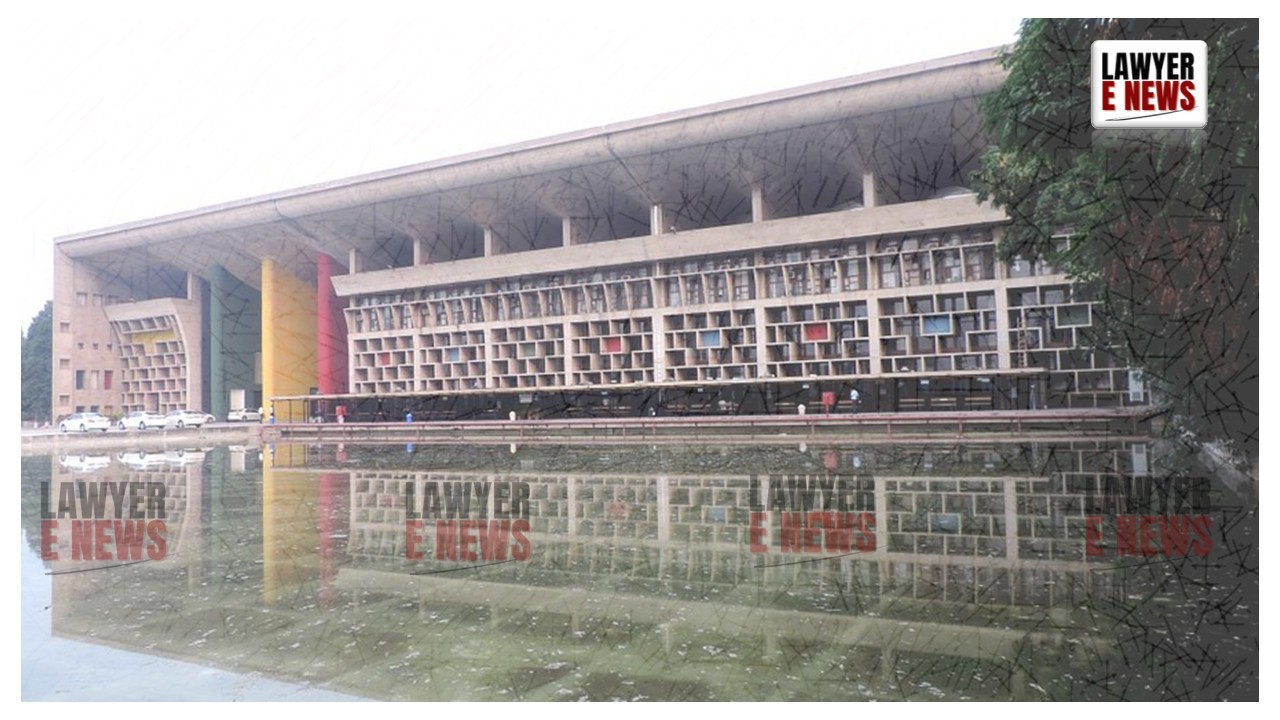
“Territorial Restrictions Defeat the Purpose of Distance Education” – In a landmark ruling that could reshape the recognition of distance education in India, a Division Bench of the Punjab & Haryana High Court comprising Justice Sureshwar Thakur and Justice Vikas Suri quashed the 2010 and 2012 UGC-DEC notifications that imposed territorial jurisdiction restrictions on study and examination centres of institutions offering remote learning. The Court held that such restrictions, as well as cut-off dates (29.03.2010 for Deemed/Private Universities and 01.11.2012 for State Universities) previously prescribed by a Single Judge, were arbitrary, ultra vires the Constitution, and violative of Article 21A—the Right to Education.
“The concept of remote distance learning, by its very definition, transcends territorial boundaries. Requiring prior approval for centres located outside the main campus strikes at the very purpose of such education,” the Court observed. It further added that such restrictions are “antithetical to the principle of universalization of education.”
State of Punjab Denied Regularization Based on Distance Degrees
The appeals arose from a batch of writ petitions and LPAs filed against a 2019 judgment in Karamjeet Kaur v. State of Punjab, where the Single Judge had upheld degrees obtained through distance mode only up to the fixed cut-off dates, and had de-recognized those earned after. Petitioners, many of whom had secured government jobs based on such qualifications, were denied regularization, promotions, or appointments, solely on the ground that their degrees were obtained via centres beyond university territorial jurisdictions, allegedly in violation of UGC norms.
The State of Punjab, opposing the petitions, argued that post the 2010 and 2012 UGC-DEC circulars, no institution had authority to operate study centres beyond state boundaries without explicit permission. However, the Court found no evidence that such centres were unauthorized, or that the universities lacked UGC recognition at the relevant time.
“UGC’s Silence is Acquiescence”: Court Refuses to Accept Violation of Natural Justice
Rejecting the State’s argument that the UGC was not impleaded as a party in every writ, the Court held: “In several connected petitions, the UGC was impleaded and appeared but failed to file any reply or challenge the judgment… Their silence is deemed to be waiver and acquiescence.”
The Court also clarified that no evidence was produced to show that examinations were conducted without proper invigilation or that mass copying occurred. In absence of such proof, blanket invalidation of degrees was unjustified.
"Examinations at Centres Closer to Homes Cannot Be Denied"
The judgment robustly defended the purpose and integrity of distance learning. Emphasizing its accessibility for marginalized and working populations, the Court observed: “Distance education aims to help the learner to actively involve himself/herself in the learning situation. It is meant to promote educational well-being of both urban and rural students.”
The Court added: “Conducting of examinations by the Universities at centres located closer to homes, but outside headquarters, is in alignment with the concept of remote learning and facilitates the right to education.”
Guidelines Quashed – Degrees to be Verified, Not Blanketly Rejected
Quashing the cut-off dates and the DEC/UGC notifications (Annexures P-51 and P-53), the Court directed that all distance education qualifications—irrespective of dates or centre location—shall be recognized subject to verification by the concerned government departments or UGC.
“Verification on a case-to-case basis is required to be made by the UGC whether the courses organized are of optimum academic standard… Audit verification of state-of-the-art apparatus is also a necessity,” the Court ordered.
One-Time Concession Granted, With Safeguards
The Court also provided one-time relief to those already employed on the strength of distance degrees, directing that such employees should not be dislodged. However, those whose degrees were essential for recruitment but found invalid after verification would not be entitled to promotion or continuation.
In such cases, the Court said: “The employees may seek recovery of tuition and damages from the Universities… but salary already paid shall not be recovered.”
In another crucial clarification, the Court held: “A higher degree attained on the basis of an invalid foundation degree is itself invalid. Illegality at the foundation stage renders the entire edifice void.”
Final Orders of the Court:
• LPA-2003-2019 allowed: Cut-off dates and UGC/DEC notifications quashed.
• All LPAs filed by the State of Punjab disposed of: State directed to verify degrees on individual basis and not reject them summarily based on date or location.
• CWP Nos. 2438 & 27015 of 2021 disposed of: Claims for appointment to be decided without relying on quashed cut-off dates.
• LPA-1105-2021 allowed: Matter remanded for fresh decision without applying invalidated notifications.
• LPA-450-2021 dismissed: Due to unresolved factual issues regarding a disputed B.Com degree from EIILM University; liberty granted to approach civil court.
“Education Through Distance Mode Cannot Be Crippled by Bureaucratic Barriers”: Court Upholds Dignity of Learners
Concluding with strong words, the Court underscored: “Imposing rigid territorial barriers to remote education frustrates the very constitutional mandate under Article 21A… Educational aspirations cannot be crushed under the weight of circulars that defy the logic and purpose of distance learning.”
Date of Decision: April 9, 2025





