-
by sayum
29 August 2026 9:28 AM







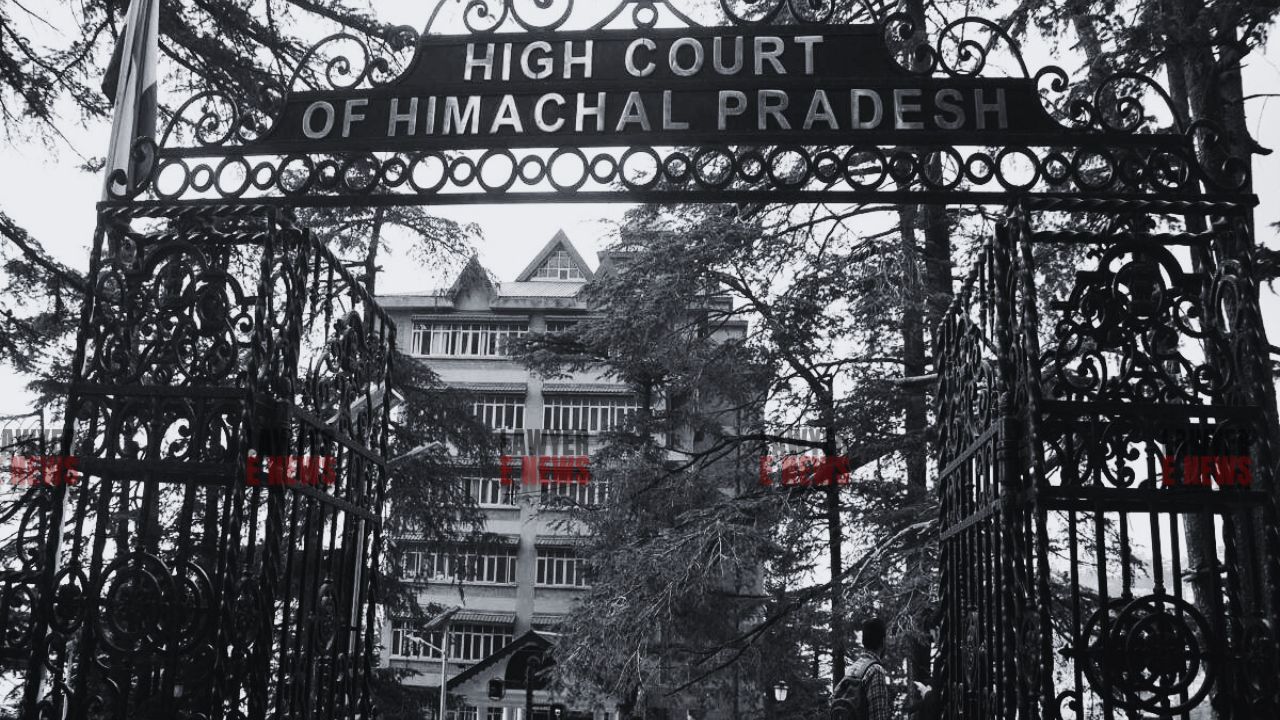
“Vehicle Left Pakka Road, Crushed Child on Kachha Portion — No Explanation for Such Reckless Conduct”: Himachal Pradesh High Court (Justice Rakesh Kainthla) dismissed Criminal Revision filed by Mohinder Pal, upholding his conviction under Sections 279 and 304-A of the Indian Penal Code and Section 187 of the Motor Vehicles Act. The petitioner was previously convicted by the Chief Judicial Magistrate, Kinnaur, for rash and negligent driving that led to the death of a 4-year-old girl in a hit-and-run incident. The High Court ruled that there was “no perversity, illegality, or miscarriage of justice” in the concurrent findings of the Trial and Appellate Courts, and thus no ground to interfere under the revisional jurisdiction.
This judgment reinforces the principle that revisional powers under Section 397 CrPC are not akin to appellate jurisdiction and cannot be invoked merely to reassess or reappreciate evidence.
Fatal Accident Near Hospital, Driver Fled Scene
The incident occurred on 24 November 2005 near the Regional Hospital at Reckong Peo. Mohan Kumari (PW11), the informant, was running a grocery shop with her husband. At around 11:30 AM, while her 4-year-old daughter Kumari Tuni was basking in the sun outside, a Mahindra pickup vehicle (HP63-0706) transporting sleepers from Kalpa approached at high speed, veered off the pucca road, and struck the child on the kachha portion near the shop. The driver wrapped the child in a gunny sack, placed her inside the shop, and fled the scene.
The child was declared brought dead at the hospital. Based on PW11’s account and corroborating eyewitness testimony, an FIR was registered, and the accused was tried and convicted.
The Trial Court sentenced him to 2 years RI under Section 304-A IPC, 6 months under Section 279 IPC, and a fine under Section 187 of the Motor Vehicles Act. The Appellate Court affirmed the findings. The revision was filed against these concurrent convictions.
The High Court rejected the revision on all grounds, firmly upholding the settled principles of limited revisional jurisdiction.
“Revisional Court Cannot Substitute Appellate Jurisdiction” – Court Relies on Supreme Court Precedents
Justice Kainthla invoked multiple binding precedents of the Supreme Court, emphasizing the narrow scope of Section 397 CrPC. Referring to Malkeet Singh Gill v. State of Chhattisgarh, (2022) 8 SCC 204, the Court reiterated:
“The High Court in criminal revision against conviction is not supposed to exercise the jurisdiction like to the appellate court, and the scope of interference in revision is extremely narrow.”
The Court noted that it cannot re-analyse or reinterpret evidence unless a “gross miscarriage of justice or perversity” is evident. Citing Amit Kapoor v. Ramesh Chandra and Sanjaysinh Ramrao Chavan v. Dattatray Gulabrao Phalke, it further held:
“The revisional jurisdiction can be invoked where the decisions under challenge are grossly erroneous, material evidence is ignored, or judicial discretion is exercised arbitrarily or perversely.”
Witness Testimonies Consistent, Minor Discrepancies Not Material
The Court upheld the testimonies of key eyewitnesses including Mohan Kumari (PW11), Sudesh Kumar (PW6), and Sant Ram (PW10) as credible and materially consistent. Addressing contradictions in estimated time, shop descriptions, and location awareness, the Court applied the settled position that: “Minor discrepancies on trivial matters not touching the core of the case... would not ordinarily permit rejection of the evidence as a whole.”
Relying on Bharwada Bhoginbhai Hirjibhai v. State of Gujarat, the Court held: “Ordinarily, a witness cannot be expected to recall accurately the sequence of events which take place in rapid succession... A hypertechnical approach would be unrealistic.”
Defence of Alternate Route Rejected: “Testimonies Contradictory and Unreliable”
The petitioner claimed he had taken a different route through the police line and thus was not involved in the accident. He examined Rajinder Kumar (DW1) and Rajesh Kumar (DW2) in support.
The Court found their testimonies inconsistent and unconvincing. Notably, DW2 stated the vehicle had two occupants but did not mention DW1 or unloading labour. Furthermore, DW2 feigned ignorance about the accident, which the Court found implausible.
“Had he been present in the vehicle, he would have positively denied the accident. His failure to do so casts serious doubt on his testimony.”
Accordingly, the Court upheld the rejection of defence evidence.
“Accused Had Scant Regard for Human Life”: Court Justifies Maximum Sentence
The Court upheld the Trial Court’s decision to impose maximum punishment under Sections 279 and 304-A IPC, observing:
“The vehicle had sufficient space on the pakka portion but hit the child on the kachha portion, showing reckless disregard for safety.”
The Court noted that the accused made no effort to take the injured child to the nearby hospital, even though he was fully aware of the incident. His act of fleeing after wrapping the child in a gunny sack only aggravated the offence.
In affirming the sentence, the Court relied on the Supreme Court's decision in Dalbir Singh v. State of Haryana (2000) 5 SCC 82: “While considering the quantum of sentence under Section 304-A IPC, one of the prime considerations should be deterrence... He must always keep in mind the fear psyche that if he is convicted... he cannot escape from a jail sentence.”
The Court echoed State of Punjab v. Balwinder Singh (2012) 2 SCC 182, stating: “Criminal Courts cannot treat the nature of the offence under Section 304-A IPC as attracting the benevolent provisions of Probation of Offenders Act.”
Thus, the prayer for reduction of sentence was rejected outright.
No Error, No Perversity – Revision Dismissed
The Himachal Pradesh High Court concluded that both the Trial and Appellate Courts had properly appreciated the evidence, applied the correct legal principles, and imposed proportionate punishment. Since the findings were based on credible, consistent evidence and no perversity was shown, no interference was warranted.
“In view of the above, the present revision petition fails, and the same is dismissed.”
The case serves as a reiteration of the judiciary’s commitment to ensuring accountability in motor vehicle fatalities and to discouraging hit-and-run incidents with lenient sentencing.
Date of Decision: 01 September 2025