-
by sayum
08 August 2026 1:54 PM







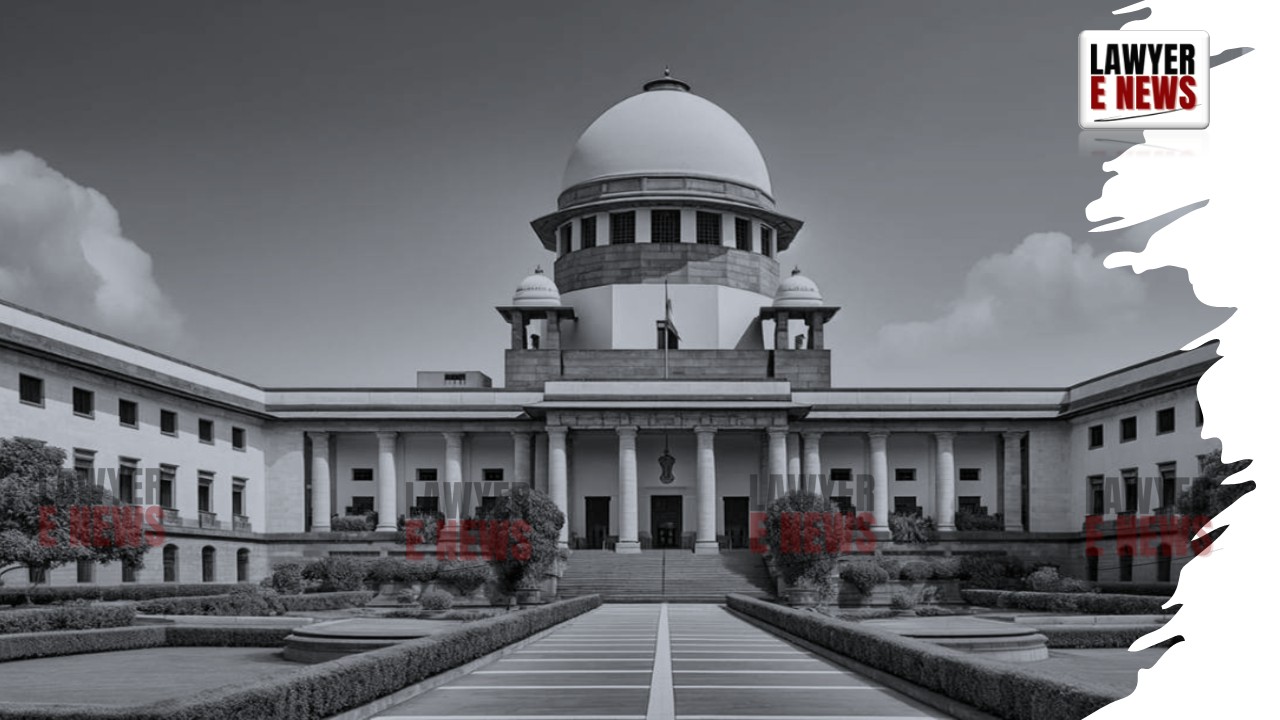
“No Authority Can Stall Arrests After Bail Denied by Supreme Court” – Supreme Court Quashes Madhya Pradesh High Court’s Review Order for Overstepping Jurisdiction and Interfering with Police Probe in Criminal Case. In a significant ruling Supreme Court of India set aside a review order passed by the Madhya Pradesh High Court, holding that the Division Bench had no authority to pass directions affecting an ongoing investigation when no valid ground for review under Order 47 Rule 1 CPC had been made out.
The Court, through a Bench of Justice Dipankar Datta and Justice Augustine George Masih, emphasised that:“It is axiomatic that review jurisdiction cannot be exercised unless any ground traceable to Order 47 Rule 1 of the Code of Civil Procedure is attracted… The impugned order… does not advert to any such ground…” [Para 7]
The apex court thus allowed the appeals and restored the investigation to the original Investigating Officer, noting that directions issued in the review were procedurally unjustified and legally unsustainable.
“Review Is Not a Round Two on Merits” – SC Slams High Court for Judicial Overreach
The case arose from a criminal writ filed by the appellant, Surendra Singh Saluja, who alleged that despite rejection of anticipatory bail applications (up to the Supreme Court), the accused were not being arrested due to a directive issued by a senior police officer.
After a Single Judge granted interim relief—including a direction to expedite investigation and a restraint on a company’s Extraordinary General Meeting (EGM)—the order was challenged via intra-court writ appeals, which were dismissed. However, in review, the Division Bench went far beyond procedural limits and issued detailed investigative directions, including:
Sending documents to forensic experts
Directing the DGP to consider changing the Investigating Officer
Ordering re-verification of alleged forged resignation documents
The Supreme Court found this a misuse of the review jurisdiction, stating: “Finally concluded proceedings could not have been reopened for rehearing by the Division Bench citing ‘interest of justice’ when no such interest required the Court’s intervention.” [Para 8]
Citing its precedents in Meera Bhanja v. Nirmala Kumar Chaturvedi, Aribam Tuleshwar Sharma, and Shivdeo Singh, the Court reaffirmed: “There are definitive limits to the exercise of the power of review… It may not be exercised on the ground that the decision was erroneous on merits. That would be the province of a court of appeal.” [Para 8]
“No One Can Override the Court's Bail Orders” – IG’s Restraint on Arrests Condemned
Earlier in the proceedings, the Single Judge had expressed dismay over a letter issued by the Inspector General of Police, Jabalpur Zone, restraining arrests despite the fact that:
Anticipatory bail had been rejected even by the Supreme Court.
No lawful authority existed to block police from arresting under such circumstances.
The High Court had also directed the Inspector General to explain his conduct, observing:
“The IG is virtually exceeding his jurisdiction… The language used appears to be contemptuous.” [Single Judge Order, 22 April 2025]
SC Restores Status Quo Ante – Investigation Back to Original Officer
The Supreme Court noted that pursuant to the High Court’s review order, the case had been transferred to the CID, thereby displacing the earlier Investigating Officer. Since that review order stood quashed, the Court directed:
“Investigation is to be restored to the Investigating Officer who was hitherto conducting investigation… uninfluenced by the IG or any other superior authority…” [Para 11]
Further, the CID was instructed to transfer all collected evidence to the original Investigating Officer, who must now proceed independently and in accordance with law.
“No Prayer, No Relief” – SC Cancels Injunction Against Company Meeting
While examining the interim restraint issued by the Single Judge against the holding of the company’s Extraordinary General Meeting, the Supreme Court found that no such prayer was made in the criminal writ petition.
Quoting its own judgment in Bharat Amratlal Kothari v. Dosukhan Samadkhan Sindhi, the Court reiterated: “Relief not claimed by a party ought not to be granted.” [Para 13]
Accordingly, it clarified: “Such direction shall not be applicable in respect of any future meeting… The appellant shall be at liberty to approach the appropriate forum…” [Para 14]
“Doubt on Maintainability of Intra-Court Appeals in Criminal Writs”
Notably, the Court also flagged a legal anomaly regarding whether intra-court appeals (writ appeals) are maintainable in criminal writ petitions under Article 226. Referring to Ram Kishan Fauji v. State of Haryana, the Court stated: “We have our doubt as to whether any intra-court appeal could lie…” [Para 6]
While not ruling directly on the issue, this observation may influence future judicial scrutiny on jurisdictional boundaries of intra-court appeals in criminal matters.
Final Directions by the Supreme Court:
Order dated 13 May 2025 of the Madhya Pradesh High Court set aside in its entirety.
Investigation restored to the original Investigating Officer; CID to hand over all materials.
Investigating Officer to proceed independently, without influence, and file final report as per law.
Interim injunction on the EGM not to apply to future meetings; liberty granted to seek remedy elsewhere.
Appeals allowed; all pending applications disposed of.
SC Reinforces Limits of Review Jurisdiction and Defends Police Autonomy
This ruling stands as a strong reaffirmation of judicial discipline regarding review powers and a cautionary tale against judicial overreach under the guise of “interest of justice.”
The Court not only protected the integrity of criminal investigations from improper interference by both the judiciary and senior police officials, but also preserved procedural boundaries fundamental to constitutional governance.
Date of Decision: 15 July 2025