-
by sayum
28 August 2026 10:07 AM







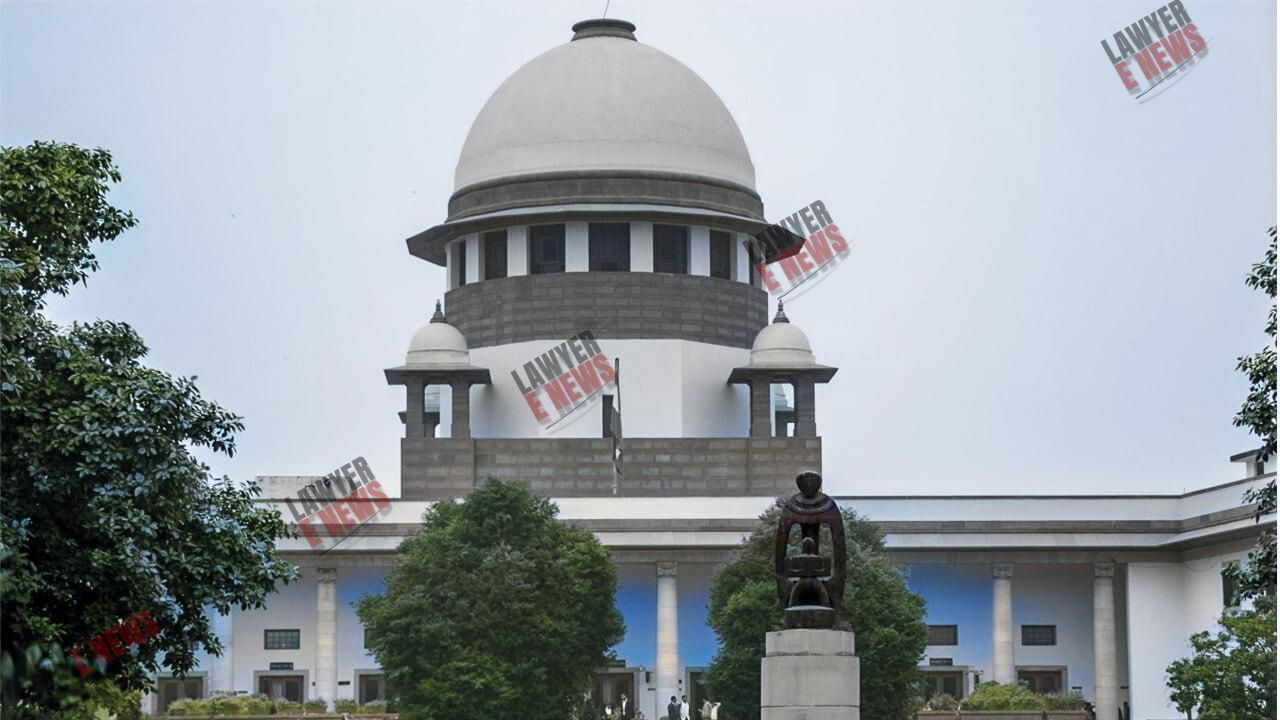
“It is a matter of grave concern that persons with disabilities, though meritorious, are denied upward movement — this constitutes hostile discrimination and defeats the very purpose of reservation.” — Supreme Court of India. In a landmark constitutional pronouncement delivered on September 12, 2025, the Supreme Court of India questioned the systemic discrimination faced by persons with disabilities in public employment, especially the denial of upward movement even when such candidates score above the general cut-off. Terming this as a “glaring example of hostile discrimination”, the Court declared that this violates the spirit of the Rights of Persons with Disabilities Act, 2016, and is inconsistent with the constitutional guarantees of equality and dignity.
The issue arose in the context of a long-pending litigation concerning the implementation of disability rights in India, where the Court was also examining the broader enforcement of the RPwD Act, 2016, in state-run care institutions. However, in a significant deviation, the Court turned its constitutional gaze toward reservation policy and recruitment practices, issuing one of the most explicit judicial observations on how reservation benefits are being wrongly withheld from the very people they are meant to empower.
“When a Meritorious Disabled Candidate Scores Above the Cut-Off, Why Should They Be Forced to Occupy the Reserved Seat?” — Supreme Court Asks Union to Justify Discriminatory Practice
The Court was categorical in holding that disabled candidates are currently being denied what Scheduled Castes, Scheduled Tribes, and OBCs are routinely granted — upward migration to the general category when meritorious.
“Such a candidate would invariably occupy the reserved seat, thereby denying the opportunity to a lower-scoring candidate with disability. In our view, this defeats the very purpose of reservation under Section 34 of the RPwD Act.”
The judgment highlighted a disturbing asymmetry: while candidates from other reserved categories are migrated to the unreserved list if they qualify on merit, candidates with benchmark disabilities are effectively trapped within their quota, causing a double loss — to the individual and to the category as a whole.
In strongly worded observations, the Bench comprising Justices Vikram Nath and Sandeep Mehta drew a constitutional parallel:
“This form of exclusion not only denies the deserving disabled candidate their rightful recognition but also steals a seat from another PwD who is in need of reservation — the result is a structural injustice.”
“Reservation Is Not a Concession — It Is a Tool of Substantive Equality” — Supreme Court Reinforces the Jurisprudence of Fair Classification
The Court anchored its reasoning in a series of past constitutional decisions, citing Indra Sawhney v. Union of India and M. Nagaraj v. Union of India, both of which affirmed that upward movement of meritorious reserved category candidates promotes fairness and optimal utilisation of reservation.
“Reservation under Section 34 of the RPwD Act is meant to level the playing field — not to restrain those who rise above barriers. Treating disabled candidates as immobile within their own category is deeply antithetical to the values of Article 14 and 16.”
The Court also critiqued the tendency to apply rigid merit standards without regard for structural disadvantage, drawing from Vikas Kumar v. UPSC and Kabir Paharia v. National Medical Commission, where it was previously held that reasonable accommodation must account for systemic exclusion.
“The Constitution Does Not Permit a Hierarchy of Disabilities” — Supreme Court Calls for Policy Reform in Promotions and Appointments
Beyond recruitment, the Court extended its concerns to promotional opportunities for persons with disabilities, observing that the same principle of upward movement must apply in the context of internal career advancement.
“Such consideration must be guided by the overarching aim that the true and substantive benefit of reservations reaches those most in need.”
The Court warned that merely having a reservation policy on paper is insufficient unless it is implemented in a manner that ensures real inclusion, real progress, and real access. The judgment emphasized that affirmative action loses its meaning if the most deserving are left behind due to policy loopholes or bureaucratic rigidity.
“State Must Explain — Why Are You Denying Mobility to the Most Marginalised?” — Supreme Court Directs Centre to Respond
To ensure accountability, the Court issued a specific direction to the Union of India: “We consider it appropriate to require the Union of India to explain whether appropriate measures have been taken to provide the upward movement of meritorious candidates applying against the post/s reserved for persons with disabilities, in case such candidate secures more than the cut-off for the unreserved category.”
The Court has fixed October 14, 2025, as the date for submission of the Centre’s affidavit clarifying its position.
Calling for a constitutionally sensitive policy shift, the Court concluded: “Such an exercise must be undertaken keeping in view the constitutional promise of equality, dignity, and inclusion, ensuring that the benefits of reservation are neither diluted nor denied to those who genuinely require them.”
A Constitutional Turning Point for Disabled Representation in Public Employment
This judgment does not merely address a policy anomaly — it reconfigures the future of disability reservation in India. For the first time, the Supreme Court has questioned the institutional logic that keeps even the most capable persons with disabilities confined to their quota, rather than recognising them as equals in the general stream.
If the Union responds affirmatively, and policy changes follow, this verdict will stand as a watershed moment in India's quest to make its public institutions truly representative, fair, and inclusive.
Date of Decision: September 12, 2025