-
by sayum
05 August 2026 9:31 AM







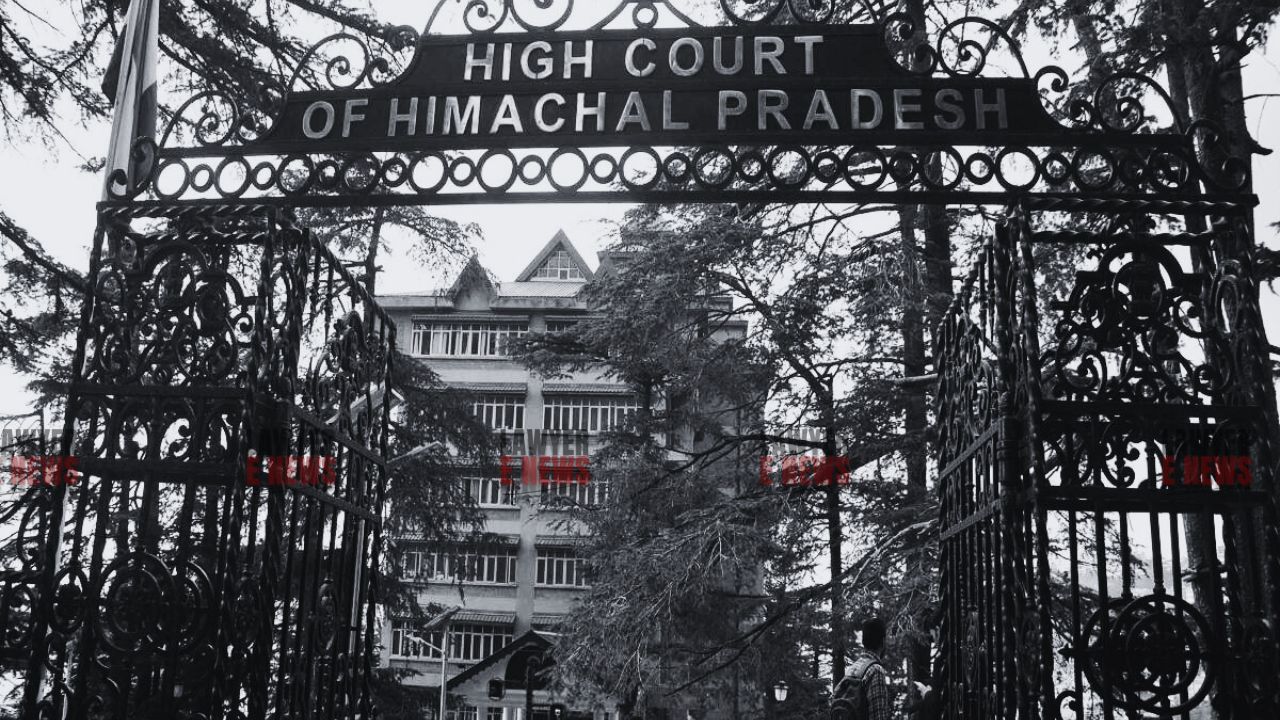
“Law Does Not Permit Forum Shopping for Expert Opinions After Facing Adverse Report,” In a decisive judgment Justice Rakesh Kainthla of the Himachal Pradesh High Court firmly rejected the attempt by an accused in a cheque dishonour case to reinitiate expert opinion proceedings after an unfavourable forensic report. The Court observed that the judicial process cannot be manipulated to “endlessly fish for favourable opinions” once an expert report is already on record. “There will be no end to such requests,” the Court warned, dismissing the petition filed by Mantesh Kumar.
“Repeated Expert Reports Are Not a Right, But a Misuse of Judicial Process”
The High Court, while scrutinising the record, found that the accused had already produced a forensic expert who was cross-examined and whose report remained on record. The Court categorically held, “Since the report of the Forensic Expert examined by the petitioner is still on record and has not been set aside, therefore, the learned Trial Court had rightly held that there was no necessity to send the signatures for comparison to another Forensic Expert.”
The Court rejected the argument that a second expert examination would serve the cause of justice. Relying on the ruling in R. Bhaskar Reddy v. Chinni, the Court remarked, “Repeated references to experts through the court, for their opinion, when the report already obtained is unfavourable, is not a legally acceptable procedure to be resorted to in a trial.”
Court Slams “Delay Tactics Camouflaged as Fair Trial Demands”
Highlighting the accused’s plea of bias and request for further expert evidence, the High Court came down heavily on the misuse of the fair trial principle. “The petition shows that the application was filed because the petitioner/accused believes that the learned Trial Court is biased. This is an extraneous consideration and shows that the application was not bona fide but meant to prolong the trial,” the Court observed.
Rejecting the accused’s claim that his fair trial rights were compromised, the Court clarified, “Right to a fair trial cannot be stretched to a right to delay proceedings interminably, particularly by seeking repetitive forensic opinions.”
“A Judge is Not a Mute Spectator”: High Court Upholds Trial Court’s Active Role
The High Court also dismissed the grievance against the Trial Court putting direct questions to witnesses. Referring to the Supreme Court’s observations in State of M.P. v. Balveer Singh (2025), the Court noted, “The presiding judge cannot afford to remain a mute spectator, totally oblivious to the various happenings taking place around him, more particularly, concerning a particular case being tried by him.” The judgment reaffirmed the principle that judges are duty-bound to actively seek the truth.
Distinction Drawn from Saroj Kumari Case
Answering the petitioner’s reliance on Saroj Kumari v. Harminder, the High Court clarified that in Saroj Kumari’s case, “the prayer was for the first-time reference to an expert, whereas in the present case, the accused had already examined an expert and failed to convince the Court of his defence.” The Court firmly concluded that “the cited judgment does not apply to the present case.”
“Speculative Allegations Against Court Do Not Merit Judicial Favour”
Rebuking the speculative plea of bias, Justice Rakesh Kainthla remarked, “The application was motivated by an extraneous assumption of bias, intended to delay trial and not pursued bona fide.” The Court refused to countenance any aspersion on judicial fairness merely because proceedings were not going in favour of the accused.
Dismissing the petition, the Court stated, “In view of the above, the present petition fails and the same is dismissed.” At the same time, the Court was careful to ensure that no prejudice was caused, stating, “The observations made herein before shall remain confined to the disposal of the petition and will have no bearing, whatsoever, on the merits of the case.”
With this judgment, the Himachal Pradesh High Court has reinforced the principle that the criminal process cannot be hijacked by endless demands for expert opinions and must progress towards finality, ensuring fairness without inviting abuse of judicial discretion.
Date of Decision: 14th July 2025