-
by sayum
29 August 2026 9:28 AM







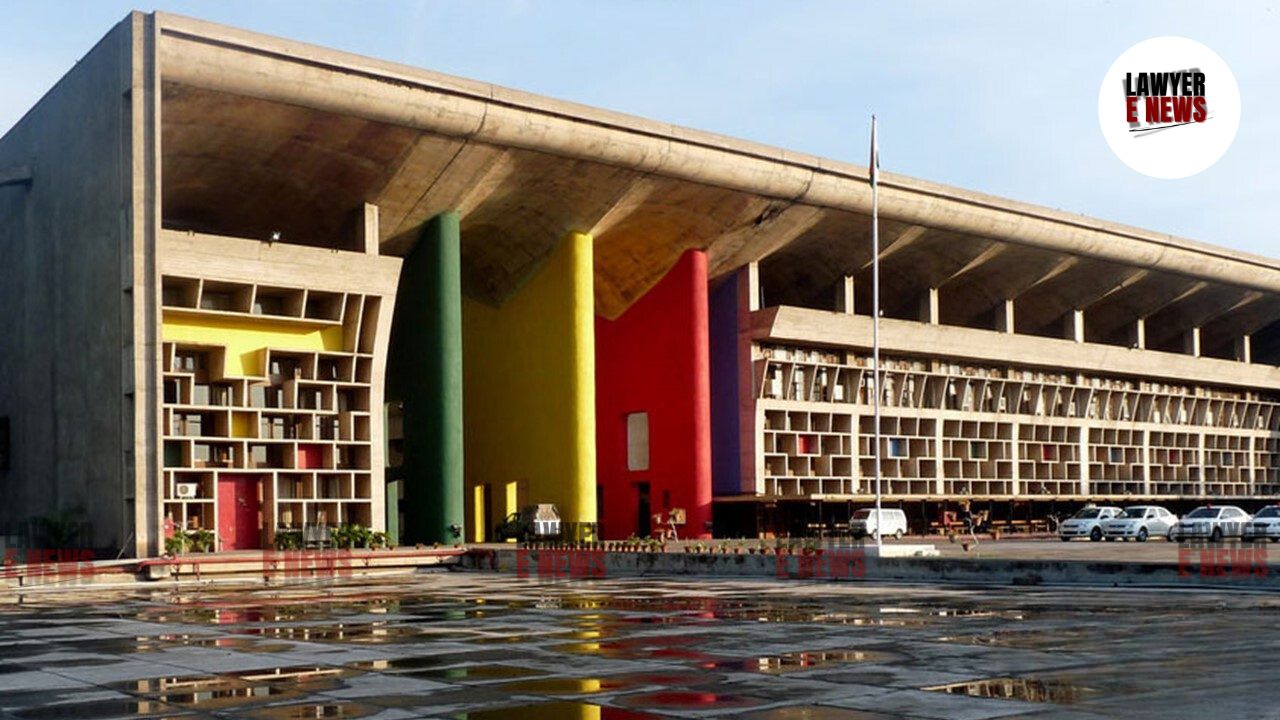
"A claimant for compensation ought not to be burdened with following a trail of successive transfers, which are not registered with the registering authority. To hold otherwise would be to defeat the salutary object and purpose of the Act" — Punjab & Haryana High Court quoting Supreme Court in Naveen v. Vijay
On 1st September 2025, the Punjab and Haryana High Court delivered a decisive judgment in the case of Smt. Usha Rani v. Master Jagmohan Bansal and Others, FAO Nos. 169 and 170 of 1994, reiterating that the registered owner of an uninsured motor vehicle involved in a road accident cannot escape compensation liability by merely alleging unauthorized use or relying on the driver’s affidavit to undertake financial responsibility.
Justice Deepak Gupta, presiding over the appeals, held that statutory liability under Section 2(30) of the Motor Vehicles Act, 1988 rests squarely with the registered owner, and that such responsibility cannot be transferred or diluted in the absence of insurance and proof of forcible possession.
Referring to precedents laid down by the Supreme Court in Naveen v. Vijay [AIR 2018 SC 983] and the latest authority Brij Bihari Gupta v. Manmet and Others [2025 INSC 948], the Court dismissed the owner's plea that she should not be held liable since the driver had taken the vehicle from her husband’s shop without her consent and had subsequently filed an affidavit taking responsibility.
"The Liability to Pay Compensation Stands Fastened Upon the Registered Owner"
The case arose from a motor accident that occurred on 7th July 1991, in which Subhash Chander and his nephew, Jagmohan Bansal, were injured after their scooter was struck by another scooter (No. CHC-8387), driven negligently by Jai Karan, a police official. The offending scooter was admittedly uninsured and stood registered in the name of appellant Smt. Usha Rani.
The injured parties filed separate claim petitions under Section 166 of the Motor Vehicles Act. The Motor Accident Claims Tribunal awarded ₹22,000 to each injured claimant along with interest, holding both the driver and the registered owner jointly and severally liable.
The owner challenged the award in appeal, asserting that the scooter was taken without authorization and that an affidavit by the driver, wherein he undertook to compensate the victims, should absolve her of responsibility.
However, the High Court refused to accept these contentions, stating: “The appellant did not produce any evidence before the Tribunal so as to prove that the offending scooter was taken forcibly by Jai Karan from the shop of her husband.”
The Court highlighted that once the vehicle is proven to be uninsured and the registered ownership is established, the liability under law becomes unavoidable. Quoting the binding Supreme Court decision in Naveen v. Vijay, Justice Deepak Gupta observed:
“In view of the definition of the expression ‘owner’ in Section 2(30), it is the person in whose name the motor vehicle stands registered who, for the purposes of the Act, would be treated as the ‘owner’.”
“To hold otherwise would be to defeat the salutary object and purpose of the Act.”
The Court categorically rejected the affidavit-based defense advanced by the owner, holding that:
“As far as the affidavit of the respondent Jai Karan is concerned, appellant will be at liberty to avail appropriate legal remedy against him so as to compensate her for making the payment to the injured-claimants. However, as far as the present claim petitions are concerned, the appellant cannot be permitted to seek any direction from this Court not to fasten any liability upon her.”
“Motor Accident Victims Cannot Be Left to Chase Informal Arrangements or Unproven Defenses”
In dismissing the appeal, the Court reaffirmed that the Motor Vehicles Act aims to protect victims, not enable procedural escapism by vehicle owners. The object of Section 2(30) is to ensure that claimants are not left in a position of uncertainty and are not made to pursue informal or unverified claims between driver and owner.
Quoting further from Naveen v. Vijay, the judgment emphasized: “A claimant for compensation ought not to be burdened with following a trail of successive transfers, which are not registered with the registering authority. The interpretation to be placed must facilitate the fulfilment of the object of the law.”
The Court also drew strength from the recent ruling in Brij Bihari Gupta v. Manmet and Others, where the Supreme Court reaffirmed that:
“The person whose name is reflected in the records of the registering authority is the owner. The owner within the meaning of Section 2(30) is liable to compensate. The mandate of the law must be fulfilled.”
Legal Ownership Brings Legal Consequence — Tribunal’s Award Stands
Dismissing both appeals filed by Smt. Usha Rani, the Court upheld the Tribunal’s decision and clarified that while the registered owner is free to initiate recovery proceedings against the driver for indemnification, the primary legal obligation to satisfy the compensation award remains hers.
“She has to satisfy the claim of the injured-claimants. Both these appeals are dismissed accordingly.”
Thus, the Court sent a clear message that statutory liability under the Motor Vehicles Act cannot be circumvented by private arrangements, affidavits, or claims of unauthorized use, particularly when the vehicle is uninsured.
Date of Decision: 01 September 2025