-
by sayum
26 August 2026 12:18 PM







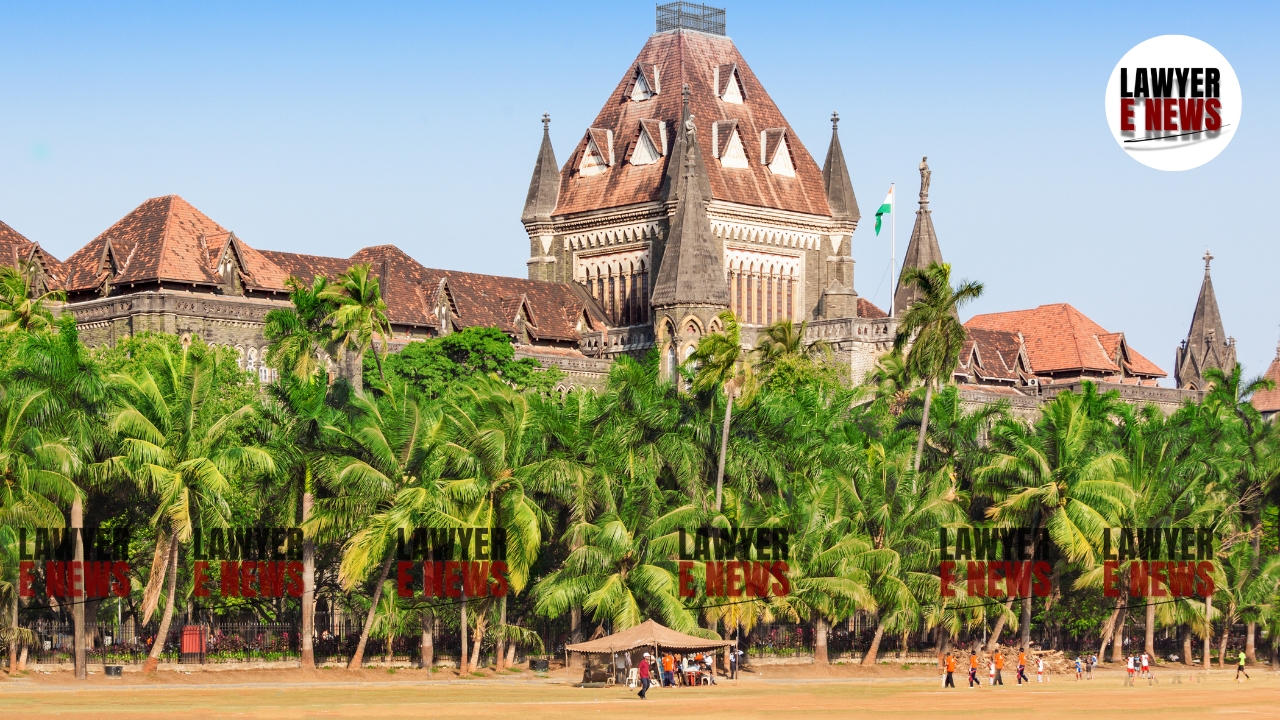
“Any right that the Appellants claim is entirely derivative of the erstwhile developer’s now-terminated rights; such claims perish with the developer’s termination”, observed Justice Kamal Khata of the Bombay High Court in a decisive ruling that clarified the legal position of third-party flat purchasers in redevelopment projects.
Bombay High Court dismissed a batch of civil appeals challenging the denial of interim injunctions sought by third-party flat purchasers. These purchasers had entered into agreements with a terminated developer and sought to restrain the housing society and a new developer from proceeding with redevelopment. The Court held that such purchasers have no enforceable rights against either the society or its new developer, thereby reaffirming a consistent judicial position on redevelopment law under MOFA (Maharashtra Ownership Flats Act, 1963).
“No Privity of Contract, No Enforceable Claim”: Society Not a Promoter Under MOFA
At the heart of the matter was whether the housing society, by virtue of having signed a development agreement and having executed a power of attorney (PoA) in favour of the previous developer, could be considered a "promoter" under Section 2(c) of MOFA, and thereby be liable for statutory obligations towards flat purchasers.
The Court squarely rejected this argument, holding:
“The Society, being the landowner, cannot be saddled with the statutory obligations of a 'promoter' under MOFA vis-à-vis third-party purchasers. Their remedies, if any, lie only against the erstwhile developer in damages, not against the Society or the newly appointed developer.” [Para 15]
Justice Khata noted that although the Society had executed certain documents authorizing the erstwhile developer to collect consideration and execute agreements, these authorizations were solely for facilitating the redevelopment and did not create any agency relationship binding the Society to third-party purchasers.
Redevelopment Agreements, Termination, and Arbitration
The dispute stemmed from a redevelopment project of a housing society in Nehru Nagar, Kurla (East), Mumbai. The Society (Respondent No. 2) had earlier appointed Respondent No. 1 as the developer under a Development Agreement dated 28 April 2008, supplemented by a registered Power of Attorney and a Supplemental Agreement in 2011. Pursuant to these, several flat purchasers (Appellants) entered into agreements, MoUs, and allotment letters with the erstwhile developer.
However, on 14 September 2015, the Society terminated the Development Agreement citing non-performance and referred the matter to arbitration. The Final Arbitral Award dated 7 November 2022 upheld the Society’s termination, rejecting the developer’s counterclaims. A new developer (Respondent No. 5) was appointed in October 2023.
Aggrieved flat purchasers approached the City Civil Court seeking interim injunctions to prevent redevelopment activity, alleging violation of their rights. Upon dismissal of their motions, they preferred the present appeals before the High Court.
The High Court dealt with multiple interconnected legal questions:Whether Purchasers Can Enforce MOFA Rights Against the Society or New Developer
The Court ruled:“Purchasers under agreements with the terminated developer have no privity of contract with the Society; their rights are entirely derivative of, and contingent upon, the developer's subsisting rights under the Development Agreement. Once that agreement is terminated, those rights extinguish.” [Para 15(i)]
Citing Vaidehi Akash Housing Pvt. Ltd. v. D. N. Nagar CHS and Goregaon Pearl CHS, the Court emphasized that a society does not become a promoter simply by executing a development agreement.
Is the Society Bound as Confirming Party to Sale Agreements?
While the Appellants submitted that the Society had signed some sale agreements as a confirming party, the Court held that this did not establish contractual liability. Referring to the clauses in the development and power of attorney documents, it observed that:
“The Developer was authorised to sell free-sale flats on his own account. The Society was neither party to, nor did it ratify, the sale transactions to the extent of creating independent obligations.” [Para 29]
Applicability of Section 202 of the Indian Contract Act, 1872 – Irrevocable Agency
The Court rejected the plea that the developer had an irrevocable agency or interest in the subject matter under Section 202:
“The Developer’s authority under the PoA was limited to facilitation of redevelopment – not sale on the Society’s behalf. The Developer sold free-sale flats independently. Section 202 has no application.” [Para 34]
Reliance on Unregistered Agreements and Enforcement Under MOFA
The Appellants had argued that even unregistered agreements could be enforced under Sections 4 and 4A of MOFA, relying on C. Radhakrishnan v. Richa Construction. The Court distinguished that judgment:
“That case involved no redevelopment, no developer termination, and no dispute between landowner and developer. In the present case, any such agreements are nullified by the valid termination of the development agreement.” [Para 37]
“Once Terminated, All Rights Flowing from the Developer Stand Extinguished”
The Court firmly concluded that:“It follows that Appellants who hold allotment letters, MOUs, registered or unregistered agreements cannot assert an independent claim against the Society or anyone claiming through it once the rights of the prior developer have been lawfully terminated.” [Para 40]
Further, Section 35 of the Arbitration and Conciliation Act, 1996 made the arbitral award final and binding. As purchasers claiming through the terminated developer, the Appellants were bound by the award and could not bypass its findings by targeting the Society or the new developer. [Para 35]
Binding Nature of Precedents Despite “Prima Facie” Language
Addressing arguments that prior rulings like Vaidehi Akash and Goregaon Pearl were merely “interim” and thus not binding, the Court clarified:
“The mere use of the words ‘prima facie’ in a judgment does not dilute its binding effect. Once a Court, after hearing the parties, renders a determination, that decision becomes conclusive and binding.” [Para 24]
It particularly highlighted that in Deepak Prabhakar Thakoor v. MHADA, the Division Bench had “emphatically reaffirmed” the principles laid down in Vaidehi Akash, giving it binding status. [Paras 18, 39]
The Bombay High Court dismissed all the appeals and interlocutory applications filed by the Appellants, holding that there was no merit in granting interim protection. It also declined their request to continue the interim relief earlier granted:
“In view of the Respondent-Society members’ rights being severely affected since more than a year by the protection granted in favour of the Appellants, the request is rejected.” [Para 44]
This judgment is a reaffirmation of the legal limits on the enforceability of third-party flat purchasers’ rights in redevelopment contexts, especially where the developer through whom they claim has been lawfully terminated. The Bombay High Court, by systematically addressing and distinguishing each precedent cited by the Appellants, has further consolidated the position that Societies and their new developers cannot be burdened with obligations towards purchasers with whom they share no contractual relationship. The ruling ensures a balance between consumer protection and the statutory autonomy of cooperative housing societies, especially in Maharashtra’s heavily litigated redevelopment landscape.
Date of Decision: 04 November 2025