-
by sayum
01 August 2026 2:00 PM







Subheadline: The court emphasizes that the Police Complaints Authority's mandate is limited to investigating police misconduct, not private disputes.
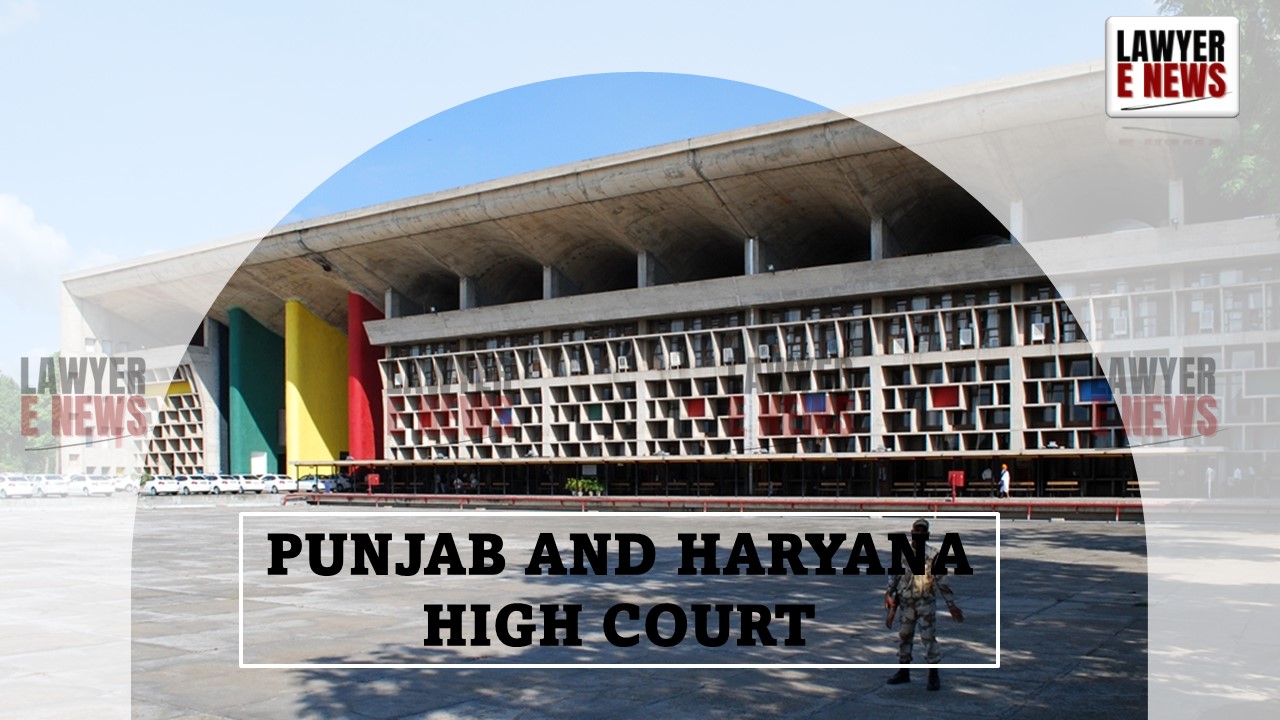
In a significant judgment, the Punjab and Haryana High Court ruled that the Police Complaints Authority (PCA) overstepped its jurisdiction by ordering the registration of an FIR against private individuals. The Court's decision clarified that the PCA's authority is confined to addressing complaints of serious misconduct by police personnel, and it cannot adjudicate or intervene in civil disputes between private parties.
The case originated from a complaint filed by Satish Kumar Saini against LIC Housing Finance Limited and other private individuals, including Jasbir Kaur. Saini alleged that these parties conspired against him in a property transaction. Dissatisfied with the police's handling of his complaint, Saini approached the PCA, which directed the registration of an FIR against the private individuals involved. This order was subsequently challenged by the accused, leading to the present appeals.
The High Court underscored that the PCA's jurisdiction is strictly limited to investigating allegations of serious misconduct by police personnel. The Court pointed to the Supreme Court's decision in Prakash Singh & Ors v. Union of India, which established that the PCA’s role is to oversee police accountability, not to mediate or resolve private disputes.
The Court observed that the PCA exceeded its authority by delving into the merits of a private dispute between Saini and the other parties. The judgment highlighted that the PCA's mandate does not extend to directing FIRs against private individuals or resolving civil disputes such as those concerning property transactions. The High Court set aside the PCA's order as being ultra vires, emphasizing that any such disputes should be resolved through the appropriate civil courts.
The High Court noted that while the PCA can recommend actions against police officers based on complaints of serious misconduct, it has no legal standing to direct criminal investigations against private individuals. The ruling also reaffirmed that private parties aggrieved by police inaction have the recourse to seek remedies under Section 156(3) of the CrPC or through civil litigation, rather than involving the PCA in matters outside its purview.
The Punjab and Haryana High Court's ruling has significant implications for the functioning of the PCA, reinforcing the boundaries of its jurisdiction. The decision serves as a reminder that civil disputes must be addressed within the civil judiciary, while the PCA remains a body focused on ensuring police accountability. This judgment is expected to guide the PCA's future operations, ensuring that it does not exceed its legally defined role.
Date of Decision: July 26, 2024