-
by sayum
25 August 2026 11:12 PM







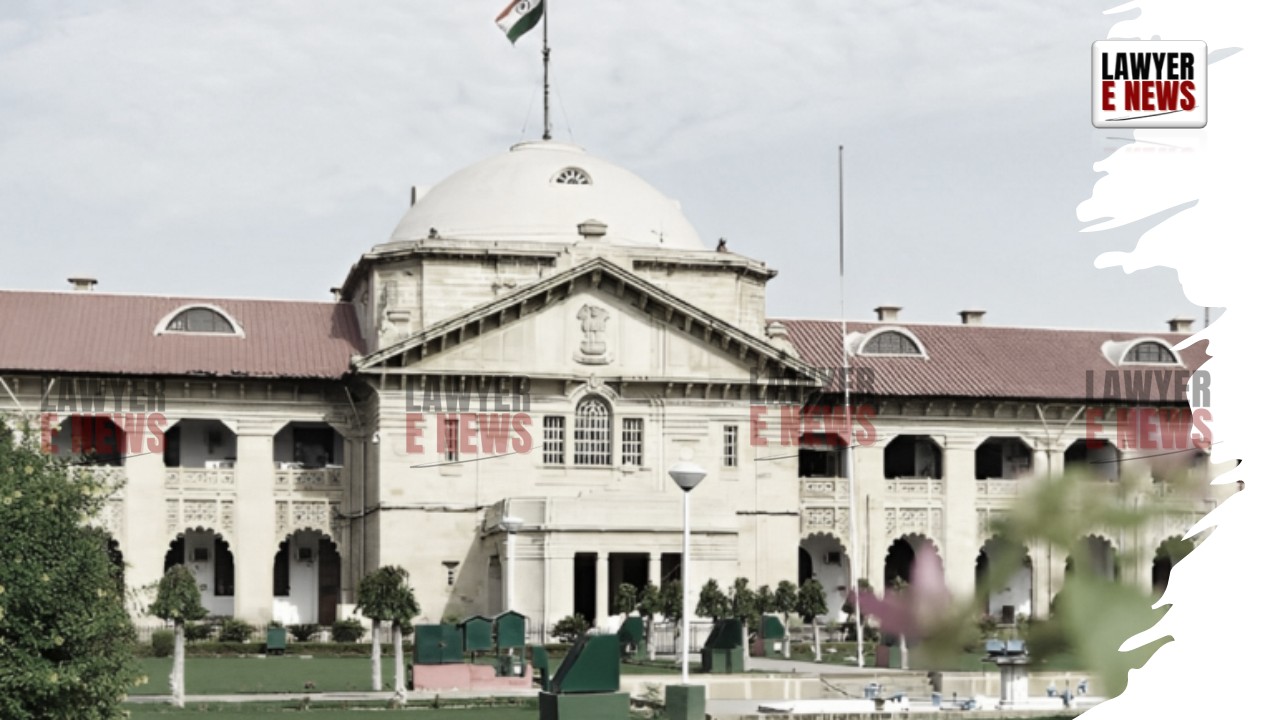
“Filing a forged document is a direct assault on the principle of maintaining the integrity of judicial process” – In a significant ruling Allahabad High Court dismissed a petition filed under Section 482 CrPC seeking quashing of criminal proceedings and a summoning order issued under Section 466 IPC. The Court found that the applicant, Gaurav Mehta, had submitted an altered ICICI Bank statement before the Maintenance Court during a Section 125 CrPC proceeding, thereby prima facie committing forgery within the scope of Sections 463 and 464 IPC.
The High Court held that the presentation of the tampered document to the Maintenance Court, omitting substantial debit and credit entries, constituted a prima facie offence under Section 466 IPC—relating specifically to forgery of documents in judicial proceedings. The judgment underscores the Court's intolerance for any attempt to mislead judicial forums by suppressing or altering financial data, especially in cases involving the welfare of minor children.
“The nature of injury may lie in the mind or reputation of the person deceived, not just financial loss” – Vimla v. Delhi Administration Applied
Gaurav Mehta and Anamika Chopra, after their marriage in 2004 and subsequent divorce in 2007, had been engaged in a protracted legal battle over the maintenance of their son. In the course of proceedings under Section 125 CrPC, the Family Court on 26.02.2019 directed the applicant to submit his financial details, including bank statements, salary slips, and asset declarations.
In purported compliance, Mehta filed what was presented as a “detailed statement” of his ICICI Bank salary savings account for the financial years 2011-12 to 2013-14. Based on these documents, the Maintenance Court granted maintenance of ₹15,000/month in November 2019.
However, following a criminal complaint filed by Ms. Chopra, investigation revealed serious discrepancies. The statements submitted in court were found to be unauthenticated and notably absent of high-value entries, including large deposits and withdrawals. Police, upon obtaining the original bank statements directly from ICICI Bank, confirmed that several material entries had been removed from the version submitted to court.
A chargesheet under Section 466 IPC was filed, and a summoning order was issued on 17.10.2019 by the Second Additional Chief Judicial Magistrate, Gautam Buddh Nagar. The applicant challenged both the summoning order and the entire criminal proceedings under Section 482 CrPC, asserting the absence of mens rea, wrongful gain, or loss.
“Once a party approaches the Court, he is bound to act fairly and with full disclosure” – High Court Emphasizes Judicial Integrity
Rejecting the argument that no pecuniary loss had been caused and that excerpts of statements were submitted in good faith, Justice Vikram D. Chauhan meticulously examined both the document filed before the Maintenance Court and the original ICICI bank statements on record. The judgment noted that over 60 financial entries—many of them reflecting substantial deposits and withdrawals—were found to be missing from the statement submitted to the court.
“It is not denied by the Applicant that the disputed statement filed before the Maintenance Court differs significantly from the original statement obtained by police from ICICI Bank,” the Court observed. It added, “The presentation of a doctored statement, under the pretense of it being a ‘detailed statement’, with high-value financial entries missing, prima facie constitutes forgery under Section 466 IPC.”
The Court referred to the definitions under Sections 463 and 464 IPC, emphasizing that a false document is one made dishonestly or fraudulently, with the intent to deceive or mislead. Referring to Vimla v. Delhi Administration, the Court clarified that injury in the context of fraud need not be economic and could relate to harm to reputation, mind, or judicial process.
“To summarize,” quoted the Court from Vimla, “the expression 'defraud' involves two elements: deceit and injury to the person deceived. Injury is not confined to economic loss but includes harm to body, mind, or reputation.”
In light of these principles, the Court ruled that even though the maintenance application was ultimately allowed, the act of misleading the court with a forged document—especially in proceedings impacting child welfare—was sufficient to constitute a criminal offence.
Forgery in Judicial Proceedings Must Be Dealt With Sternly to Preserve Public Trust in Courts
Justice Chauhan warned against the increasing trend of litigants misleading courts through tampered documents and false affidavits. The Court stressed, “Filing of forged document before a court of law gives an unfair advantage and disturbs the level playing field which the courts are bound to maintain. It is an insult to the majesty of law.”
The applicant had attempted to argue that the document was only an excerpt and not intended to deceive, but the Court rejected this justification outright. “Nowhere in the document or accompanying affidavit was it disclosed that the bank statement was an excerpt,” the Court noted. On the contrary, the document was headed as a “DETAILED STATEMENT,” with the ICICI logo prominently displayed.
Further, the Court clarified the scope of powers under Section 482 CrPC and the limited role of High Courts at the stage of quashing. It reiterated that, “At the stage of issuing process, the Magistrate is only required to be satisfied that a prima facie case exists, not whether a conviction is likely.” Citing State of Haryana v. Bhajan Lal, the Court noted that the case did not fall under any category warranting interference under inherent jurisdiction.
On the issue of the summoning order being issued on a proforma format, the Court declined to interfere, noting that full arguments on merits had been heard and adequate materials existed to sustain the prosecution. A remand to the Magistrate was found unnecessary.
The Court held that a prima facie case had been established under Section 466 IPC against the applicant. The attempt to mislead a court in a maintenance proceeding by submitting fabricated bank statements amounted to forgery of a judicial record.
Justice Chauhan concluded, “At this stage, the disputed document is prima facie false in nature, as it does not reflect the true and complete entries of the statement of account. The nature and motive behind the suppression of entries is a matter of trial.”
Accordingly, the application under Section 482 CrPC was dismissed, and the criminal proceedings in Criminal Case No. 5043 of 2019 were directed to proceed.
Date of Decision: December 8, 2025






