-
by sayum
25 August 2026 11:12 PM







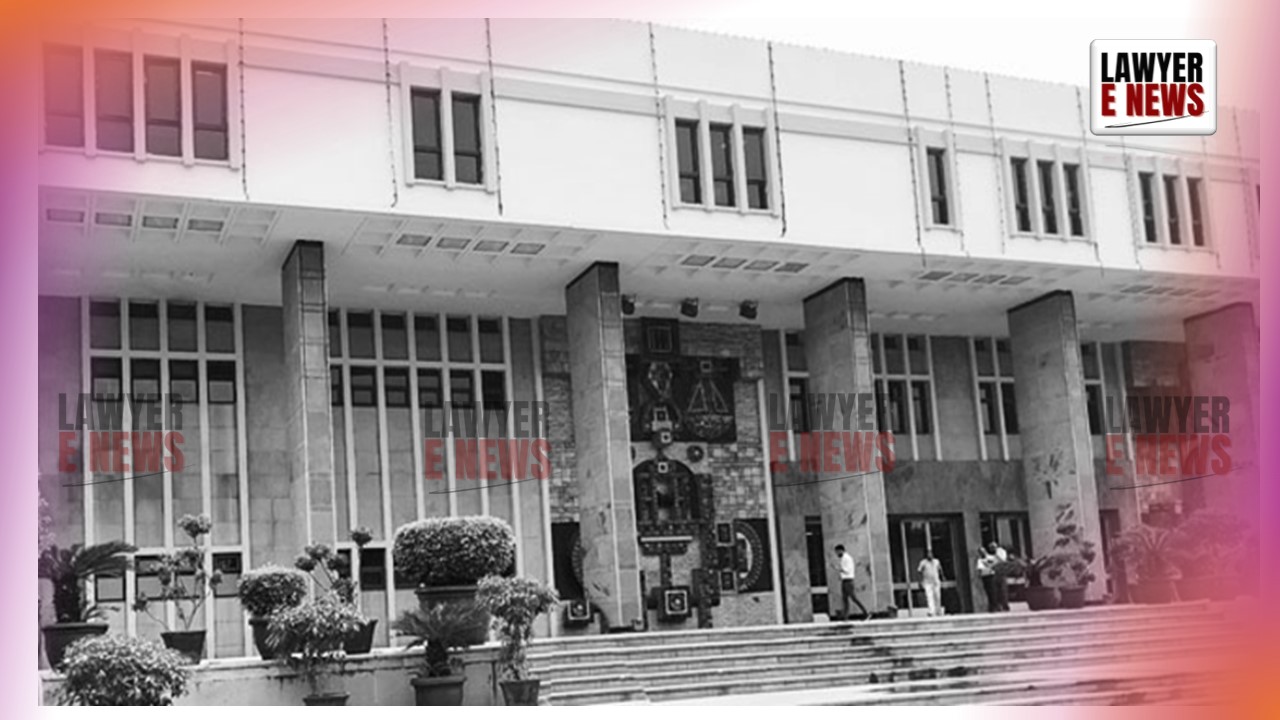
“Once dismissal is found to be stigmatic, opportunity to be heard must be granted, which is conspicuously absent in the present case.”, In a landmark verdict asserting the supremacy of constitutional safeguards and the inviolability of natural justice, the Delhi High Court delivered a reportable judgment in the civil writ petitions titled Deepak Kumar & Faruk Khan v. Directorate of Civil Defence, GNCTD & Anr., holding that summary dismissals of Civil Defence Volunteers (CDVs) under Section 6(2) of the Civil Defence Act, 1968, were illegal when stigmatic in substance. The Court held that both petitioners had been removed on allegations amounting to misconduct, and the authorities had misused the provision for dismissal simpliciter to avoid inquiry, thereby violating Section 6(1) and the principle of audi alteram partem.
The Bench comprising Justice C. Hari Shankar and Justice Om Prakash Shukla categorically held:
“The provisions of Section 6(2) were employed to circumvent the rigours of Section 6(1) of the Act… Once dismissal is found to be stigmatic, opportunity to be heard must be granted, which is conspicuously absent in the present case.”
Further, in a significant constitutional pronouncement, the Court read down Section 14(1) of the Act, holding that it cannot bar judicial review under Article 226. The Court affirmed:
“Section 14(1) does not act as an absolute embargo on the jurisdiction of this Court... The legality of the order passed under the Act ought to be subjected to judicial review.”
Dismissal Without Hearing for Alleged Misconduct Violates Section 6(1), Court Says
“We find the dismissal orders passed under Section 6(2) of the Act to be stigmatic in essence.”
On facts, both Deepak Kumar and Faruk Khan—long-serving CDVs with the Civil Defence Corps in Delhi—were dismissed during the early months of the COVID-19 pandemic. Deepak was unable to join pandemic duty due to illness, while Faruk, though not named in any FIR, was allegedly connected to an NGO involved in making face masks in violation of lockdown rules. In both cases, the authorities issued termination orders under Section 6(2) of the Civil Defence Act, citing “undesirability” of their continued service but without assigning reasons, without inquiry, and without hearing.
The petitioners challenged the dismissals as punitive and stigmatic in substance, masked as dismissal simpliciter, and argued that Section 6(1)—which mandates inquiry and hearing in case of misconduct—was wrongly bypassed.
The Court, applying the test laid down in Supreme Court judgments such as Mathew P. Thomas v. Kerala State Civil Supply Corpn. and Jarnail Singh v. State of Punjab, held that:
“The real face behind it is to get rid of the services of a probationer on the basis of misconduct... In such cases it becomes necessary to travel beyond the order of termination simpliciter.”
In Deepak’s case, the Respondents themselves admitted during arguments that the dismissal was for non-joining of COVID-19 duty, and in Faruk’s case, the connection to an FIR formed the foundation of his removal. Hence, the Court held both dismissals were in reality punitive, and therefore, non-compliance with Section 6(1) rendered them void.
Section 6(2) Is Not Unconstitutional per se — But Can’t Be Misused to Evade Due Process
The Court, while refusing to strike down Section 6(2), clarified its limited scope:
“Dismissal simpliciter, in itself, is a valid and well-settled principle in service law... However, if the power conferred under sub-section (2) is exercised to circumvent the rigours of Section 6(1), the legality of such dismissal will be amenable to challenge in a Court of law.”
Rejecting the argument that all dismissals under Section 6(2) carry stigma, the Court drew a clear line:
“A dismissal simpliciter, in its true sense, will not adversely affect the future prospects of a CDV... However, when the dismissal is based on allegations of misconduct, the protections of Section 6(1) must apply.”
The Court also examined the voluntary and honorary nature of service of CDVs, noting that Section 8 of the Civil Defence Regulations (CDR) and Standing Orders clarify that CDVs are not regular employees, and there exists no vested right to tenure. Nonetheless, the Court reiterated:
“Principles of justice and fairness warrant that a balance be met, and such discretion should not render a volunteer entirely at the mercy of such authority.”
Judicial Review Cannot Be Ousted: Section 14(1) Read Down
Perhaps the most significant constitutional outcome of the case was the reading down of Section 14(1) of the Civil Defence Act, which sought to bar courts from questioning orders made under the Act. The Court strongly reaffirmed the basic structure doctrine, ruling:
“Section 14(1) merely stipulates that the propriety of any order under the Act cannot be challenged in any Court. The legality, however, is always subject to judicial review.”
Citing decisions from Minerva Mills, Kesavananda Bharati, and L. Chandra Kumar, the Court held:
“The power of judicial review is an integral part of our constitutional system... Without it, the rule of law would become a teasing illusion and a promise of unreality.”
Therefore, while the Act may validly limit the Court from reviewing the merits of administrative discretion, it cannot shield illegal or unconstitutional actions from judicial scrutiny.
Petitions Partly Allowed: Dismissals Quashed, Reinstatement Not Granted Due to Service Discontinuation
Recognising that Civil Defence services had been discontinued vide GNCTD Circular dated 31 October 2023, the Court did not order reinstatement. However, it:
Quashed both dismissal orders as violative of law
Directed the authorities to reconsider the dismissal under Section 6(1) after affording opportunity of hearing
Ordered that the process be completed within three months
Directed that petitioners be given preference if CDV appointments resume in future
The Court concluded:
“The dismissal of the petitioners has been made under Section 6(1) of the Act in substance but cloaked under Section 6(2)... Authorities are directed to pass a speaking order after affording full opportunity of hearing.”
Key Takeaways from the Judgment
Dismissal under Section 6(2) must be truly simpliciter, not based on misconduct or allegations
Stigmatic dismissals, even if not explicitly reasoned, require inquiry and hearing under Section 6(1)
Judicial review cannot be barred by legislation—Section 14(1) cannot shield illegal dismissals
CDVs, though not regular employees, are entitled to fairness and natural justice
Volunteers serving critical roles during disasters must not be summarily discharged without process
This decision is likely to shape future jurisprudence relating to volunteer bodies like CDVs and Home Guards, especially on procedural safeguards in dismissals, and will act as a constitutional checkpoint against arbitrary exercise of statutory power under the guise of administrative efficiency.
Date of Decision: 9 December 2025