-
by sayum
25 August 2026 11:12 PM







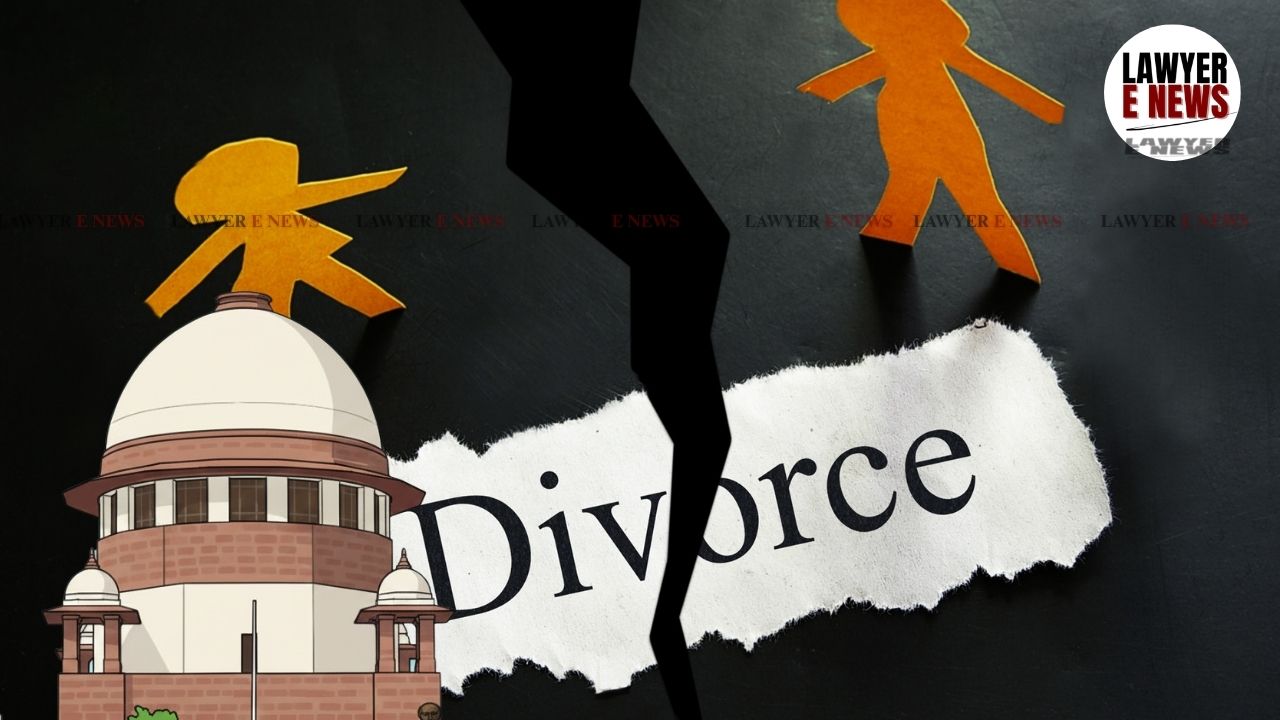
“Twenty-Four Years of Separation Leaves No Sanctity in Marriage”, Supreme Court of India holding that a marriage that has long ceased to function in reality must not be sustained as a legal fiction. Despite the High Court’s earlier refusal to grant divorce on the ground of “desertion,” the Supreme Court, exercising its extraordinary powers under Article 142, dissolved the marriage citing “irretrievable breakdown” and prolonged estrangement of over two decades.
Justice Manmohan, writing for the Bench, made it clear:
“The parties have been living separately for twenty-four years and there is no sanctity left in the marriage. Also, rapprochement is not in the realm of possibility.”
“Desertion Must Be Proven Beyond Doubt — And the Husband Failed to Do So”: High Court Had Rejected Divorce Claim
Earlier, the Gauhati High Court had reversed the divorce decree granted by the trial court, holding that the husband failed to establish the essential elements of “desertion” under Section 13(1)(i-b) of the Hindu Marriage Act. The High Court had observed:
“Not an iota of evidence has been adduced by the respondent to show the attempt made by him for reconciliation… the letter sent one year later reads more like an ultimatum than a plea for reunion.”
It further remarked that the husband's conduct was “demonstrably interested only in creating a hostile atmosphere at home… to obtain a decree of divorce by falsely projecting that she has deserted him.”
“Marriage Broken Beyond Repair — Refusal to Sever Legal Ties Only Perpetuates Cruelty”
Despite the High Court’s findings, the Supreme Court underscored the evolved judicial thinking on the concept of cruelty in matrimonial disputes, particularly in cases where reconciliation is no longer viable.
“Spouses have strongly held views with regard to the approach towards matrimonial life and they have refused to accommodate each other… This conduct amounts to cruelty to one another.”
The Court noted that no child had been born from the wedlock and that all efforts — including mediation — had failed:
“No efforts have been made since 2012, by either of the parties, to reconcile their matrimonial differences… there has been no cohabitation for twenty-four years.”
“Court Must Not Preserve a Marriage That Exists Only in Law”: Article 142 Invoked to Do Complete Justice
Importantly, the Court invoked its constitutional authority under Article 142 to override the procedural hurdle of "fault-based" divorce and grant relief on the basis of irretrievable breakdown. Citing the Constitution Bench in Shilpa Sailesh v. Varun Sreenivasan, the Court observed:
“No spouse can be compelled to resume life with a consort, and as such, nothing is gained by keeping the parties tied forever to a marriage which has, in fact, ceased to exist.”
The Bench emphasized that:
“The power to do ‘complete justice’ is not fettered by the doctrine of fault and blame. Where the marriage has completely failed and the parties will not cohabit together, continuation of the formal legal relationship is unjustified.”
“Perpetual Litigation Should Not Be Used to Sustain a Dead Marriage”
The Supreme Court was also critical of the long pendency of the case, noting that litigation began merely two years after marriage, and had continued for 22 years without resolution.
“It is in the best interest of parties and the society if ties are severed between parties in cases where litigation has been pending for a considerably long period of time.”
This observation reflects the Court’s growing inclination to prioritize substantive justice and mental peace over formalism in matrimonial disputes.
Marriage Dissolved, High Court Judgment Set Aside
The Court accordingly concluded:
“The marriage between the parties has irretrievably broken down… Accordingly, the order of the Additional Deputy Commissioner (Judicial), Shillong, insofar as it grants a decree of divorce to the parties is upheld and the impugned order of the High Court is set aside.”
Date of Decision: December 15, 2025