-
by sayum
29 August 2026 3:15 PM







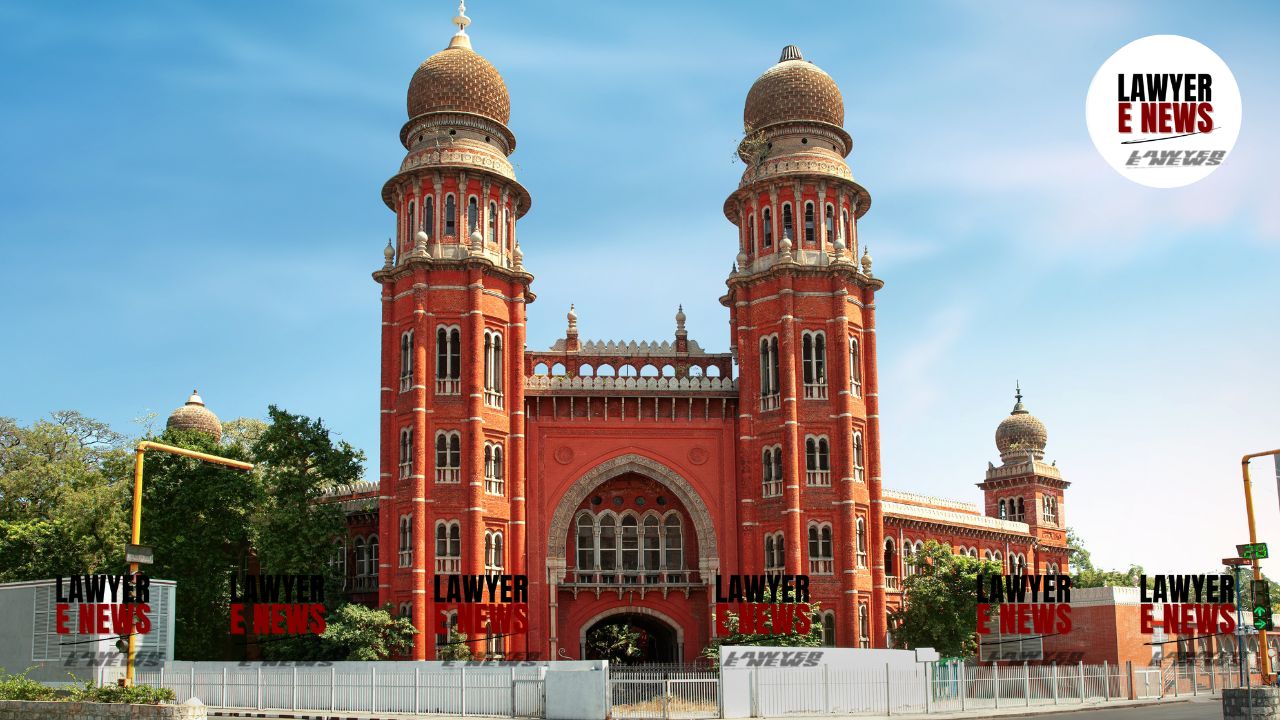
“The Petitioner Was Kept Completely in the Dark… This Procedure Has Caused Grave Prejudice”: Madras High Court delivered a hard-hitting judgment setting aside the Tamil Nadu Medical Council’s (TNMC) finding that no negligence was committed by a team of doctors accused of grievous medical errors in the diagnosis and treatment of a rare cancer.
Justice N. Anand Venkatesh came down heavily on the TNMC for conducting a one-sided inquiry behind closed doors, in violation of settled judicial guidelines, and ordered the matter to be re-investigated by a properly constituted expert committee.
The Court ruled that “the impugned order passed by the first respondent suffers from violation of the principles of natural justice since the inquiry was not conducted in a fair manner.” The proceedings were quashed and the Council was directed to conduct a fresh inquiry within four months.
“Not a Single Oncologist Was on the Panel”: Court Condemns Lack of Domain Expertise in Life-Threatening Cancer Case
The petitioner, a young advocate, had endured a terrifying ordeal that began on 13.2.2022 with abnormal vaginal bleeding. Following an MRI scan and biopsy, she was diagnosed at SRMC, Chennai, with a placental site trophoblastic tumour (PSTT)—a generally benign condition. Based on that, she underwent a hysterectomy on 15.3.2022.
Shockingly, a later test by Tata Memorial Hospital in Mumbai concluded that the actual diagnosis was Choriocarcinoma, a rare and malignant gestational cancer that had metastasized to her lungs and brain. What followed was a devastating series of chemotherapies and 12 sessions of whole-brain radiation, leaving her permanently debilitated.
The Court recorded that “the petitioner suffered further complications due to inadequate treatment, and ultimately had to undergo radiation that caused permanent hair loss and neurological issues.”
In her complaint to the TNMC, the petitioner alleged gross negligence on the part of the doctors—ranging from misdiagnosis and wrong surgery to delayed and inappropriate chemotherapy. Despite the gravity of the case, the Disciplinary Committee of the Council did not include even a single oncologist.
“The matter involved cancer and in spite of it, not a single member of the Committee was an oncology specialist,” the Court observed with dismay.
“Fairness Requires the Presence of Both Parties… Not Separate, Isolated Inquiries”: Court Upholds Procedural Safeguards in Medical Negligence Cases
The crux of the High Court’s intervention was the TNMC’s failure to follow due process in conducting its disciplinary inquiry.
Justice Venkatesh held that the inquiry fell foul of the law as laid down in P. Basumani v. TNMC (WP No.12303 of 2021), which had mandated that both the complainant and the accused doctors must be heard in each other’s presence to allow real-time rebuttal and transparency.
The Court stated: “Admittedly, in this case, the petitioner was called for the inquiry on one day and the doctors were called on the other day… the petitioner was completely kept in the dark as to the stand taken by the doctors before the first respondent.”
It emphasized that the minimum procedural safeguard is that “both parties must be present at the same time before the Enquiry Committee, so that the stand taken by one party can be heard and understood by the other party.”
Justice Venkatesh condemned the approach taken by the Council: “The guidelines issued in the P.Basumani case may be recommendatory, but till incorporated in formal regulations, they are binding procedural safeguards that must be respected.”
“The Disciplinary Board Acted as Enquiry Committee—This Is Legally Impermissible”: Court Orders Two-Stage Inquiry with Specialist Panel
The Court found another fatal flaw in the Council’s decision-making process. Instead of conducting a two-stage inquiry as judicially mandated—first by an expert Enquiry Committee and then by the Disciplinary Board—the Council bypassed the Enquiry Committee altogether and adjudicated the matter directly.
“The Disciplinary Board straight away conducted the inquiry whereas there must be a separate Enquiry Committee, which should conduct the inquiry and submit a report to the Disciplinary Board,” the Court noted.
It laid down clear directions for future procedure: “The inquiry must be conducted in two stages. The first stage is before the Committee of Doctors, which should also contain a specialist depending upon the area of specialization involved in that particular case… the Disciplinary Board shall act on the report of the Enquiry Committee.”
“This Is an Unfortunate Case Where the Petitioner Had to Undergo a Painful Journey That Ended in Brain Radiation”: Court Grants Relief and Orders Expedited Re-Enquiry
The Court refrained from going into the merits of the medical treatment at this stage but made it clear that “the impugned proceedings dated 08.01.2024 are hereby quashed” and “the entire process shall be completed within a period of four months.”
Taking note of the petitioner’s deteriorated health condition due to the treatment, the Court allowed her to be assisted during the new inquiry process:
“Since it was brought to the notice of this Court that due to the treatment undergone by the petitioner, she is weak and feeble… her husband or close relative can be present at the time of inquiry to assist her.”
Date of Decision: 22 August 2025