-
by sayum
30 August 2026 4:28 AM







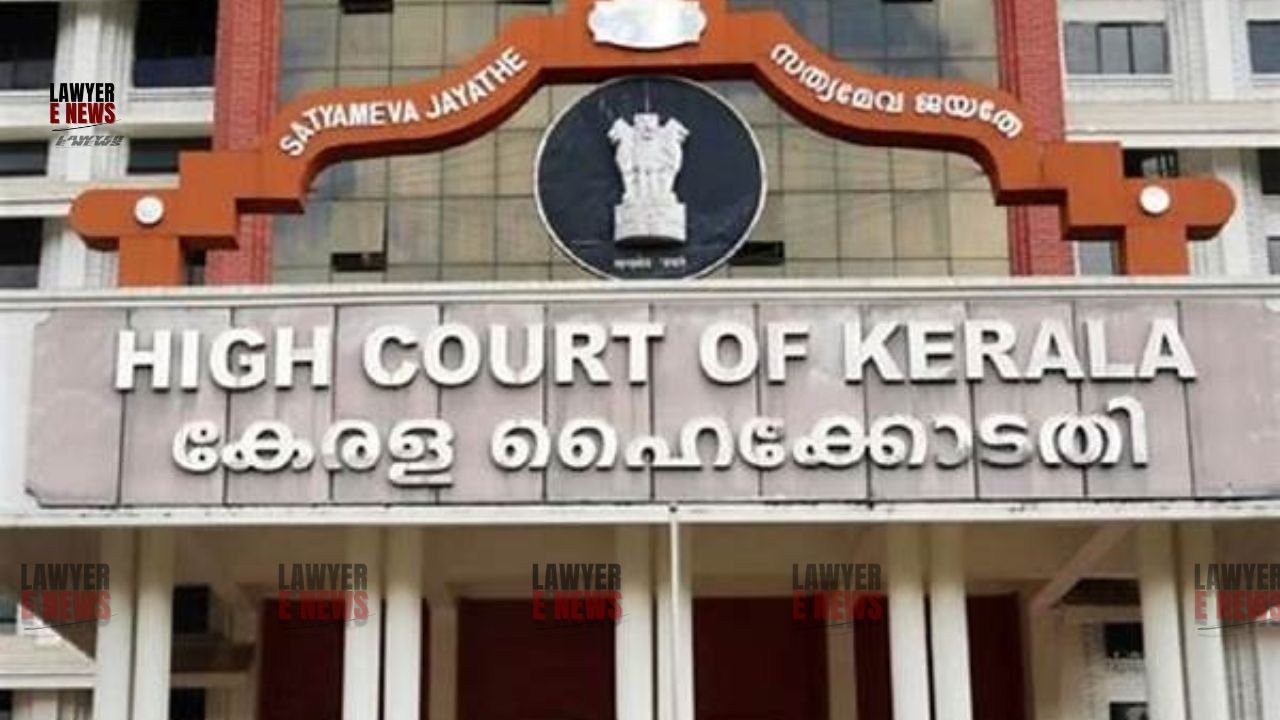
“No appointment of Managing Director can be made without effective consultation with the Board of Directors as mandated under Section 20(1)(c) of the Warehousing Corporations Act” – Kerala High Court (Justices Sushrut Arvind Dharmadhikari and Syam Kumar V.M.) dismissed two writ appeals challenging the order of a Single Judge that quashed the interim appointment of Sri Anil S. Das as Managing Director of the Kerala State Warehousing Corporation (KSWC). The High Court reaffirmed that the appointment was violative of Section 20(1)(c) of the Warehousing Corporations Act, 1962, and declared the continued interim tenure of the appointee impermissible in law.
The Court further directed the State and the Corporation to appoint a new Managing Director, strictly in accordance with the statute and on merit, within two months. Crucially, the Court barred any further extension of Sri Anil S. Das’s interim role beyond this window.
The matter arose out of a writ petition (W.P.(C) No. 6667 of 2023) filed by K. Vikraman, an experienced professional in the field of warehousing, challenging the appointment of Sri Anil S. Das, a retired police officer, as interim Managing Director of the KSWC.
Vikraman sought a writ of quo warranto, asserting that the appointment violated statutory provisions—particularly Section 20(1)(c) of the Warehousing Corporations Act, which mandates that the State Government must appoint a Managing Director in consultation with the Board of Directors. He also sought a declaration of his eligibility for the post, citing his professional domain experience.
A learned Single Judge, in a detailed judgment dated 20.12.2024, allowed the petition, finding that the appointment was made without the requisite statutory consultation and thus illegal. Appeals were subsequently filed by both Sri Anil S. Das (W.A. No. 2165/2024) and the State Government (W.A. No. 37/2025) challenging this decision.
The Court was called upon to determine whether the interim appointment of Sri Anil S. Das was made in compliance with Section 20(1)(c) of the Warehousing Corporations Act, and whether the writ of quo warranto was maintainable in such circumstances.
Violation of Statutory Mandate under Section 20(1)(c)
Section 20(1)(c) clearly provides that the appointment of a Managing Director must be made by the State Government in consultation with the Board of Directors and under intimation to the Central Warehousing Corporation. The Division Bench agreed with the Single Judge that:
“The learned Single Judge has passed a reasoned and speaking order dealing with each and every aspect of the matter… the appointment of Sri. Anil S. Das is illegal and cannot be sustained.” [Para 11]
The Court noted that there was no material to show that effective consultation with the Board had taken place. While the State attempted to argue that the appointment was temporary and in the interest of the Corporation, the Court firmly reiterated that procedural compliance is mandatory, even for interim appointments.
Writ of Quo Warranto Maintainable in Public Appointments
The Court held that a writ of quo warranto is the appropriate remedy when a public office is occupied by someone not appointed in accordance with law. It ruled that administrative performance or experience cannot cure the defect of a non-compliant process:
“Procedure trumps performance when the appointment itself is ultra vires the statute.” [Para 12]
Hence, the petition under Article 226 was maintainable as there was a clear breach of statutory procedure.
No Perpetuity in Interim Appointments
Emphasizing the temporary and transitional nature of interim appointments, the Bench rejected the justification for continued holding of office by Sri Anil S. Das:
“He cannot be permitted to continue as interim Managing Director indefinitely.” [Para 12]
The Court further observed that interim orders or procedural lapses cannot be used as a justification to continue in office contrary to law.
Details of the Judgment
Reiterating that Section 20(1)(c) is not a mere formality but a binding legal requirement, the Division Bench held that both the State and the Corporation acted contrary to law by bypassing the mandated consultative process.
The Court directed:
Dismissal of both writ appeals, thereby affirming the Single Judge’s order.
The Corporation must appoint a new Managing Director within two months from the date of the judgment.
Sri Anil S. Das shall continue as interim Managing Director only for the said two months.
No extension of his interim tenure shall be permitted beyond that period under any circumstances.
“It is made clear that in case the Corporation does not invoke the exercise to appoint a regular Managing Director, the appointment of Sri. Anil S. Das as interim Managing Director shall not be extended under any circumstances.” [Para 14]
The judgment ends with the Court vacating any interim orders previously granted, and declining to award costs.
In its decisive ruling, the Kerala High Court reaffirmed the primacy of statutory compliance in public appointments, stressing that interim arrangements must not become tools to sidestep legal norms. The Court made it clear that public functionaries must hold office only if their appointment is rooted in law, and not merely based on administrative convenience or subjective evaluations of performance.
By upholding the Single Judge’s order and quashing the interim appointment of Sri Anil S. Das, the Court has re-emphasized that public bodies cannot disregard statutory procedure, and quasi-permanent appointments through interim means cannot be permitted to undermine transparency and meritocracy.
Date of Decision: 30 May 2025