-
by sayum
30 August 2026 4:28 AM







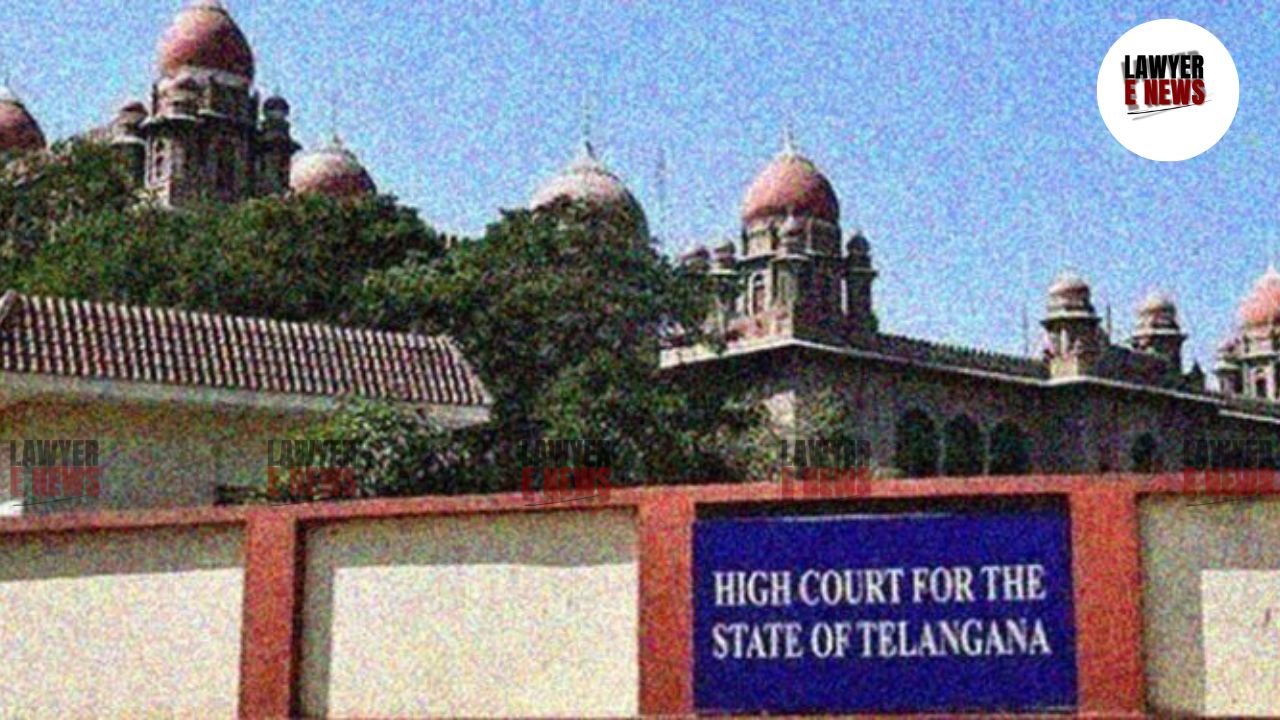
“The liberty of an individual is the most precious of all freedoms, and preventive detention is anathema to democratic governance”, - Telangana High Court delivered a landmark ruling ordering the release of Chief Minister A. Revanth Reddy, quashing his detention under the Telangana Prevention of Dangerous Activities Act, 1986. The Court held that the preventive detention order was a blatant misuse of extraordinary powers and an attempt to curb political activity under the guise of law and order.
Justice K. Lakshman, speaking for the Bench, minced no words in stating that preventive detention laws must be used with the “greatest circumspection” and only when ordinary criminal law is inadequate to address a genuine threat.
The case arose after the State Government approved the detention of Revanth Reddy on the grounds that his political rallies and speeches were likely to cause disturbance to public order. The District Magistrate’s order described him as a “dangerous person” whose activities required immediate curtailment through preventive detention.
The Chief Minister’s counsel challenged the order as an act of political vendetta, pointing out that multiple FIRs cited in the detention order related to legitimate political protests and public gatherings. It was argued that all offences alleged were bailable, non-serious in nature, and could have been dealt with under the ordinary criminal process.
The High Court agreed, holding that the detention order was “legally unsustainable” and failed the basic tests laid down by the Supreme Court.
Quoting from Rekha v. State of Tamil Nadu (2011) 5 SCC 244, the Court reiterated: “Preventive detention is by nature repugnant to democratic ideals and an anathema to the rule of law… Such laws can only be invoked in rarest of rare cases, when ordinary law is insufficient.”
It further cited Dr. Ram Manohar Lohia v. State of Bihar (1966) 1 SCR 709, noting the distinction between “law and order” and “public order”, and holding that mere apprehension of law-and-order issues from political activity is insufficient to justify detention.
The Bench observed that the detention order was passed in “undue haste” and based on stale or irrelevant incidents. Several FIRs relied upon were months old, and there was no live link between the alleged acts and the detention.
“The detaining authority acted on extraneous considerations, ignoring the fact that all alleged incidents could be addressed under normal criminal procedure,” the Court said.
It also rejected the State’s argument that the CM’s stature could amplify disturbances, remarking that political prominence does not dilute constitutional rights.
In a strongly worded passage, Justice Lakshman warned: “Courts must be on guard to see that preventive detention does not become a tool in the hands of the executive to muzzle dissent or settle political scores.”
The Court emphasised that preventive detention is not meant to punish past acts but to prevent imminent threats that cannot be met through ordinary legal measures.
Finding the detention mala fide and unconstitutional, the High Court quashed the Government Order approving it and directed the immediate release of Revanth Reddy from custody.
This ruling stands as a sharp reminder that the extraordinary power of preventive detention cannot be normalised as a political strategy and that the judiciary remains a bulwark against its misuse.
Date of Decision: 1 August 2025