-
by sayum
29 August 2026 3:15 PM







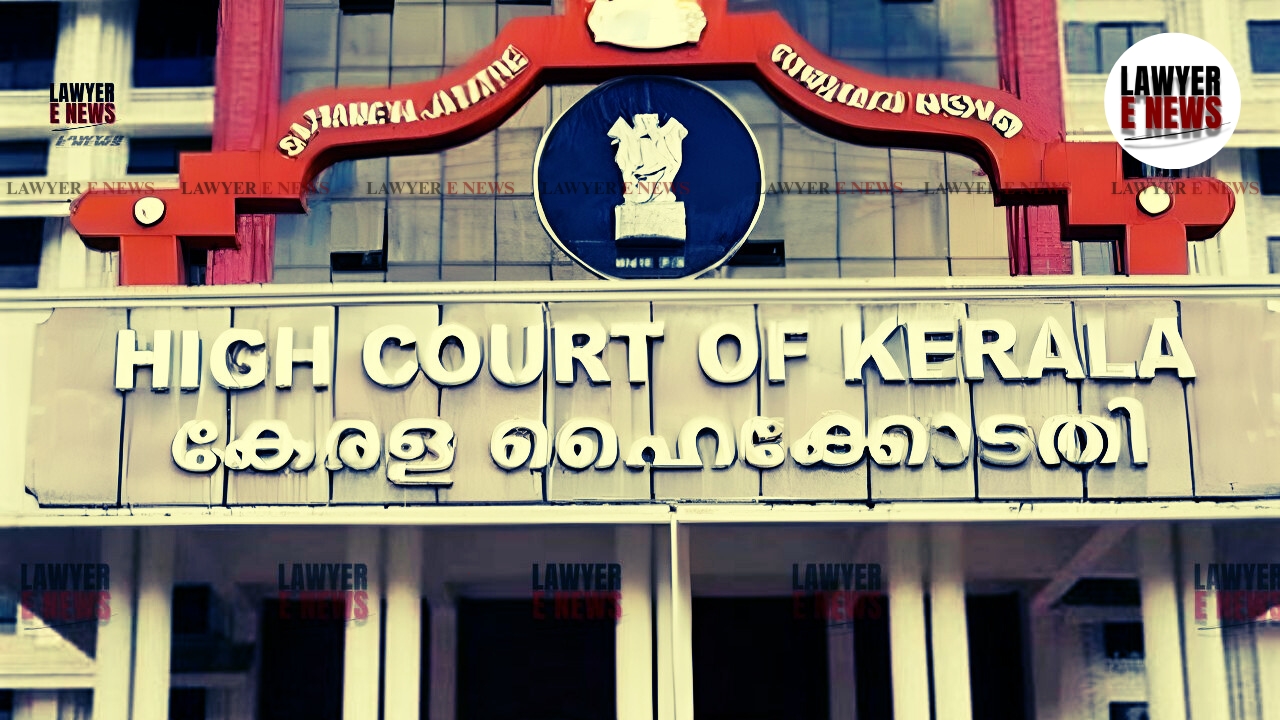
“Plaintiff Cannot Rely on Presumption After Failing to Prove Payment of Sale Consideration”, Kerala High Court delivered a critical judgment holding that where the consideration alleged by the plaintiff is disproved, the presumption under Section 118(a) of the Negotiable Instruments Act, 1881, stands rebutted, and the plaintiff must independently prove the liability. The judgment overturns the decree granted by the Sub Court, Alappuzha in O.S. No. 11 of 2016, which had allowed a claim based on alleged payments acknowledged via issued cheques.
The Division Bench comprising Justice Sathish Ninan and Justice P. Krishna Kumar allowed the appeal filed by Jayachandran (Defendant) and dismissed the money suit filed by Muhammed Haris (Plaintiff), declaring that the entire basis of the suit — claimed payments of ₹15,80,040 on three occasions — was factually and legally untenable.
"Plaintiff Failed to Prove Consideration for Cheques — Presumption Stands Rebutted"
The Court observed that while Section 118(a) of the NI Act allows the presumption of consideration in favour of the holder of a negotiable instrument, such a presumption is conditional upon the plaintiff establishing the foundation of his claim.
“When such form of consideration as pleaded by the plaintiff is disproved, the presumption under Section 118(a) of the Negotiable Instruments Act stands rebutted. Then it is for the plaintiff to establish the liability, independent of the presumption.” — Para 19
The plaintiff’s case rested on the argument that he had paid ₹15,80,040 each on 19.12.2015, 19.01.2016 and 19.02.2016 towards the sale of a resort property, and that three cheques (Exts.A5 to A7) were issued by the defendant acknowledging those payments. However, the Court categorically found that no credible evidence existed to support the payment of such amounts.
“Claim That Seller Issued Cheques to Buyer to Acknowledge Advance Is Inherently Unbelievable”
In a particularly striking observation, the Court rejected the logic of the plaintiff’s case:
“It is quite strange that cheques are claimed to have been issued by the seller to the purchaser to acknowledge receipt of advance sale consideration. Such a story does not stand to reason and is difficult to accept.” — Para 13
The Court also expressed disbelief at the specificity of the amounts claimed (₹15,80,040), noting that no plausible explanation was given for this particular figure being paid three times. It further noted that the plaintiff failed to explain why prior cheques issued (₹5 lakhs and ₹20 lakhs) were not encashed, and yet he allegedly made further huge payments in cash within days of such dishonoured cheques.
“Presumption Under NI Act Becomes Inapplicable When Plaintiff Alleges Different Consideration”
Citing the landmark judgment of the Supreme Court in K.P.O. Moideenkutty Hajee v. Pappu Manjooran [(1996) 8 SCC 586], the Court reiterated that:
“Once the plaintiff pleads consideration different from the one found in the negotiable instrument, the statutory presumption does not arise.” — Para 20
The Court emphasized that when a particular form of consideration is pleaded, and that plea is disproved, the plaintiff cannot take shelter under the statutory presumption.
Trial Court’s Judgment Flawed in Drawing Presumption Without Proof
The trial court had granted a money decree in favour of the plaintiff by invoking Section 118(a) of the NI Act and relying upon oral evidence of plaintiff’s employee (PW3). However, the High Court dismissed PW3’s testimony as unreliable:
“On a reading of his evidence, we find that his evidence is unbelievable, that he is not a trustworthy witness.” — Para 18
Additionally, the Court noted that the plaintiff failed to produce any independent proof of source of funds, nor were there any endorsements on the written sale agreement reflecting these alleged payments.
“Plaintiff Must Prove Transaction When Presumption Falls — Cannot Simply Rely on Cheques”
Summing up its conclusion, the Court observed:
“The plaintiff is to establish the liability of the defendant, independent of such presumption, in which, the plaintiff has miserably failed.” — Para 21
Accordingly, the decree and judgment of the trial court were set aside, and the suit was dismissed in its entirety.
This judgment provides critical guidance on the limitations of presumptions under Section 118(a) of the NI Act, reaffirming that:
Presumption of consideration is not automatic — it must be anchored in factual plausibility.
Where the plaintiff pleads a specific form of consideration and fails to prove it, the burden to prove liability shifts back.
Issuance of a cheque is not by itself sufficient to secure a decree in absence of credible proof of actual transaction.
Date of Decision: 20 August 2025