-
by sayum
11 August 2026 2:00 PM







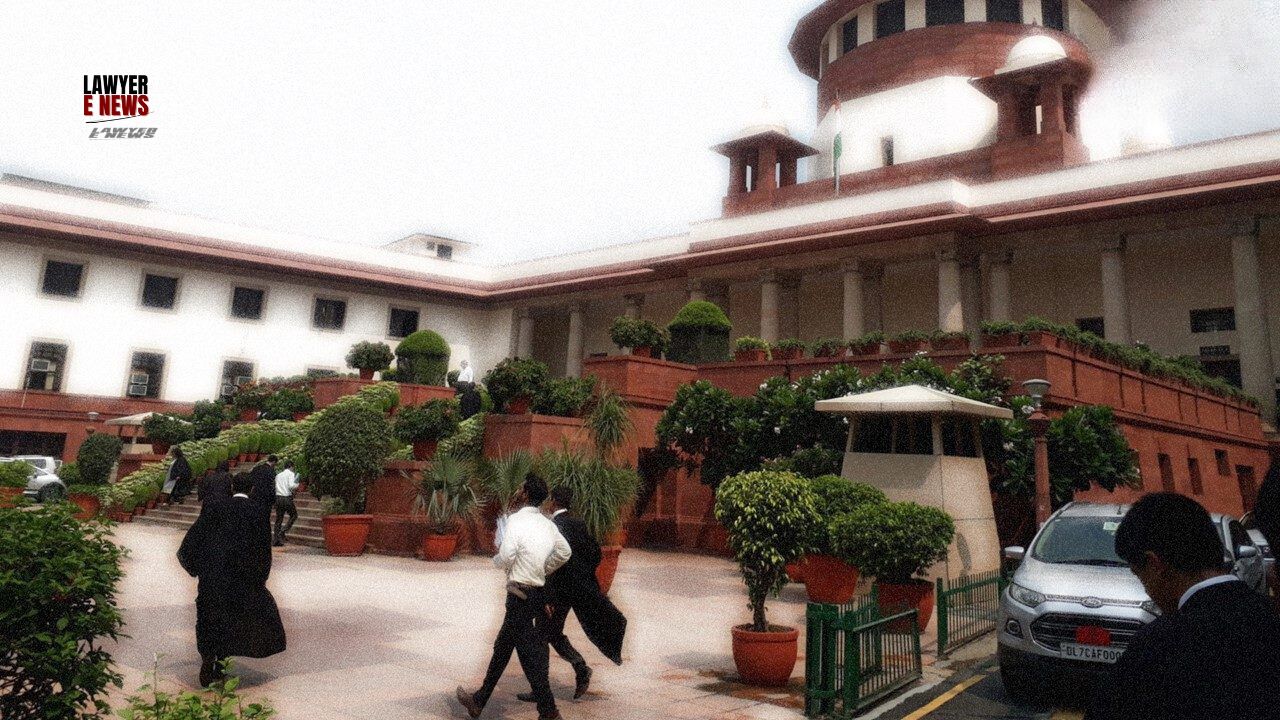
“You Need Not Wield the Weapon, But You’re Guilty When You Exhort Others to Kill” — In a powerfully reasoned decision delivered on April 16, 2025, the Supreme Court in R. Baiju v. State of Kerala, SLP (Crl.) No. 12926 of 2024, affirmed the conviction of a politically influential municipal councillor for culpable homicide not amounting to murder. Though the appellant had not physically attacked the victim, the Court held that his presence, provocation, and exhortation—“kill them”—made him equally liable under Section 304 Part II read with Section 120B of the IPC. Rejecting arguments of parity with an acquitted co-accused, the Court declared that “A6 definitely had the knowledge that the attack perpetrated by the accused could lead to death, and the attack was carried out under his watchful eyes.”
The altercation that ultimately led to a brutal killing began in a seemingly routine disagreement—over the purchase of coir mats. The appellant, A6, a powerful municipal councillor and chairman of the standing committee, visited the house of the deceased on November 29, 2009, attempting to sell mats made by Kudumbashree women’s groups. The deceased refused. In response, the appellant threw a mat at him and said, “Burn it if you don’t want it.” Hours later, the deceased’s son raised a query in the Ward Council meeting questioning whether the purchase of such mats was mandatory—a move that further infuriated the appellant.
That very night, accused A1 to A4 stormed into the home of the deceased. A6 stood outside. What he did not do was perhaps more damning than what he did: he did not enter the house, but loudly exhorted the others to kill, according to eyewitness PW1. The result was fatal. The deceased suffered severe blows to the head, and despite hospitalization, succumbed on December 8, 2009.
“This Is Not a Case of Mere Presence — It Was Presence with Provocation and Purpose”
Rejecting the argument that the appellant was wrongly convicted while another accused, A5, was acquitted, the Court underscored that the appellant’s involvement was not passive. “The presence of A6 in the vicinity of the crime scene, prior to the crime, in the company of the other accused, also stood established,” the Court wrote. “His was not a coincidental presence like A5, who lived nearby. A6 had no such explanation.”
Witnesses consistently spoke of A6’s confrontation earlier in the day, his altercation in the evening council meeting, and finally, his exhortation to kill at the crime scene. The Court observed, “The sequence of provocations and the appellant’s role forms an unbroken chain leading to the deadly incident.”
“Conspiracy Is Often Hidden, But Its Footprints Are in the Conduct and Circumstances”
Refusing to accept the defence’s argument that the conspiracy charge was speculative, the Supreme Court turned to established precedent. Citing State of Tamil Nadu v. Nalini, the Court reminded that conspiracy, by nature, is secretive: “No direct evidence may surface. It is by inference from conduct, circumstance, and the chain of events.”
Here, the Court found that A6 had displayed hostility in the afternoon altercation, again in the evening council session, and ultimately stood outside the house of the deceased while the assault unfolded. “He saw the accused picking up wooden logs. He saw them enter. He exhorted them to kill. That is not the act of a bystander,” the judgment declared.
“If the Investigation Was Manipulated, It Was to Shield Him — Not to Doubt His Guilt”
The defence pointed out that A6 was not named in the initial police statements and was added later. The Court, however, found this omission not exculpatory, but rather symptomatic of deliberate suppression. The investigating officer (PW18) himself admitted that the appellant was a powerful leader in the ruling political party, and that there was political interference.
“It was not that the witnesses did not speak. It was that the investigators chose not to listen,” the Court said. “Statements were not truthfully recorded. That omission cannot now be a weapon in the appellant’s favour.”
“A Councillor’s Power Cannot Shield Criminal Accountability”
In concluding its judgment, the Supreme Court underlined that the appellant was no ordinary man. He was the Chairman of the Municipal Standing Committee, an elected representative with both influence and responsibility. “A6, as a leader, had a heightened obligation to defuse tensions, not ignite them,” the Court reflected.
Instead, he weaponized a minor civic disagreement into a politically-charged vendetta that resulted in a man’s death.
“Even if the accused did not come with deadly weapons, they picked up the logs before his eyes. They were invited into the house, and under his gaze, they attacked without provocation. A6 must bear the legal and moral responsibility.”
Dismissing the appeal, the Court upheld the conviction and sentence of 10 years rigorous imprisonment under Section 304 Part II read with Section 120B, along with other punishments. “There is absolutely no reason to interfere with the conviction and sentence,” the Court ruled.
This judgment serves as a warning that influence, political clout, or strategic silence do not exonerate culpability. The Supreme Court has laid down that where a person instigates, enables, and watches a crime unfold, the law will hold him equally responsible.
Date of Decision: April 16, 2025