-
by sayum
08 August 2026 1:54 PM







“Restitutionary Damages Are Not Penalties – Boards Can Act Proactively to Prevent Pollution”: Supreme Court Clarifies Environmental Regulators' Powers Under Sections 33A & 31A – Restitutionary and Preventive Directions Are Valid, But Must Be Backed by Subordinate Legislation
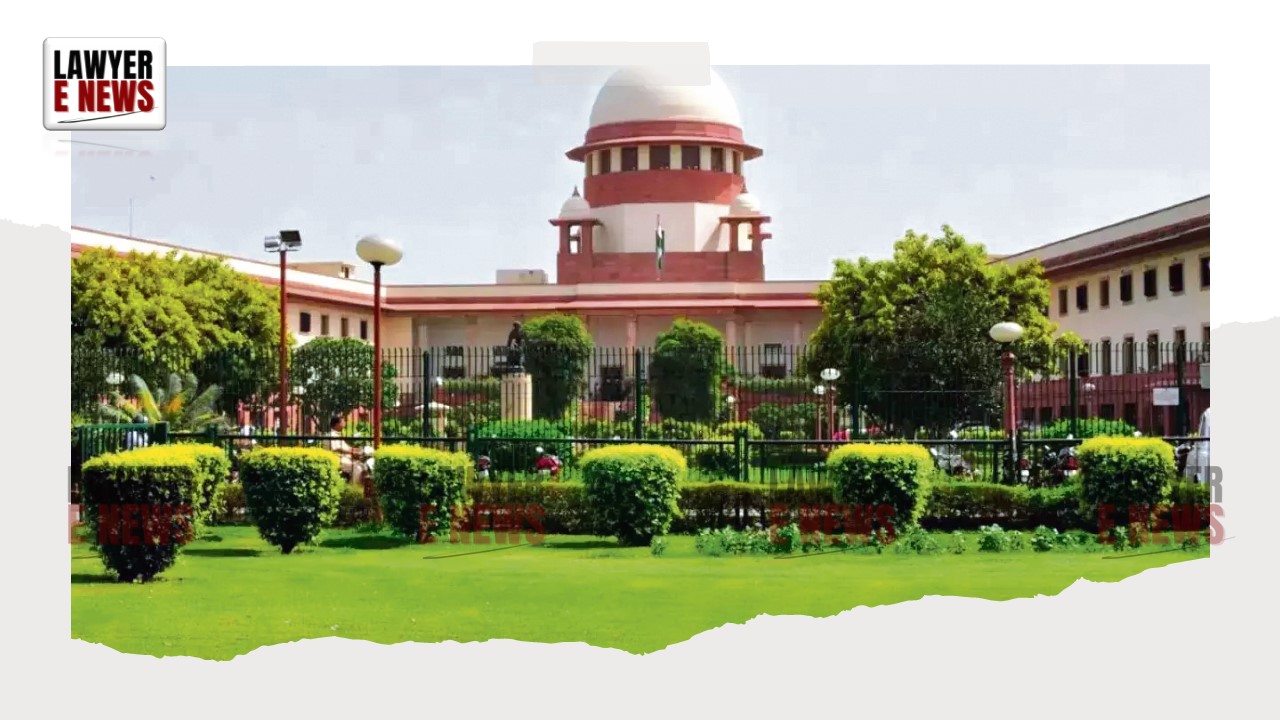
Supreme Court of India, delivered a landmark judgment , settling the long-contested issue of whether Pollution Control Boards have the legal authority to impose environmental damages and require bank guarantees to prevent potential pollution, even before proven damage occurs.
The Court emphatically held that Sections 33A of the Water (Prevention and Control of Pollution) Act, 1974, and Section 31A of the Air (Prevention and Control of Pollution) Act, 1981 empower State Pollution Control Boards (PCBs) to issue such directions. However, the Court laid down that these powers are remedial, not punitive, and must be exercised through a framework of subordinate legislation ensuring transparency, natural justice, and fairness.
"We hold that the Pollution Control Boards can impose and collect restitutionary and compensatory damages... or require furnishing bank guarantees as an ex-ante measure towards potential environmental damage.” – Justice P.S. Narasimha, para 28
DPCC’s Show-Cause Notices for Damages Were Quashed by High Court as 'Lacking Legal Authority'
The dispute stemmed from a series of show-cause notices issued in 2006 by the Delhi Pollution Control Committee (DPCC) to large commercial and residential developments accused of operating without statutory environmental clearances.
The Delhi High Court, both at the single-judge and Division Bench levels, held that the DPCC lacked power to impose “damages” or demand bank guarantees under Sections 33A and 31A. The Court observed that penalties under environmental laws can only be imposed by courts following the procedure laid down in Chapter VII of the Water Act and Chapter VI of the Air Act.
“The levy of penalty is without any authority of law... the role of the Pollution Control Boards is to initiate proceedings before the Court of Competent jurisdiction and no more.” – Delhi High Court, para 42
The Supreme Court reversed this restrictive interpretation.
Can Regulatory Boards Demand Pre-emptive Environmental Damages Without Court Trial?
The core question before the Supreme Court was whether the regulatory boards can, under Sections 33A and 31A, issue directions requiring payment of fixed sums or bank guarantees, not as penalties but as remedial or preventive measures – even before actual pollution occurs.
“Polluter Pays Includes Ex-Ante Measures – Prevention is as Important as Cure”
The Court affirmed that Indian environmental law, especially under the “Polluter Pays” principle, allows anticipatory action, even in the absence of actual damage, if there is a reasonable likelihood of harm.
“Application of the Polluter Pays principle... is triggered even when a potential risk or a likely adverse impact to the environment is anticipated, irrespective of whether or not prescribed thresholds... are breached.” – Para 27(III)
“Environmental regulators have a compelling duty to adopt and apply preventive measures irrespective of actual environmental damage.” – Para 27(IV)
Citing precedents such as Indian Council for Enviro-Legal Action (1996), M.C. Mehta v. Kamal Nath (1997), and Vellore Citizens’ Welfare Forum (1996), the Court reaffirmed that remedial action can include monetary costs and is distinct from criminal penalties, which require a court trial.
Restitution ≠ Punishment: Supreme Court Differentiates Between Penalty and Environmental Restoration
The Court drew a crucial legal distinction:
“There is a distinction between an action for environmental damages for restitution or remediation and imposition of penalties or fines levied at the culmination of a punitive action.” – Para 18
“Restitutionary directives are a necessary concomitant of both the fundamental rights of citizens who suffer environmental wrongs and the duties of a statutory regulator informed by Part IV A of the Constitution.” – Para 16
The Court thus recognised that Sections 33A and 31A empower Pollution Control Boards to issue restorative or anticipatory directions, which do not require adjudication or a finding of guilt.
“Statutory Mandate Is Broad, But Exercise of Power Must Be Transparent and Rule-Based”
While upholding the powers of the Boards, the Court cautioned against arbitrary exercise:
“While we hold that the Boards have the power... this power must always be guided by two overarching principles — it cannot be exercised arbitrarily, and the process must be infused with transparency.” – Para 33
The Court directed that these powers can be exercised only through subordinate legislation — rules and regulations laying down the quantum of damages, method of assessment, and principles of natural justice.
“At present, damages are being levied... on the basis of certain guidelines issued by the Central Pollution Control Board... It is important that these guidelines are reviewed and issued in the form of Rules and Regulations.” – Para 35
No Revival of Old Notices – But Legal Principle Clarified for Future
The show-cause notices issued by DPCC in 2006, which were quashed by the High Court, will not be revived: “We allow the appeal on the principle of law, but there shall not be any consequential direction for reviving the show-cause notices...” – Para 38
Any amounts already collected must be refunded by DPCC within six weeks.
Legal Green Light for Pollution Control Boards to Act – But Must Be Guided by Fairness and Procedure
This landmark ruling clarifies that Pollution Control Boards are not helpless to act until pollution occurs, nor are they restricted to court complaints for every violation. They can take remedial and preventive action, including monetary directions, under Sections 33A and 31A, provided these are not punitive and are exercised transparently.
“Boards must have the power and discretion to decide the appropriate action... punishment or immediate restoration or both.” – Para 32
In doing so, the Court struck a balance between empowering environmental regulators and ensuring procedural safeguards, potentially reshaping environmental enforcement in India.
Directions Issued by the Supreme Court:
Appeal Allowed – High Court’s judgment on the legal principle set aside.
Show Cause Notices of 2006 Not Revived – No retrospective action.
Boards Empowered – To impose restitutionary damages and seek bank guarantees under Sections 33A and 31A.
Rules Needed – Exercise of such power only through subordinate legislation incorporating natural justice.
Date of Decision: August 4, 2025