-
by sayum
29 August 2026 9:28 AM







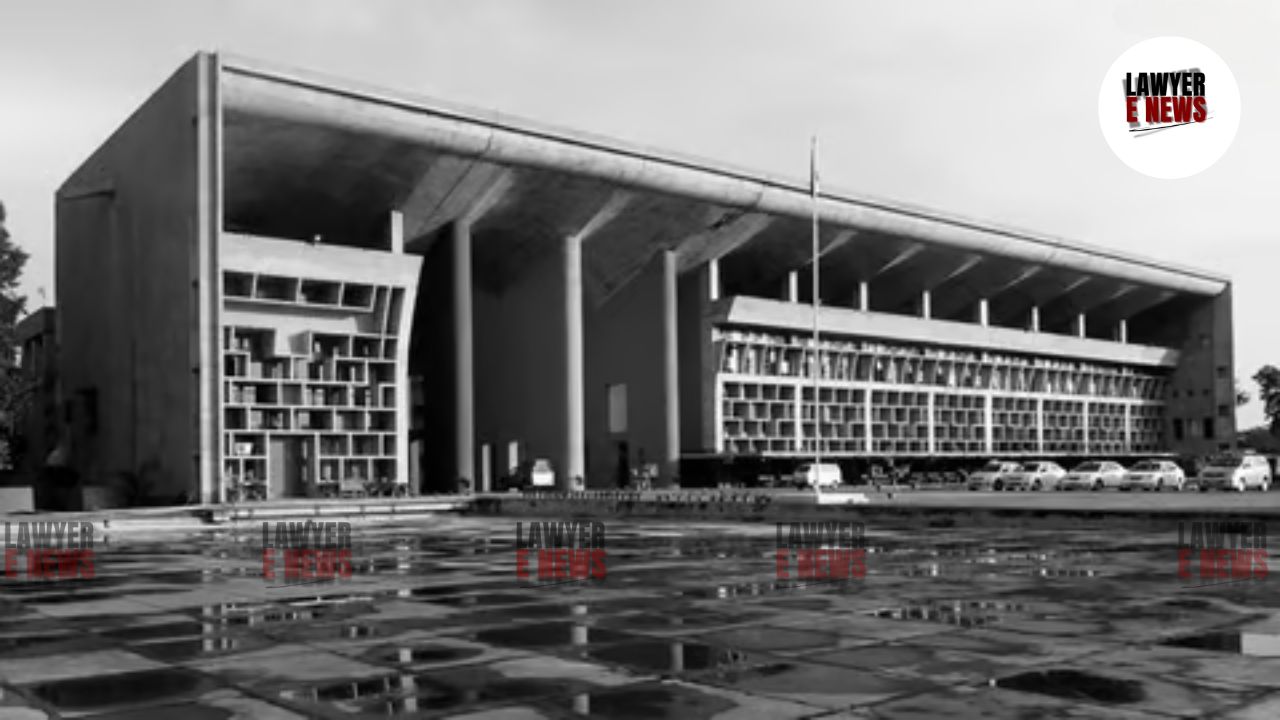
“It is abundantly clear that a non-cognizable offence is made out and police cannot shy away from its responsibility of lodging a non-cognizable report” — Punjab & Haryana High Court dismissed a plea filed by TV Today Network Limited, challenging the initiation of criminal proceedings for defamation under Section 500 IPC. High Court upheld the Judicial Magistrate’s authority to direct police to investigate a non-cognizable offence under Section 155(2) CrPC.
Reiterating the independence of criminal prosecution in defamation cases, the Court observed, “The right to file civil suit for defamation is independent of criminal case and in no way hinders the prosecution thereof.”
“No Exception Can Be Taken to the Procedure Followed — Magistrate Has Jurisdiction to Order Investigation into Non-Cognizable Offences”
The case arose when a cease and desist notice was served to digital platforms like Google, Facebook, Twitter, and others on behalf of the second respondent, demanding removal of URLs and videos allegedly maligning his reputation. Subsequently, a complaint was filed on 6.12.2022 against TV Today Network, accusing it of a “criminal conspiracy to defame” the complainant and damage his political and business career.
Though the District Attorney opined that no cognizable offence was made out, he acknowledged a prima facie case of defamation. This led the complainant to approach the Judicial Magistrate under Section 155(2) CrPC, resulting in a direction on 21.12.2022 to register and investigate the matter as a non-cognizable case.
Following the direction, the police registered NCR No. 65/2022 and after investigation, a chargesheet was filed under Section 500 IPC. The accused was summoned by the Magistrate on 6.6.2024.
Challenging these proceedings, the petitioner contended that Section 199 CrPC creates a bar on police investigation or prosecution in defamation matters and that the complainant’s only remedy was a private complaint before the Magistrate. Heavy reliance was placed on the Allahabad High Court’s decision in Kanhaiya Lal v. State of U.P., and Harjit Singh Hassanpuri v. State of Punjab.
“Magistrate Never Invoked Section 156(3) — Complaint Procedure Was Lawfully Initiated Under Section 155(2)”
Dismissing the petitioner’s objection, the High Court clarified that Section 199 CrPC only bars recourse to Section 156(3) CrPC (which relates to registration of FIRs and investigation in cognizable offences) in defamation cases, but does not bar the Magistrate from exercising power under Section 155(2) in relation to non-cognizable offences.
The Court noted, “In the instant case, such a situation does not arise as the Magistrate has not issued any direction under Section 156(3) Cr.P.C. to register an FIR, nor has any been registered.”
The judgment further held, “Investigation in the case has been carried out on the basis of complaint by the second respondent disclosing non-cognizable offence against the petitioner, and chargesheet has been filed pursuant to directions issued under Section 155(2) Cr.P.C.”
Emphasizing the statutory mechanism, the Court explained, “Apparently, Section 155 provides that on receiving information, an officer in charge of the police station is required to enter substance of the information in a book, and refer the informant to the Magistrate. Investigation of such a case cannot be carried out without an order by the Magistrate concerned.”
“Grievance Regarding Defamation Can’t Be Stifled on Technicalities — Civil and Criminal Remedies Are Not Mutually Exclusive”
The Court declined to accept the petitioner’s plea that the respondent ought to have only filed a private complaint and not involved police investigation. The Magistrate, upon satisfaction of prima facie material, was held to be justified in allowing police investigation into the allegations of defamation.
As noted in the Magistrate’s impugned order dated 21.12.2022:
“The report of investigating agency and the legal opinion of Ld. DDA to the office of C.P. Gurugram explicitly mention that prima facie offence of defamation is made out… Thus, it is abundantly clear that a non-cognizable offence is made out and police cannot shy away from its responsibility of lodging a non-cognizable report.”
The High Court also rejected the petitioner’s reliance on prior judgments, observing, “The other judgment rendered in Harjit Singh Hassanpuri also has no application to the facts of the instant case, as therein the Court primarily relied upon Kanhaiya Lal, which does not deal with the issue at hand.”
Petition Dismissed — Chargesheet Valid, Magistrate’s Order Upheld
Holding the entire process to be lawful and aligned with procedural safeguards, the Court concluded: “In view thereof, there is no merit in the petition and it stands dismissed.”
The judgment reaffirms the permissibility of police investigation in non-cognizable defamation complaints—when initiated through proper judicial order—and clarifies that Section 199 CrPC cannot be interpreted as a bar to such lawful recourse.
Date of Decision: 06 August 2025