-
by sayum
29 August 2026 3:15 PM







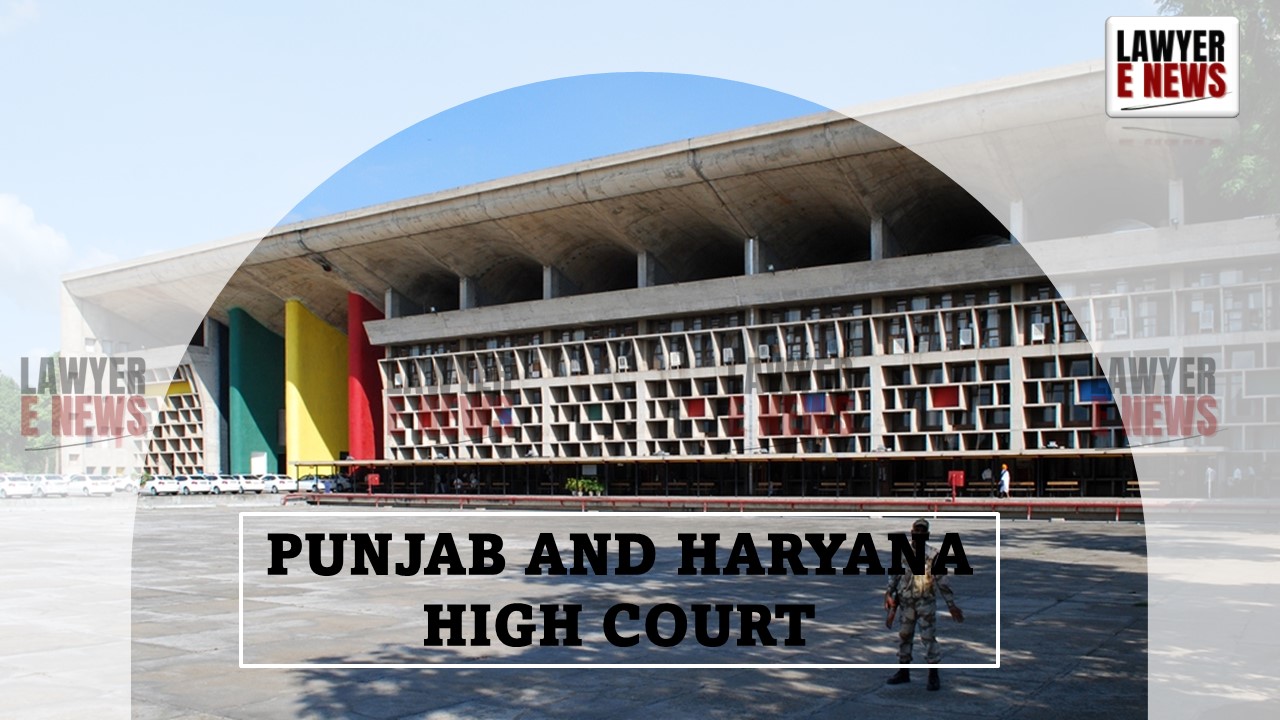
“Judiciary is the third pillar of democracy… the edifice of democracy will crumble if any of the three pillars is weakened…Issue the fire safety certificate within one week—or we will implead MC Chandigarh.” - Punjab & Haryana High Court passed a time-bound interim order tightening the screws on administrative inaction over judicial infrastructure. The Bench directed that the Municipal Corporation, Chandigarh, must issue a fire-safety certificate for the newly allotted Sector-17 premises within a week, warned of impleadment upon default, mandated “green pavers” in the kutcha parking within 60 days, and pressed the U.T. Administration to adopt a “facilitative stance” toward urgent space augmentation for the High Court. The ruling underscores that judicial functionality is a democratic imperative, not a discretionary convenience.
Proceeding in a continuing PIL on a “holistic plan” for court infrastructure, the Bench recorded that, pursuant to earlier orders, Additional Solicitor General Satya Pal Jain chaired a joint meeting on 07.08.2025 with the Bar and the U.T. Administration, and a follow-up was scheduled for 20.08.2025. The Court directed that the minutes of both meetings be brought on record on the next date.
At the forefront was safety compliance for the Sector-17 building, already handed over for administrative branches of the High Court. The Court noted with concern that the Municipal Corporation had not issued the requisite fire-safety certificate, “which disables the High Court from taking advantage of the possession handed over of the said four floors including basement,” and therefore ordered issuance “within next one week,” warning that otherwise it would implead the Corporation and “take action in accordance with law.”
Parallelly, easing day-to-day functioning through immediate parking relief was treated as non-negotiable. After the Bar confirmed concurrence with the Building Committee minutes, the Court directed completion of “laying green pavers in kutcha parking within sixty days from today.”
For medium-term accommodation, the Bench took judicial notice that the U.T. Secretariat had shifted to a new complex, leaving parts of the erstwhile building vacant. It directed the Administration to “explore the possibility of allotting two (2) floors for housing the Branches of the High Court which are facing acute shortage of space in Sector-1,” filing an affidavit and, crucially, adopting “a facilitative stance… rather than adversarial.”
The Court anchored these directions in constitutional comity, reminding the Executive that “the requirement/need/constraints of the High Court are the requirement/need/constraints of the Chandigarh Administration,” and cautioning: “It goes without saying that judiciary is the third pillar of democracy… The edifice of democracy will crumble if any of the three pillars is weakened.”
Finally, diagnosing the structural capacity deficit, the Bench recorded that “as against sanctioned strength of 85, the High Court has only 69 operational court-rooms. This dissuades the High Court from working full strength,” beseeching a “pragmatic view” and approval of the Holistic Plan, “be it restrictively.”
The core directions were unambiguous and time-bound. On fire safety: “U.T. Administration is directed to ensure issuance of fire safety certificate by the Municipal Corporation within next one week, failing which this Court will be compelled to implead Municipal Corporation, Chandigarh as party and take action in accordance with law.” On parking: “The U.T. Administration… is directed to complete the work of laying green pavers in kutcha parking within sixty days from today.” On interim accommodation: “This Court thus directs the U.T. Chandigarh Administration to explore the possibility of allotting two (2) floors… by filing affidavit in this regard,” while “adopt[ing] a facilitative stance… rather than adversarial.”
On the longer-term new-building site, the Court consciously held its hand until the 20.08.2025 stakeholder meeting concluded: “this Court refrains from making any comments or directions in this regard.” Listing was fixed thereafter, with pending directions from the 01.08.2025 order to be taken up on the next date.
By welding immediate compliance (fire safety within a week; parking upgrade within 60 days) to an insistence on cooperative federalism in action (“facilitative” not “adversarial”), the Bench situates infrastructure not as a managerial afterthought but as the lifeblood of constitutional adjudication. The message is plain: executive inertia that stymies court functioning imperils democratic equilibrium—and the Court will not permit that equilibrium to slip.
Date of Decision: 13.08.2025