-
by sayum
29 August 2026 3:15 PM







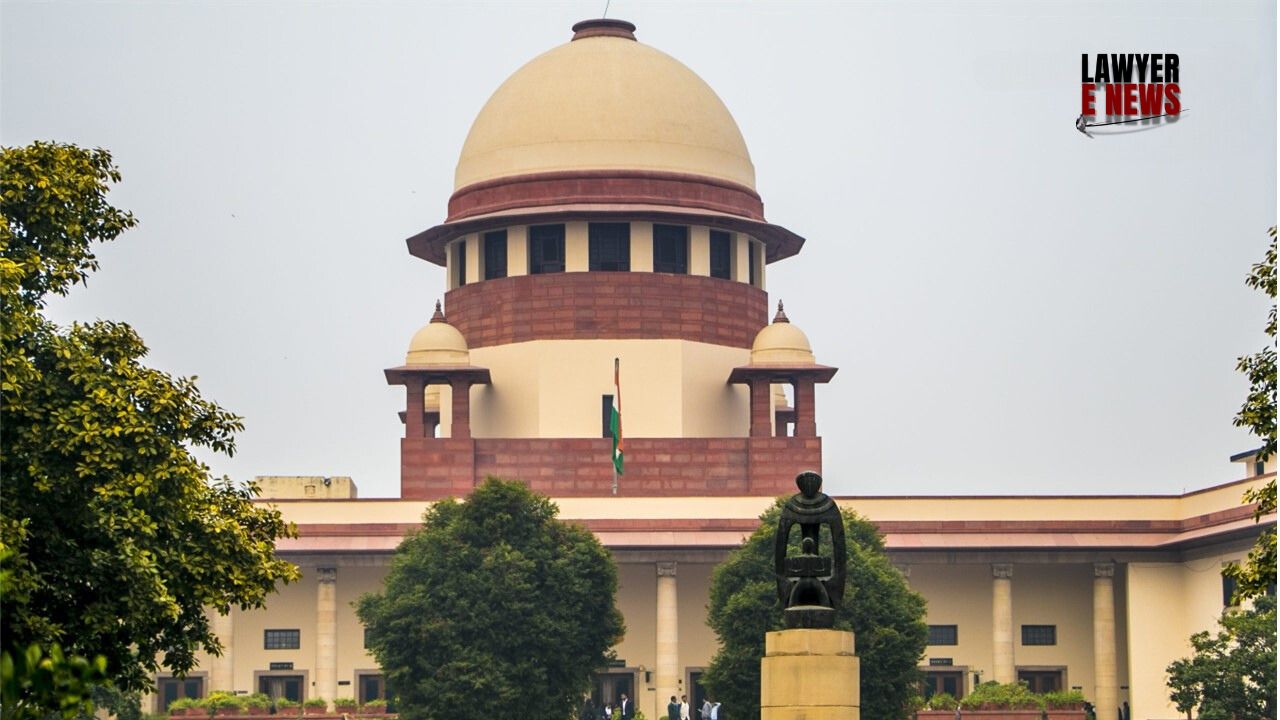
“There’s No Overlap Between ‘Permanent Disability’ and ‘Loss of Income’ — They Are Distinct Heads of Compensation”, In a powerful reaffirmation of the rights of motor accident victims, the Supreme Court came down heavily on the Madras High Court for wrongly slashing Rs. 19 lakhs from the compensation awarded to a 21-year-old man who suffered 100% permanent disability after a tragic bus accident.
Observing that “the High Court was not justified in reducing the quantum of compensation”, the Court not only restored but enhanced the compensation originally granted by the Claims Tribunal, awarding a total of Rs. 82,83,866/- to the claimant.
The appellant, Kavin, then a 21-year-old student, was travelling in a private Omni bus from Coimbatore to Chennai on July 3, 2011, when the bus collided into a tamarind tree. He suffered catastrophic injuries, rendering him permanently and totally disabled, confined to a wheelchair and requiring lifelong assistance.
The Motor Accident Claims Tribunal had awarded him Rs. 67,83,866/- under various heads — including medical expenses, attendant charges, loss of income, pain and suffering, and more. However, while the claimant sought enhancement, the insurance company appealed for reduction.
The Madras High Court, though it affirmed the findings on liability, reduced the compensation by Rs. 19 lakhs, setting aside or lowering several components — most notably, amounts for permanent disability, future medical expenses, and pain suffered by family members.
The primary legal issue before the Supreme Court was whether the High Court was justified in reducing compensation granted by the Tribunal, especially under heads such as permanent disability, future medical care, and non-pecuniary damages.
The Court categorically held: “The High Court was not justified in reducing the quantum of compensation that was awarded by the Claims Tribunal.”
On the question of permanent disability, the Court rejected the High Court’s reasoning that compensation towards “loss of income” subsumed the compensation for disability:
“The grant of compensation for loss of future income is a distinct head from the one under which compensation is granted for permanent disability.”
In the Court’s words, “the claimant suffered 100% permanent disability and was living in a vegetative state”, and deserved distinct compensation for the irreversible human impact of such disability.
Future Medical Expenses: Misjudged and Rectified
The High Court had arbitrarily reduced future medical expenses from Rs. 9 lakhs to Rs. 2 lakhs, stating the original amount was excessive.
The Supreme Court found this completely unjustified, emphasizing that:
“Restricting the amount of future medical expenses only for a period of 25 years appears to be unjustified… He would require such expenses for the rest of his life.”
Accordingly, the Court enhanced this amount to Rs. 15 lakhs, noting that the amount, if invested, could yield interest to sustain long-term care.
Attendant Charges: Reinstated and Enhanced
The Court strongly disagreed with the High Court’s reduction of attendant charges from Rs. 6 lakhs to Rs. 3 lakhs. Recognizing the harsh realities of a disabled life, it said:
“He would definitely require assistance during his further life… A lump sum grant of Rs. 10 lakhs towards attendant charges would meet the ends of justice.”
Pain and Suffering of Family: Undervalued by High Court
The Tribunal had awarded Rs. 3 lakhs towards pain and suffering of the family, relying on precedent. The High Court struck it down without reasoning.
The Supreme Court corrected this error: “Another co-ordinate Bench of the same High Court could not have ignored the said judgment… We do not find any reason whatsoever to deny the claimant the grant of compensation under this head.”
Compensation for Loss of Enjoyment of Life: Unreasonably Denied
On the denial of Rs. 3 lakhs awarded for loss of enjoyment of life and amenities, the Court criticized the High Court for its silence:
“It cannot be gathered from the impugned judgment as to what weighed with the High Court… In the light of the permanent disability suffered by the claimant, the said amount… did not warrant any interference.”
The amount was restored in full.
Final Compensation: Rs. 82,83,866/- with Interest
Holding the High Court’s reduction of Rs. 19 lakhs as “unsustainable”, the Supreme Court enhanced and restored various components of compensation, concluding:
“The claimant would be entitled to an amount of Rs. 82,83,866/- under Section 166 of the Motor Vehicles Act, 1988.”
The Court directed the unpaid amount to be disbursed within four weeks, with interest at 7.5% per annum, as per the Tribunal’s directions.
A Victory for Human Dignity and Fair Compensation
This landmark ruling reinforces the principle that compensation in accident cases must be just, fair, and sensitive to human suffering. By declaring that permanent disability deserves separate recognition apart from income loss, the Court ensured that victims aren’t reduced to financial spreadsheets.
In the Court’s silent but powerful message — a life in a wheelchair is not merely a loss of wages, it’s a lifelong battle, and the law must account for it in full measure.
Date of Decision: August 22, 2025