-
by sayum
23 August 2026 2:56 PM







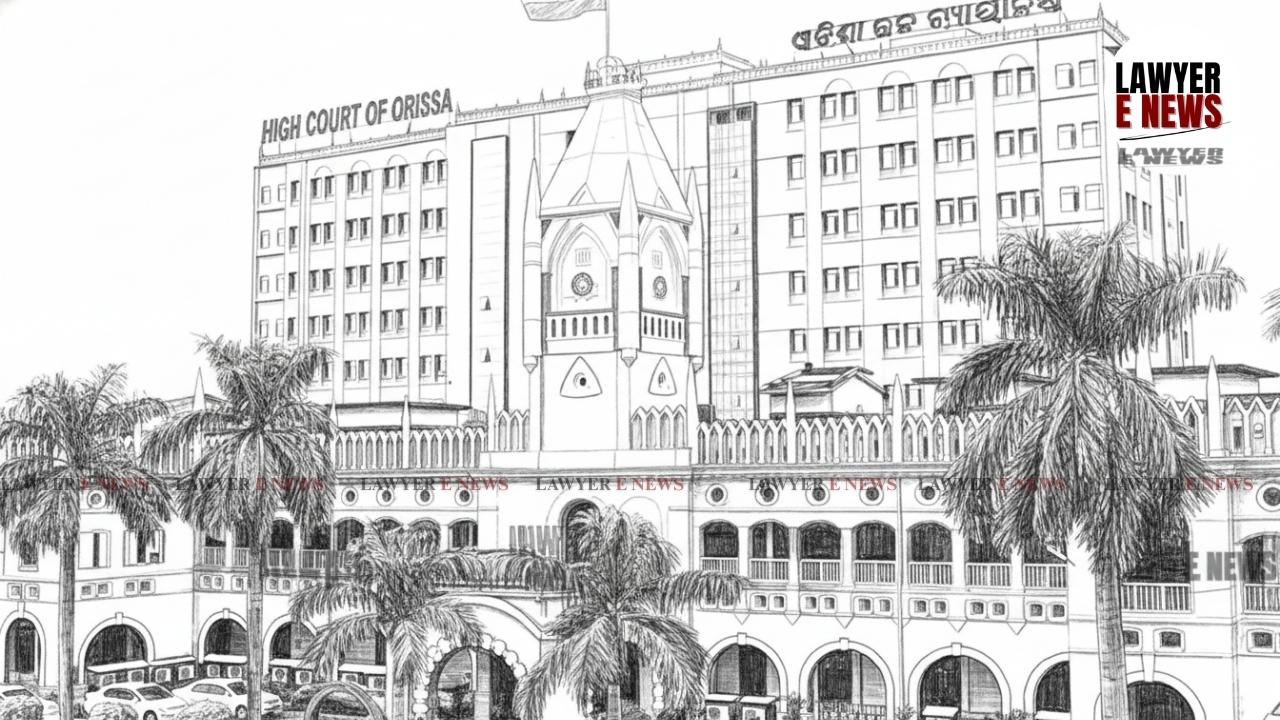
In a significant judgment addressing abuse of penal clauses in lease agreements, the Orissa High Court held that damages imposed on a tenant for unauthorized occupation must be reasonable and cannot be blindly enforced based on punitive clauses in contracts.
Allowing the Regular Second Appeal No. 256 of 2025 in part, Justice Sashikanta Mishra upheld the eviction and arrear rent decrees passed by the courts below but modified the interest rate from 12% to 7.5% and reduced the penal damages for unauthorized occupation from ₹27,000/- per day to 10% of monthly rent per month, applying Section 74 of the Indian Contract Act, 1872.
"Even Where Contract Specifies Penalty, Court Must Award Only Reasonable Compensation" – Section 74 Invoked to Protect Tenants from Unconscionable Damages
At the heart of the dispute was a lease agreement dated 01.10.2019, under which the plaintiff (Subhalaxmi Mishra) claimed to have leased out a commercial building (Hotel Lavender) to the defendants for a monthly rent of ₹4,00,000/- plus GST, with an added clause stipulating damages at double the rent in case of breach.
When the tenants failed to pay rent from April 2020 and did not vacate despite a notice under Section 106 of the Transfer of Property Act, the plaintiff filed a civil suit for eviction, arrear rent of ₹53,75,000/-, and damages of ₹50,000/- per day.
While both the Trial Court and First Appellate Court upheld the genuineness of the lease agreement (Ext-1) and accepted the rent as ₹4,00,000/-, the Trial Court imposed damages of ₹27,000/- per day, relying on Clause 25 of the lease, which permitted double the rent as damages.
However, the High Court found this to be excessive and legally untenable, holding:
“Section 74 of the Indian Contract Act makes it abundantly clear that even if a sum is named in the contract as penalty, the Court must award only reasonable compensation not exceeding the amount so named.”
Justice Mishra observed that:
“The Trial Court appears to have applied Clause-25 rigidly without enquiry as to what would be reasonable compensation... The mere existence of AC restaurant, kitchen, marriage hall or location in a commercially viable place cannot be the sole basis for such punitive damages.”
Accordingly, the High Court reduced the damages to 10% of the monthly rent per month from March 2021 to September 2024, noting that the defendants had already vacated the premises.
No Relief from Eviction, Lease Agreement Held Genuine – Self-Serving Alternative Lease Rejected under Section 21 of Evidence Act
The defendants had also contested the genuineness of the lease agreement (Ext-1), alleging forgery, and instead relied on an alternative agreement (Ext-B) allegedly submitted before the GST authorities, reflecting a lower rent of ₹1,00,000/- per month.
However, both courts below found Ext-1 to be genuine and notarized, bearing the signatures of defendant Nos. 2 and 3, and rejected the defense version as self-serving and inadmissible under Section 21 of the Indian Evidence Act, which bars a party from proving its own admission in its favour.
The High Court upheld this finding, observing:
“Defendants cannot seek to benefit from their own document... Ext-B, being a self-serving admission, has no evidentiary value.”
Crucially, the signatories to Ext-1 never entered the witness box nor denied their signatures, and the defendants withheld the best evidence by not producing the lease agreement they claimed to possess. This negative inference, coupled with taped-together original lease, led all three courts to accept Ext-1.
Interest on Arrear Rent Scaled Down – No Contractual Rate Found
The Court also intervened on the question of interest imposed on unpaid rent, which the Trial Court had pegged at 12% per annum. Finding no clause in Ext-1 specifying interest, the High Court held that the prevailing bank rate of 7.5% would be just and reasonable, stating:
“The agreement does not specify the rate of interest... under such circumstances, the prevailing bank rate can be imposed.”
Thus, the total arrears of ₹53,75,000/- were upheld, but the interest component was moderated.
Documents Filed Under Order XLI Rule 27 Already Admitted – Substantial Questions of Law Rendered Academic
One of the substantial questions of law on which the second appeal was admitted related to the non-exhibition of additional documents (Ext-B and Ext-C) filed under Order XLI Rule 27 CPC. However, the High Court noted that it had already admitted these documents by order dated 05.12.2025, making the issue academic.
On the second question—whether submission of Ext-B to the GST authorities contradicted the plaintiff’s claim—the Court reiterated that self-serving documents filed before a third authority without corroboration cannot override a genuine, notarized lease signed by both parties.
Final Order: Appeal Partly Allowed – Rent and Eviction Decrees Upheld, Interest and Damages Moderated
Summarizing the legal and factual analysis, the Court ruled:
“This Court while concurring with the decree holds that the rate of interest shall be modified to 7.5% and the direction to pay damages shall also be modified to 10% of monthly rent for every month of unauthorised occupation... The appeal is allowed in part.”
Key Takeaways for Legal Practitioners:
Date of Decision: 24 December 2025