-
by sayum
23 August 2026 9:32 AM







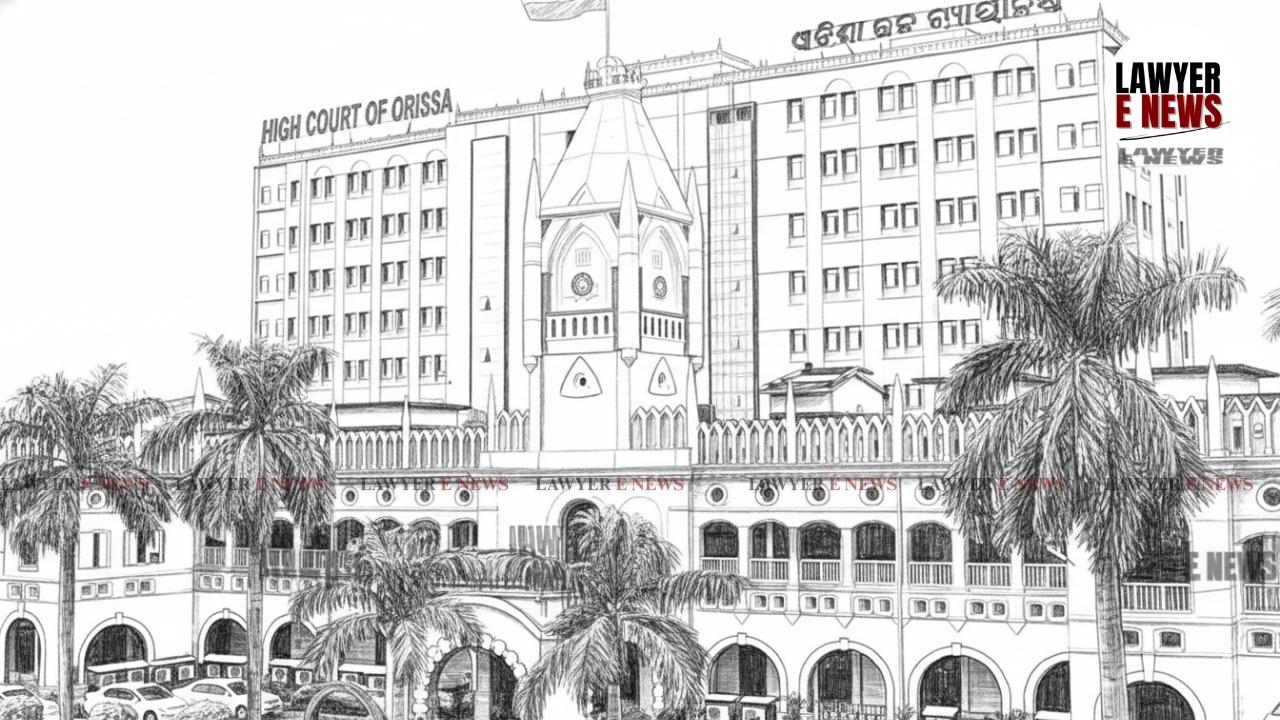
In a significant ruling on the scope of judicial discretion under Order VII Rule 14(3) of the Code of Civil Procedure, the Orissa High Court dismissed a challenge under Article 227 of the Constitution against an order permitting the plaintiff to mark certain public documents as exhibits after the closure of evidence.
Justice Sashikanta Mishra, presiding over the matter in Civil Miscellaneous Petition No. 662 of 2024, affirmed that belated admission of public documents does not amount to “filling up a lacuna”, especially where the trial court has exercised discretion based on judicial reasoning and ensured the right of rebuttal to the opposing party.
"Procedural Law is the Handmaid of Justice, Not Its Mistress" – High Court Reconciles Order XIII Rule 1 and Order VII Rule 14(3)
At the heart of the dispute was an order dated 06.03.2024 passed by the Civil Judge (Junior Division), 1st Court, Cuttack, allowing the plaintiff to mark ten additional public documents as exhibits after both parties had concluded their evidence. The petitioner, who is the first defendant in the underlying civil suit for declaration, alleged that the plaintiff's belated attempt to introduce these documents—absent from the initial pleadings and list of relied documents—was a ploy to "fill up lacuna" and unfairly bolster her case.
The petitioner invoked Pitani Sai v. Pitani Nagmanil, 2017 (I) OLR 873, and Sarat Chandra Mohapatra v. Narsingha Mohapatra, 2017 (I) OLR 633, to argue that late-stage production without explanation is impermissible. However, the High Court distinguished both precedents, noting that in the present case, the documents were public in nature, were held vital for just adjudication, and the trial court had provided adequate opportunity to the defendant to rebut the documents.
Rejecting the petitioner’s contention, the Court clarified:
"The defendants cannot claim to have been prejudiced, as mere marking of the documents as exhibits or admitting them at a belated stage does not take away the right to adduce rebuttal evidence or even to question the credibility of the said documents."
High Court on Scope of Discretion Under Order VII Rule 14(3)
The Court elaborated on the interplay between Order XIII Rule 1 and Order VII Rule 14(3) CPC. While Order XIII Rule 1 outlines the stage for document production (typically at or before settlement of issues), the High Court emphasized that Order VII Rule 14(3) specifically empowers the court to allow later admission of documents “with leave of the Court.” Justice Mishra cited the Andhra Pradesh High Court’s decision in Bada Bodaiah v. Bada Linga Swamy, 2003 (1) APLJ 141 (HC), to reinforce that:
"The trial Court is vested with the discretion whether or not to permit the plaintiff to produce evidence on his behalf at the hearing of the suit."
He further cautioned against an overly rigid interpretation of procedural rules:
“If an extreme interpretation of the above provision [Order XIII Rule 1] is made, there would be no scope for producing documents subsequent to the settlement of issues.”
In harmony with this approach, the Court found that the trial court had exercised discretion reasonably and judiciously, noting that the documents were directly relevant to the controversy, and defendants’ rights were protected by allowing rebuttal.
Article 227 – Limited Supervisory Scope
Addressing the petitioner’s invocation of Article 227 of the Constitution, the High Court underscored the narrow confines within which supervisory jurisdiction can be exercised. Referring to settled law, the judgment reiterated:
"High Court exercising jurisdiction under Article 227 cannot interfere with a discretionary order unless perversity or jurisdictional error is shown."
Since the trial court had recorded reasons, considered the nature of the documents, and granted safeguards to the defendants, the High Court found no jurisdictional error or perversity warranting interference.
Discretion Rightly Exercised; No Prejudice Shown
Ultimately, the Court upheld the trial court’s decision and dismissed the petition, reaffirming that:
“From the analysis of facts, law and discussions made hereinbefore, this Court fully concurs with the reasoning adopted by the trial Court in allowing the petition of the plaintiff. This Court therefore, finds no reason to interfere.”
This decision is a reaffirmation of the principle that procedural rules must aid the cause of substantive justice. Courts retain the discretion to allow production of documents at later stages—particularly public documents—as long as procedural fairness, including the right to rebut, is maintained. Attempts to resist such discretion purely on technicalities or rigid procedural grounds are unlikely to succeed in supervisory writ jurisdiction under Article 227.
Date of Decision: 19 December 2025