-
by sayum
30 August 2026 4:28 AM







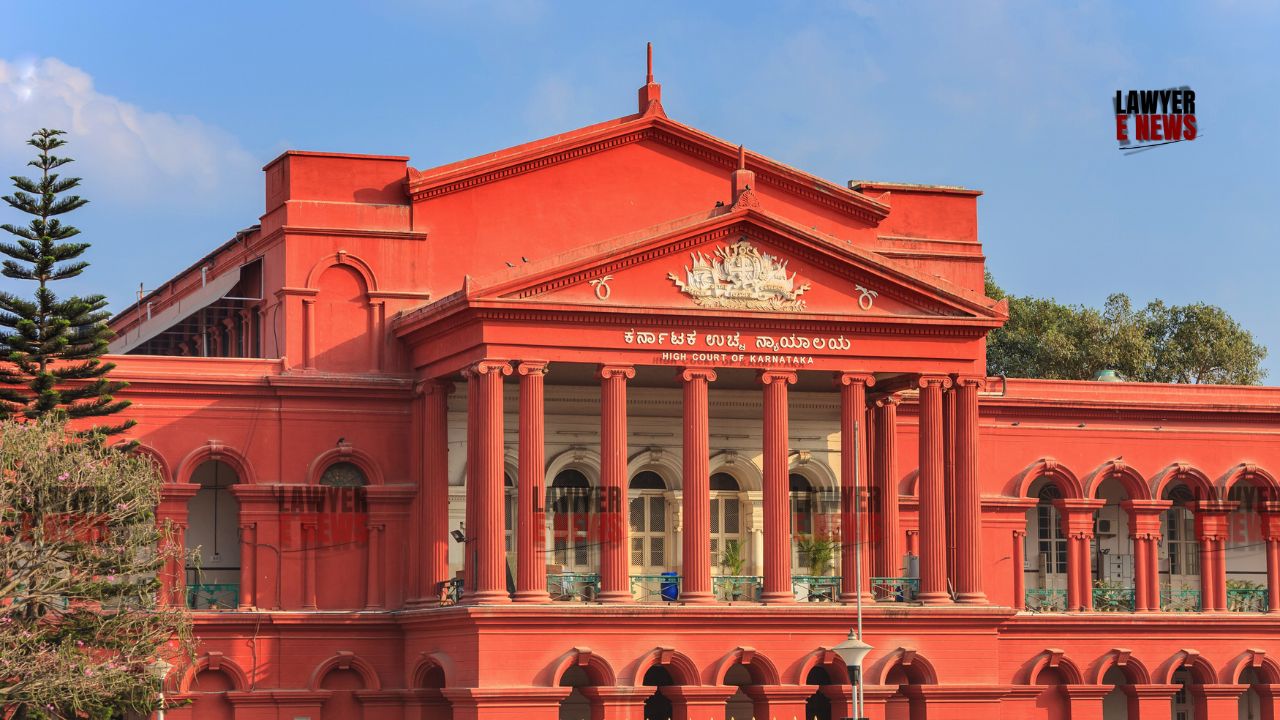
“The Mandate of the Statute Cannot Be Given a Go-Bye”, Karnataka High Court struck down a trial court’s decision permitting a 21-year-old pension dispute to be converted into a representative suit under Order I Rule 8 of the CPC. Justice M. Nagaprasanna ruled that such permission, sought after the case had already been argued and reserved for judgment, violated the statutory mandate and was “on the face of it, unsustainable.”
The litigation began in 2004, when the Association of retired employees of erstwhile Vysya Bank sued for alleged non-payment and short payment of terminal benefits under the Vysya Bank (Employees’) Pension Regulations, 1995. Their grievances spanned seven categories — from denial of five years’ notional service under Regulation 29(5), to omission of quantified special pay in pension calculations, to non-grant of leave encashment — and applied to members who had taken the 2002 Voluntary Retirement Scheme.
In 2024, with the suit already two decades old, the Association filed an application to convert it into a representative suit, claiming it involved a common cause for all similarly placed pensioners. The trial court allowed the plea in February 2025, calling the absence of earlier compliance “a curable procedural defect.”
Justice Nagaprasanna disagreed, holding that Order I Rule 8 requires both prior court permission and public notice to all interested persons — safeguards that had been bypassed. “The mandate of the statute cannot be given a go-bye by permitting institution of a representative suit without bringing in all the interested,” he wrote, noting that many potentially affected pensioners were outside the Association’s membership.
The Court also faulted the extraordinary delay: “If the 1st plaintiff/Association is so interested, it need not have waited for 20 long years to bring an application for such conversion, that too after the matter was reserved for its judgment… any application of this kind ought not to have been entertained after 20 years.”
Further, the judge questioned the premise of a common grievance, observing that apart from all being retirees, “there is nothing similar insofar as their grievances are concerned” and permitting representative status now would multiply the complexity: “The grievance could rise to ten-fold and the suit can never be taken to its logical conclusion.”
Finding “serious flaws and blatant violation of the mandate of the statute,” the High Court quashed the trial court’s order, dismissed the application under Order I Rule 8, and directed the trial court to pronounce judgment in the long-pending suit within four weeks.
Date of Decision: August 5, 2025