
-
by sayum
28 August 2026 2:11 PM







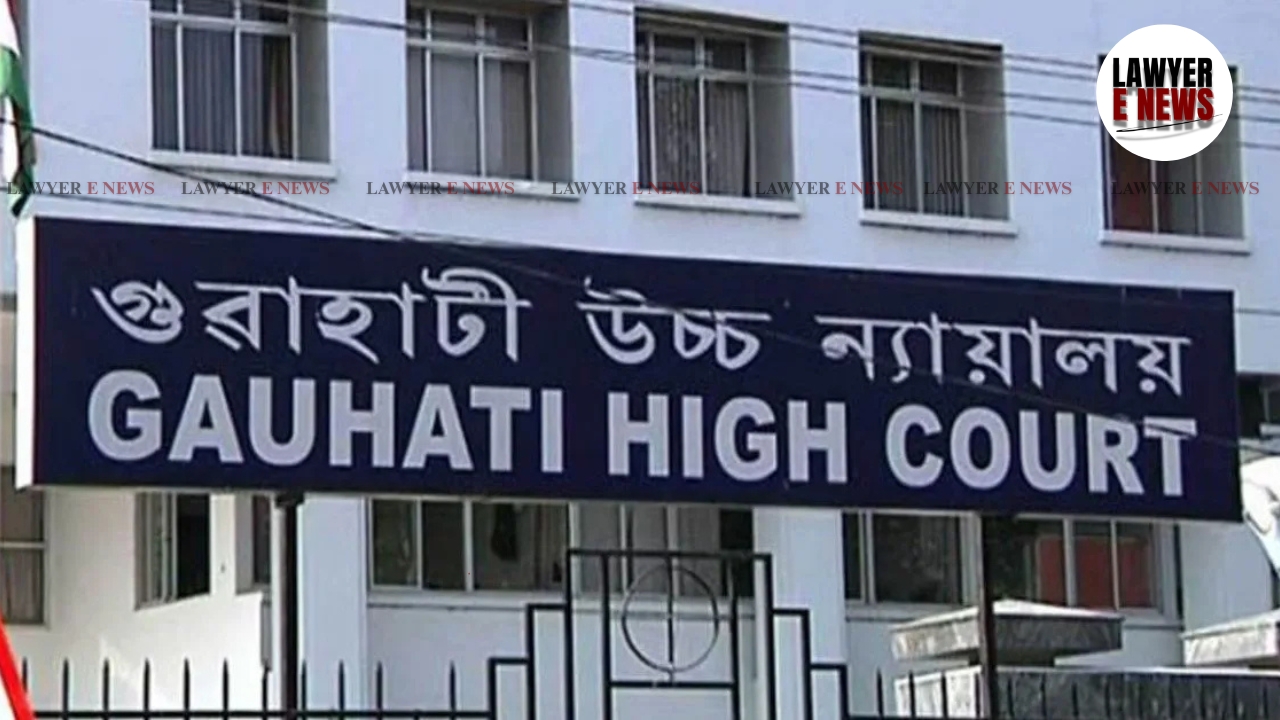
"The proper course of action of the part of the learned Trial Court would have been to dispose of the application in terms of the aforesaid concession... the question of the real ownership of the said shares is inseparably linked to the suit." Gauhati High Court, in a significant ruling, held that a Trial Court cannot dismiss an application for a temporary injunction when the respondent has explicitly conceded to the grant of such relief.
A bench of Justice Sanjeev Kumar Sharma observed that when a party expresses a 'no objection' to being restrained from transferring disputed property, the court should typically dispose of the application in terms of that concession rather than dismissing it on technical grounds.
The original plaintiff, late Hemendra Prasad Barooah, had filed a title suit seeking a declaration of absolute ownership over 8,61,918 equity shares of 'B and A Limited'. These shares were held in a joint demat account with his daughter, Respondent No. 2. The plaintiff contended that the daughter’s name was added only for "operational convenience" and no beneficial interest was intended to pass to her. Following the plaintiff’s death, the appellant, as the executor of his will, was substituted in the proceedings.
The primary question before the court was whether the Trial Court was justified in dismissing an injunction application under Order XXXIX Rules 1 & 2 of the CPC despite the defendant/respondent conceding to the restraint. The court also examined whether the technical rules of the National Securities Depository Limited (NSDL) regarding the transmission of shares to a surviving holder could override a prima facie dispute regarding the actual ownership of those shares.
Trial Court Erred In Overlooking Respondent's Concession
The High Court noted that during the proceedings before the Learned Civil Judge, Jorhat, the counsel for Respondent No. 2 had specifically submitted that she had no objection to the grant of an injunction restraining her from transferring the shares. The bench remarked that "the proper course of action of the part of the learned Trial Court would have been to dispose of the application in terms of the aforesaid concession."
The court found it "perverse" that the Trial Court proceeded to dismiss the injunction petition despite this recorded consent. The bench emphasized that the Trial Court’s decision was wholly without jurisdiction as it went beyond the scope of the submissions made by the parties involved.
Ownership Dispute Is Primary To Procedural Rules - "Trial Court Misconceived Scope Of NSDL Rules"
The Trial Court had dismissed the application by relying on NSDL Rule 12.6.1, which allows shares in a joint account to be moved to the surviving holder's account upon the death of one holder. The High Court, however, clarified that such transmission is not automatic and requires a specific application. It further noted that the Trial Court’s insistence on adhering to this "legal framework" was misconceived in the context of a title dispute.
The bench observed that while the NSDL rules might empower a surviving holder to move shares, the "fundamental question to be decided in the suit" is the real ownership of said shares. Since the Plaintiff/Appellant sought a declaration of ownership, the procedural ease provided by NSDL rules cannot be used to justify the dismissal of a restraint order when the title itself is under challenge.
Injunction Limited To Original Prayers - "Relief Cannot Transgress Contours Of Application"
While the appellant sought a further direction to transfer the shares from the joint account to his individual account as an executor, the High Court declined this specific request. The court noted that the original injunction application filed before the Trial Court was limited to a restraint upon the transfer of shares by the daughter and the misuse of delivery slips.
The bench held that it could not grant a relief in the appeal that was not part of the original prayer in the Title Suit. It emphasized that "the appellant/plaintiff cannot, in the instant appeal, be granted a relief which would transgress the contours of the prayers made in the application for temporary injunction."
The High Court set aside the Trial Court's order dated September 15, 2025, and allowed the appeal. It directed Respondent No. 2 not to transfer the 8,61,918 equity shares lying in the disputed demat account to any other account. Furthermore, Respondent No. 3 (HDFC Bank Ltd.) was directed not to facilitate any such transfer. The court concluded that all previous interim orders, including the Trial Court's status quo order, stand merged into this final direction.
Date of Decision: 10 June 2026





