-
by sayum
10 August 2026 1:57 PM







Testimony of PW-1 Does Not Inspire Confidence; Evidence of PW-2 and PW-9 Liable to Be Discarded", - In a landmark ruling Supreme Court of India acquitted all eleven appellants convicted in a sensational triple murder case arising out of intense political rivalry in Tamil Nadu. Supreme Court held that the prosecution failed to prove the charges beyond reasonable doubt. "The evidence of PW-1 does not inspire confidence," the Court observed, while also dismissing other key eyewitnesses' statements as unreliable and improperly recorded.
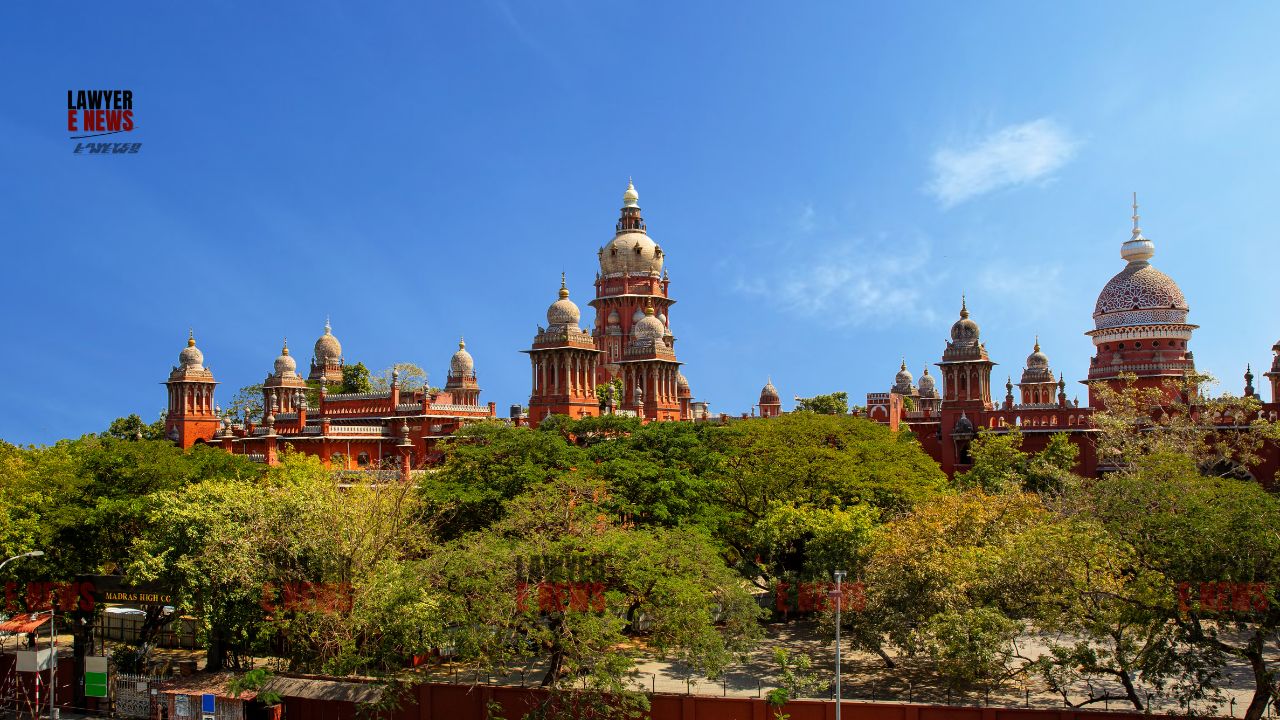
The bench comprising Justices Abhay S. Oka and Ujjal Bhuyan set aside the concurrent findings of the Trial Court and the Madras High Court, holding them to be tainted by “misreading of evidence” and “ignoring striking features” that fundamentally undermined the prosecution's case.
The case stems from a gruesome incident on the night of November 14, 2012, when three members of a politically active family—Kathiresan (Deceased No. 1), his son Prasanna (Deceased No. 2), and their driver Boominathan (Deceased No. 3)—were brutally murdered and their vehicle allegedly attacked by a mob with deadly weapons. The victims were associated with the AIADMK political party, and the accused were linked to the rival Communist Party. The conflict was rooted in a power shift in the local Panchayat elections, where PW-1’s wife defeated the wife of Accused No. 1.
A First Information Report was lodged by PW-1, Krishnan, who claimed to have witnessed the entire event while hiding in a nearby bush. Based on his written complaint, 36 individuals were initially named as accused, later narrowed to 21, out of whom 11 were convicted by the Sessions Court and the High Court.
The Supreme Court had to consider whether the evidence—particularly the testimonies of PW-1, PW-2, and PW-9—was reliable enough to uphold the convictions and whether procedural lapses in evidence collection undermined the prosecution’s case.
Justice Abhay S. Oka began the Court’s detailed analysis with a scathing review of PW-1’s conduct and statement:
“The evidence of PW-1 (Krishnan) does not inspire confidence.”
PW-1, the brother of the deceased, claimed to have watched the entire incident while hiding in a bush. However, his testimony was fraught with inconsistencies and overt political motivation. He initially named 36 persons, later retracted 15 names, and admitted in court that he had no objection to removing those accused. The Court noted:
“PW-1 has obviously exaggerated the incident due to their political rivalry... he was unsure about the number of accused who were present at the time of the incident.”
As for PW-2 (Loorthu Prabhu), another alleged eyewitness, the Court was highly skeptical of his delayed disclosure—he approached the police 43 days after the crime, only after hearing a Christmas sermon:
“Considering the conduct of the witness of remaining silent for a long period of one and a half months, the testimony of this witness cannot be believed.”
Notably, his co-witness Abdul Rehman was never examined, prompting the Court to observe:
“The prosecution failed to examine him. Therefore, adverse inference will have to be drawn against the prosecution.”
PW-9, a minor and daughter of the deceased, was ten years old at the time of her testimony. The Trial Court failed to conduct any preliminary questioning to assess her competence or understanding of the oath, a fundamental requirement for examining a child witness.
“Minors are prone to tutoring and in this case, we are dealing with a minor child who was 10 years old. Her testimony has to be kept out of consideration.”
The Court found no merit in the forensic evidence, particularly the fingerprint analysis said to link Accused Nos. 2 and 3 to the vehicle. The process of collecting fingerprints lacked legal sanctity.
“No Mahazar was drawn at the time of taking photographs of the fingerprints... The photographs taken were not exhibited... This goes to the root of the matter.”
Weapon recoveries were similarly untrustworthy. Aruvals and knives were recovered from open or public locations at different times, but often from the same place.
“Only on the basis of recovery, by no stretch of imagination can the accused be convicted.”
The Court was firm that recovery alone cannot form the basis of conviction without credible eyewitness testimony or corroborative material evidence.
Addressing the argument that the Supreme Court, under Article 136, cannot re-appreciate concurrent findings of fact, the Bench clarified that interference is warranted in cases of manifest illegality or miscarriage of justice.
“None of these decisions prevent this Court from reappreciating evidence... These decisions only lay down self-imposed constraints on interference.”
In this case, the Court held:
“The Trial Court and High Court have misread the evidence of material prosecution witnesses. Very striking features of the prosecution’s case and evidence have been ignored.”
The Court cited Pappu v. State of U.P. and Dalbir Kaur v. State of Punjab, reaffirming that where assessment of evidence is flawed or perverse, Supreme Court intervention is not only permissible but necessary.
With all key testimonies discredited and the forensic and recovery evidence found unreliable, the Court acquitted all 11 appellants: “We are of the view that the guilt of the accused has not been proved beyond a reasonable doubt.”
Having already undergone more than nine years of incarceration, the accused were ordered to be released immediately. “The impugned Judgments of the High Court and the Trial Court are hereby set aside. The appellants shall be released from custody forthwith, if not required in any other case.”
Date of Decision: May 23, 2025