-
by sayum
23 August 2026 9:32 AM







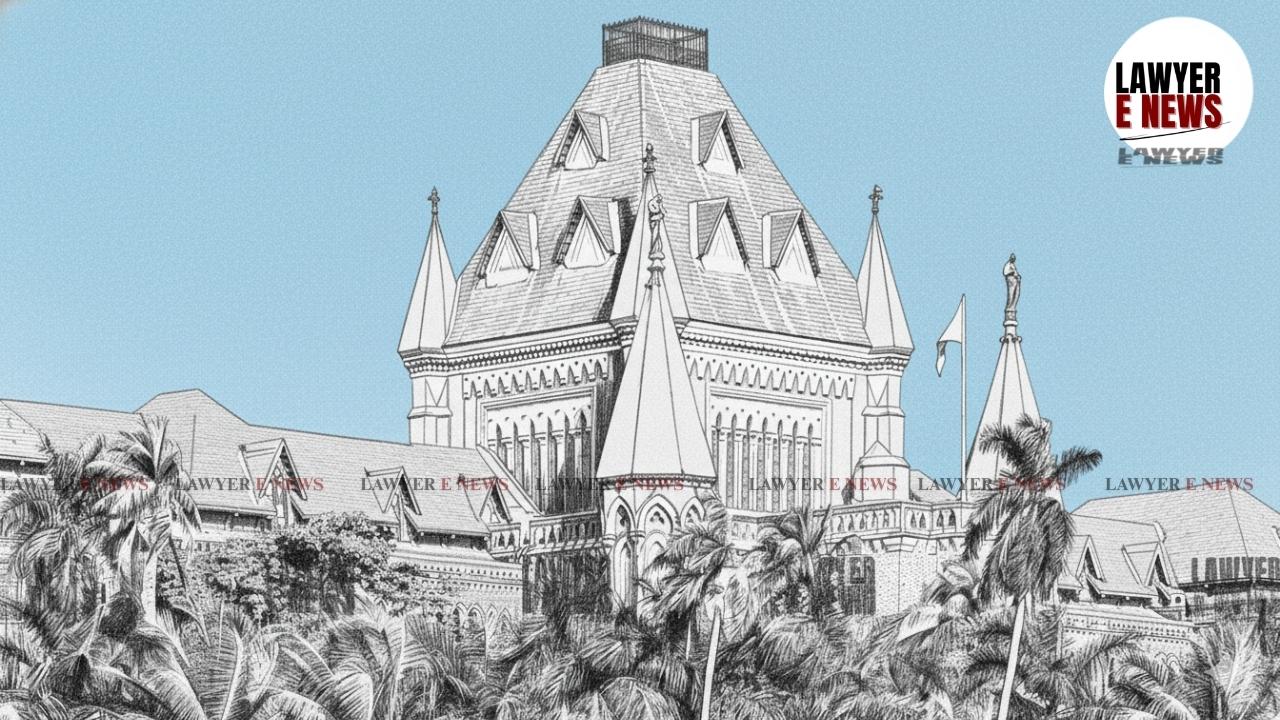
“Removal Of A Trustee Cannot Be Orchestrated By Other Trustees – Statutory Mechanism Under Section 41D Of Maharashtra Public Trusts Act Is Mandatory”, Bombay High Court (Aurangabad Bench) delivered a significant ruling in Shree Datta Deosthan Trust vs. Milind Govind Kshirsagar & Ors., dismissing a cluster of writ petitions challenging the rejection of sequential change reports under Section 22 of the Maharashtra Public Trusts Act, 1950, and decisively holding that only the Charity Commissioner has the authority to remove a trustee.
Justice Arun R. Pedneker, while dismissing seven writ petitions arising out of cascading change reports, emphasized that “the trustees cannot usurp statutory powers vested exclusively in the Charity Commissioner, even when a trustee is alleged to have committed acts against the interest of the trust.” The decision is set to have far-reaching consequences in the governance of public trusts in Maharashtra.
Court Declares Removal of Permanent Trustee by Co-Trustees as Illegal, Affirms Exclusive Power Under Section 41D
At the heart of the dispute was Change Report No. 557/2003, whereby the trust sought to remove Milind Govind Kshirsagar, a permanent trustee from the Kshirsagar family, citing alleged misconduct and mismanagement. However, the High Court firmly upheld the concurrent findings of the Assistant Charity Commissioner and Joint Charity Commissioner that the removal resolution passed on 13.03.2003 was unlawful, vitiated by procedural irregularities, and fundamentally beyond the powers of the trustees.
Justice Pedneker held:
“The trustees cannot act upon an inspector’s report to remove a trustee. Such reports can only be forwarded to the Charity Commissioner for appropriate action under Section 41D. The Assistant Charity Commissioner himself lacks power to order removal. The scheme of the Act clearly vests this power solely in the Charity Commissioner.”
Further, on the issue of the permanent nature of Milind Kshirsagar’s trusteeship, the Court found that:
“Clause 10 of the trust deed unequivocally provides for one permanent trustee from the family of Param Pujya Shri Kshirsagar Maharaj. This appointment is continuous and not subject to the 1/3rd rotational retirement provided under Clause 14.”
“Foundational Change Report Invalid – Subsequent Reports Must Fall”
The Court examined all the connected change reports—which included appointment of new trustees, removal of others, and reappointments—made over two decades, and found that they were inextricably linked to the initial, flawed removal of Milind Kshirsagar.
Justice Pedneker observed:
“If the foundational change report is invalid, all consequential change reports necessarily fail. The entire structure built upon the removal of Milind Kshirsagar crumbles due to the illegality of that first action.”
Accordingly, the Court dismissed all writ petitions arising from the subsequent change reports (W.P. Nos. 9543, 9544, 9545, 9564, 9565, 9979 & 9980 of 2025), affirming that none could be sustained either in law or on facts.
Court Flags Abuse of Trust Governance, Calls for Structural Reforms
In a striking observation about the dysfunctional state of the trust’s administration, the Court noted the governance deadlock created by repeated, unverified change reports and illegal appointments. Justice Pedneker held:
“A peculiar situation has now arisen that all the change reports are rejected and the consequent effect would be that all change reports pending as of today before various authorities would have to be necessarily rejected.”
“Over the passage of time trustees (except the permanent trustee) would be illegally holding the post of trustee. It is also not possible to restore status quo ante due to long passage of time.”
In light of the administrative paralysis and absence of a general body of voters, the Court invoked its jurisdiction to direct restructuring of the trust under Section 50A, ordering the Assistant Charity Commissioner to amend the constitution of the trust.
“Devotees to Be Enrolled As Members – Elections Within 18 Months”
To safeguard the integrity and future functioning of the Shree Datta Deosthan Trust, the Court issued detailed directions to restructure the governance framework:
The Court emphasized that the modifications were necessary “to give effect to the intention of the settler of the trust and to carry out the object of the trust and to protect the interest of the trust for the long term.”
“Notice Of Removal Was Never Issued, Meeting Was Orchestrated”
Another critical flaw that sealed the fate of the trust’s case was the lack of natural justice and procedural integrity in the purported removal of Milind Kshirsagar. The Court found that:
“The meeting dated 13.03.2003 was orchestrated. The process adopted was procedurally flawed and substantively without jurisdiction.”
The Bombay High Court has unequivocally reaffirmed that removal of trustees from public trusts in Maharashtra must strictly comply with the statutory mechanism under Section 41D, and trustees themselves have no authority to orchestrate removals, even on the basis of serious allegations.
This judgment will likely have cascading impact on other trusts operating under similar frameworks, especially where permanent or hereditary trusteeship is involved.
The court’s direction for electoral and constitutional reforms within the Shree Datta Deosthan Trust reflects a rare instance of judicial intervention to reboot trust governance, aligning it with transparency, participation, and statutory compliance.
Date of Decision: 24 December 2025