-
by sayum
28 August 2026 10:07 AM







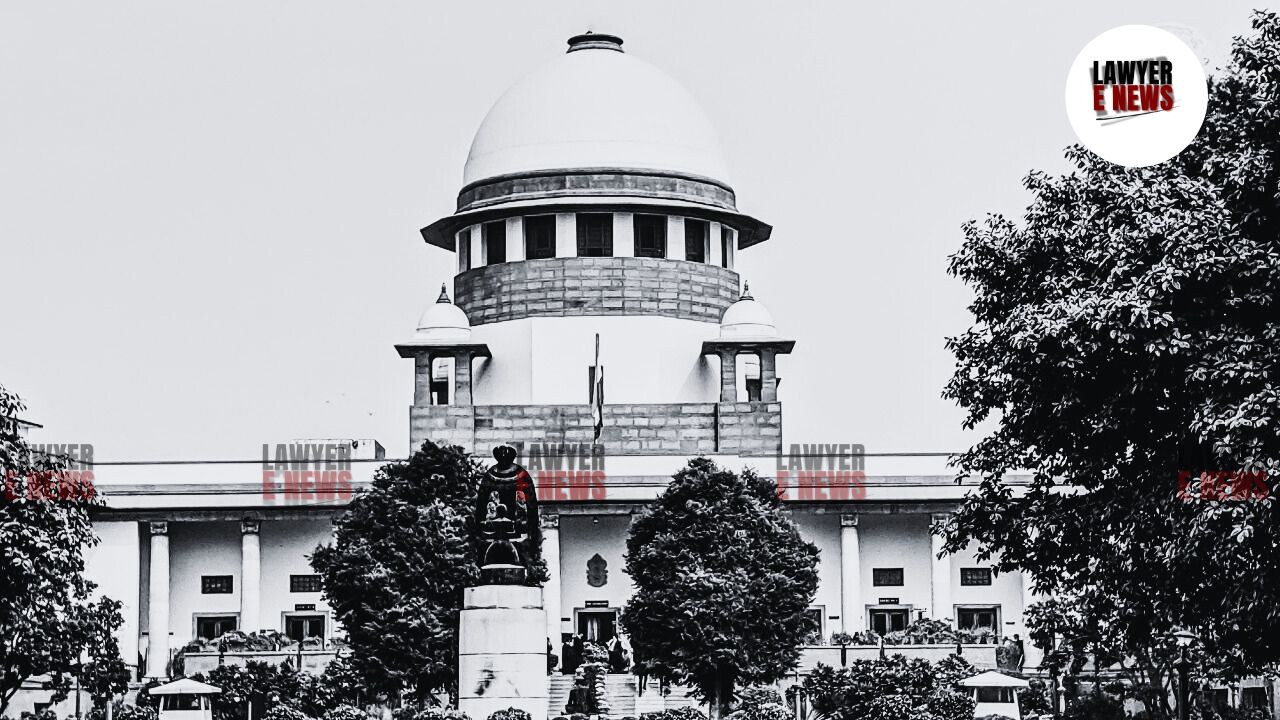
“High Court committed manifest error by treating a statutory bar as discretionary — anticipatory bail in caste atrocity cases cannot be granted merely by doubting witness statements”, In a landmark pronouncement Supreme Court of India decisively ruled that any prima facie allegation of casteist insult, assault, or intimidation under Section 3 of the SC/ST Act bars the grant of anticipatory bail under Section 438 CrPC. The bench comprising Justices B.R. Gavai, K. Vinod Chandran, and N.V. Anjaria overturned the Bombay High Court’s grant of pre-arrest bail, calling it a "clear illegality and jurisdictional error."
The Court reiterated that courts are not permitted to conduct a mini-trial at the stage of bail and that where caste-based offences are alleged in public view with specific casteist language, the bar under Section 18 of the SC/ST Act operates in absolute terms.
“Calling Someone ‘Mangtyano’ In Public With Intent to Humiliate Is Not Mere Abuse — It Is a Cognizable Caste Offence”: SC Emphasises Caste Nexus
The case arose from a deeply disturbing incident in Kapilapuri village, Maharashtra, following the assembly elections of November 2024. The complainant, Kiran — a member of the Matang community (Scheduled Caste) — was allegedly attacked at his residence on 25.11.2024 by Rajkumar Jain and several co-accused. According to the FIR, the accused, enraged that Kiran had not voted for their preferred candidate, hurled casteist slurs and assaulted him and his female relatives.
The Court reproduced the offensive words used: “Mangtyano, you have become much arrogant... you are staying in the village and voting against me”
It further noted that the attack took place outside the house, in public view, and that the accused were armed with iron rods and petrol bottles. The mob, all non-SC members from the Jain community, allegedly damaged household property and molested the complainant’s mother.
The Supreme Court categorically held:
“The use of the word ‘Mangtyano’ was with a clear intention to humiliate the complainant because he belonged to the said Scheduled Caste community... The caste nexus was established.”
“Section 18 of SC/ST Act Is Not a Technical Bar — It Is a Constitutional Safeguard Against Humiliation, Violence, and Caste Terror”: Supreme Court
The High Court had granted anticipatory bail to Rajkumar Jain by suggesting that the FIR was politically motivated and that there were inconsistencies in witness statements. The Supreme Court slammed this reasoning, stating:
“The High Court, in proceeding to evaluate the testimony of witnesses and to opine on that basis that no offence was made out, committed a manifest error.”
The Court called this an improper judicial exercise and reminded that Section 18 was enacted to protect Scheduled Castes from systemic oppression, and could not be “brushed aside by elaborate discussion on the evidence.”
Relying on precedents such as Vilas Pandurang Pawar v. State of Maharashtra, Prithvi Raj Chauhan v. Union of India, and State of M.P. v. Ram Krishna Balothia, the bench observed:
“If there is a specific averment in the complaint — namely, insult or intimidation with intent to humiliate by calling with caste name — the accused persons are not entitled to anticipatory bail.”
In a sharp articulation of constitutional vision, the Court stated:
“Seemingly a stricter provision, [Section 18] underscores the Constitutional idea of availing social justice and to ensure the same pedestal for the Scheduled Caste and Scheduled Tribe community people with other classes in the society.”
“Public View, Caste Reference, and Prima Facie Offence Are Sufficient — Courts Cannot Conduct Evidentiary Trials at Bail Stage”: Apex Court Reiterates Legal Threshold
The judgment also clarified the scope of judicial scrutiny permissible at the bail stage:
“It would not be permissible for the Court to travel into the evidentiary realm or to conduct a mini trial.”
The High Court had relied on Shajan Skaria v. State of Kerala, but the Supreme Court distinguished that case, noting that the accused there had not used any casteist term, and therefore the bar of Section 18 did not apply. Here, however, the facts were starkly different:
“In the present case... the incident took place outside the house of the appellant which could be viewed by anybody. It was indeed a place within public view.”
The Court concluded that all necessary ingredients for an offence under Section 3(1)(r), 3(1)(s), and 3(1)(o) of the SC/ST Act were met, especially since the assault and humiliation were directly linked to the complainant’s electoral choice — a protected activity under Section 3(1)(o).
“Courts Cannot Dilute The Legislative Mandate In The Name of Discretion — When Caste Offence is Made Out, Section 438 CrPC Does Not Apply”: Judgment Cancelled Bail
The Court firmly held that anticipatory bail in such cases not only violates statutory law but also undermines the broader constitutional guarantee under Article 17 — abolition of untouchability and prohibition of its practice.
“The anticipatory bail granted by overlooking and disregarding the bar of Section 18 of the Act was a clear illegality and jurisdictional error committed by the High Court.”
The Supreme Court allowed the appeal, cancelled the anticipatory bail granted by the Bombay High Court, and clarified that the matter would now proceed to trial, uninfluenced by observations in this judgment.
Date of Decision: 1st September 2025