-
by sayum
24 August 2026 3:22 PM








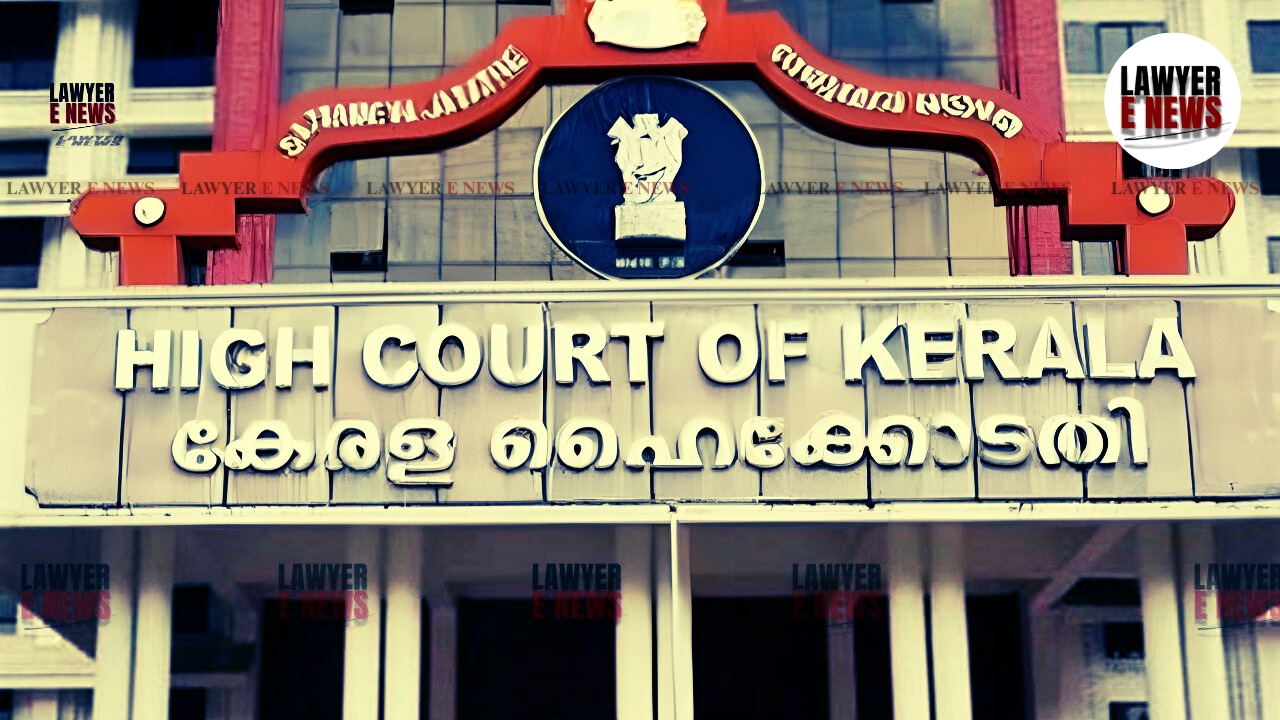
The Kerala High Court dismissed a criminal revision petition filed by K. Govindankutty, upholding his conviction in a cheque bounce case under Section 138 of the Negotiable Instruments Act, 1881. The court ruled that his defence of cheque misuse lacked credibility, particularly because he failed to initiate any legal action against those he accused of manipulating the cheque.
Justice G. Girish, while confirming the lower court’s decision, made a strong observation: "Once the accused admits his signature on the cheque, the presumption under Section 139 of the NI Act is automatically attracted. It then becomes his burden to rebut it with cogent evidence. Mere allegations of manipulation without legal action against the alleged perpetrators weaken the defence beyond repair."
The case arose from a complaint filed by Krishnankutty Nair, who alleged that Govindankutty had borrowed ₹4,00,000 from him on January 7, 2013, and subsequently issued a cheque for ₹4,90,000 (including interest) dated November 25, 2014, towards repayment of the debt. When the cheque was dishonored due to insufficient funds, the complainant issued a statutory notice, which the accused failed to respond to.
The matter was first tried before the Judicial First Class Magistrate-II, Chavakkad, where Govindankutty was found guilty under Section 138 of the NI Act and sentenced to six months’ simple imprisonment along with a direction to pay ₹4,90,000 as compensation.
On appeal, the Additional Sessions Court-IV, Thrissur, upheld the conviction but modified the sentence to imprisonment till the rising of the court, while retaining the compensation order. Aggrieved by this, Govindankutty approached the High Court in revision.
During the pendency of the revision petition, Krishnankutty Nair passed away, and his legal heirs were impleaded as respondents.
Govindankutty argued that the cheque was not issued for a loan but was a signed blank cheque misused by the complainant and his wife, who conspired with a former bank manager, C.N. Rangeesh. He claimed that the cheque was initially handed over for a chitty transaction at Mattom Service Co-operative Bank, where the complainant’s wife was the secretary.
Rejecting this defence, the Kerala High Court made a scathing remark: "If the accused truly believed that his signed cheque was misused, the natural course of action would have been to take immediate legal steps against those involved. His inaction significantly weakens his version of events."
The court relied on the Supreme Court's ruling in Bir Singh v. Mukesh Kumar (2019) 4 SCC 197, stating: "Once the person who had drawn a cheque admits his signature in that cheque, in the absence of cogent evidence pointing to vitiating circumstances, he cannot be heard to say that the other entries in that instrument were incorporated by somebody else by way of manipulations."
The court emphasized that the burden to rebut the statutory presumption under Section 139 of the NI Act lies on the accused, and a mere denial without substantial evidence is insufficient.
The High Court reiterated that revisional jurisdiction is not an appellate power and that interference is warranted only if the lower courts’ findings are perverse, wholly unreasonable, or based on no material evidence. Referring to Sanjaysinh Ramrao Chavan v. Dattatray Gulabrao Phalke (2015) 3 SCC 123, the court observed:
"Unless the order passed by the Magistrate is perverse or the view taken by the court is wholly unreasonable or there is non-consideration of any relevant material, the Revisional Court is not justified in setting aside the order, merely because another view is possible."
The court found that both the Trial Court and the Appellate Court had properly appreciated the evidence and had correctly concluded that Govindankutty’s defence lacked merit.
Dismissing the revision petition, the Kerala High Court ruled: "The findings of the Trial Court and the Appellate Court are based on proper appreciation of evidence. The accused’s claim of cheque misuse is neither substantiated nor credible. The revision petition is devoid of merit and stands dismissed."
The conviction of Govindankutty was upheld, and he was directed to pay ₹4,90,000 as compensation.
This ruling reinforces that accused persons in cheque bounce cases must provide substantial proof when claiming fraud or cheque misuse. The judgment also discourages baseless defences that lack supporting legal action. The Kerala High Court has once again upheld the presumption of liability under Section 139 of the NI Act, ensuring that cheque transactions remain legally binding unless convincingly rebutted.
Date of decision: 14 February 2025