-
by sayum
29 August 2026 3:15 PM







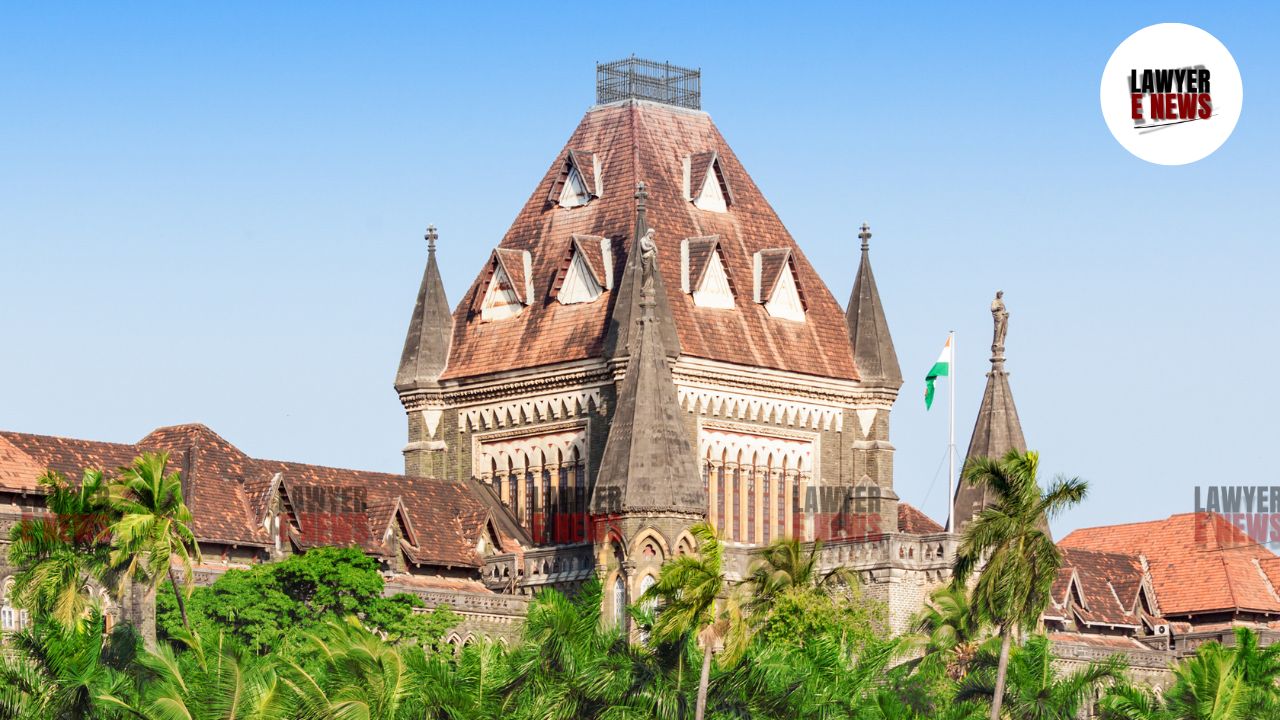
“A Daughter’s Right to Reside Cannot Be Revoked by Partition or Sympathy—It Becomes Ownership Under Law” - In a significant reaffirmation of Hindu women’s property rights, the Bombay High Court set aside eviction decrees passed against daughters residing in ancestral property, holding that a father’s moral obligation to maintain his destitute daughters transforms into a legal and absolute right under the Hindu Succession Act, 1956.
Justice Gauri Godse, allowing Second Appeal, observed: “A moral obligation, even though not enforceable under law, would, by acknowledgement, bring it to the level of a legal obligation.”
The Court ruled that the plaintiffs—sons and their heirs—had no right to dispossess the daughters who had been residing in the property since before 1956, especially when such residence was tied to their status as widowed or deserted daughters and was protected under Section 23 and matured into absolute ownership under Section 14(1) of the Hindu Succession Act.
“The Right of Residence, Once Created, Cannot Be Terminated by Labeling It as Licence”
The case involved ancestral property originally owned by Natha, partitioned between his sons Rama and Chandar, with the disputed portion falling to Rama’s share. Rama had three sons and three daughters. The respondent-plaintiff was the widow of one of the sons—Laxman—who claimed the suit property as part of his partitioned share and sought possession against Rama’s daughters, alleging that they were merely allowed to stay out of sympathy, as gratuitous licensees.
However, the defendants, i.e., the daughters of Rama, stated that they had been given the right to reside in the property by their father himself, long before 1956, due to being widowed or abandoned by their spouses. They constructed the structure themselves and had remained in peaceful possession ever since.
The plaintiff’s claim that her late husband had granted them residence was held to be untenable, as Justice Godse pointed out:
“It is not in dispute that defendant no.2 came to reside in the suit property during the lifetime of Rama. Hence, there was no question of Laxman permitting her to reside in the property as a gratuitous licensee.”
Section 14(1) Converts Limited Rights into Absolute Ownership
The core legal pivot in the case was Section 14 of the Hindu Succession Act, under which any property possessed by a Hindu female, acquired before or after the Act, becomes her absolute property, unless specifically restricted under Section 14(2).
Citing the Supreme Court’s landmark ruling in V. Tulasamma v. Sesha Reddy, the High Court reiterated:
“Sub-section (1) of Section 14 is wide in scope and converts even moral or restricted rights into full ownership if the property is possessed by a Hindu female, regardless of how the right originated.”
Justice Godse emphasized that: “The limited interest in the suit property created in favour of the defendants has blossomed into absolute ownership... the plaintiff has no right to seek possession of the suit property.”
“Section 23 Gave Daughters the Right to Reside—And That Cannot Be Ignored”
Even prior to its repeal in 2005, Section 23 of the Hindu Succession Act gave female heirs—if widowed, deserted or unmarried—the right to reside in the family dwelling house, though not the right to partition unless the male heirs chose to divide their shares.
Justice Godse explained: “Section 23 provided that the female heir shall be entitled to a right of residence in the dwelling-house if she is unmarried or has been deserted by or has separated from her husband or is a widow.”
Noting that both defendant no. 2 was a widow since 1949, and defendants 1 and 3 were deserted or widowed, the Court found that their residence in the house was protected by Section 23 and any argument calling it a revocable license was fundamentally flawed.
“A Moral Duty of the Father Translates into a Legal Right Against the Heirs”
The Court went beyond technical statutory interpretation to emphasize the equitable and moral dimension of Hindu law. Drawing from decisions such as Laxmappa v. Balawa and Yeshwant Maruti Lonkar v. Anjanabai Dhamdhere, the High Court reaffirmed:
“The Hindu father is morally obliged to maintain his daughters. Upon his death, that obligation devolves on those who inherit his property. This obligation, when acknowledged, matures into a legal right.”
Justice Godse, in a vital observation, stated:
“It would be perfectly legitimate for the father to treat himself obliged out of love and affection to maintain his destitute daughter. This obligation would also apply to the heirs of the father who inherited his property.”
“Occupation Since Before 1956 Leads to Ownership—Not a Licence”
The timeline was crucial. The daughters had been in possession since before the Hindu Succession Act came into force, some even since the father’s lifetime. Therefore, the Court concluded that:
“Once it is established that the appellants are in possession of the suit property since prior to 1956... their limited interest blossoms into absolute interest in view of Section 14 of the 1956 Act.”
It further held that the partition deed of 1966 could not extinguish the daughters’ rights, as the alleged licence by Laxman could not override the rights created prior to his ownership.
In a resounding judgment upholding women’s right to shelter and dignity, the Bombay High Court declared that the plaintiff's claim for possession was unsustainable—whether Rama died before or after 1956 was immaterial, as the defendants’ right to reside had matured into absolute ownership under law.
“The notion that widowed or deserted daughters could be dispossessed at will contradicts the foundational principles of Hindu succession and maintenance law.”
The High Court quashed and set aside the decrees passed by the Trial Court and First Appellate Court and dismissed the original suit for possession.
The Second Appeal was allowed, with no order as to costs.
Date of Decision: 13 August 2025