-
by sayum
02 August 2026 1:07 PM







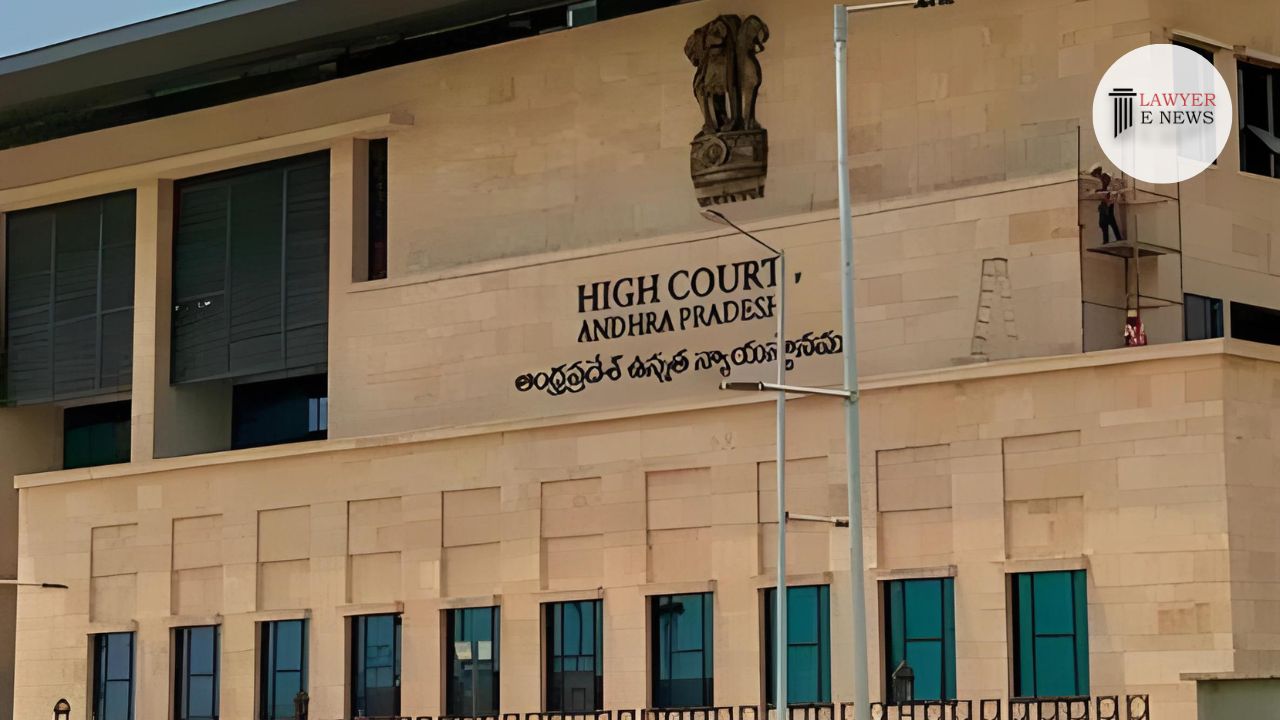
In a landmark ruling Andhra Pradesh High Court overturned the conviction of two government officials for contempt of court, holding that failure to assess compensation for demolished structures cannot be treated as willful disobedience if the structures no longer exist and records are unavailable. The Court ruled that the officials had made reasonable efforts to comply with court orders, and their inability to complete the task due to missing records did not constitute contempt.
"A person cannot be held in contempt if compliance is rendered impossible due to circumstances beyond their control. When structures no longer exist and records are lost, contempt cannot be presumed," the Court observed while allowing the appeals filed by M. Sudarshana Reddy and Ketan Garg, officials of the Andhra Pradesh Mineral Development Corporation (APMDC) and Revenue Department.
The ruling sets an important precedent, ensuring that contempt proceedings are not misused to penalize officials for practical impossibilities.
"Were Officials Jailed for Failing to Pay Compensation? High Court Examines the Case"
The dispute arose in Mangampet Village, Kadapa District, where several houses were demolished as part of a barytes mining project by APMDC. Affected residents, including Anumalagundam Narasamma, sought compensation for their lost homes.
A writ petition was filed before the Andhra Pradesh High Court (W.P. No. 17951 of 2019), where the petitioners argued that compensation should be calculated through a fresh valuation of the demolished structures. The Court, in its order dated November 28, 2019, directed the District Collector and APMDC to appoint a private structural engineer to determine the value of the demolished properties.
Despite this direction, the compensation was not finalized, leading Narasamma to file a contempt petition (C.C. No. 633 of 2020) against the officials, alleging that they willfully disobeyed the Court’s orders.
The Single Judge hearing the contempt case found the officials guilty, stating that they failed to engage a private structural engineer and pay compensation. The officials were sentenced to six months’ simple imprisonment and fined ₹2,000 each.
Challenging this decision, the officials approached the Division Bench of the High Court, arguing that they had engaged a consultant, but valuation was impossible due to the disappearance of physical structures and missing government records.
"Contempt requires deliberate disobedience, not failure due to factual impossibility. The structures were already demolished, and historical valuation records were missing from the Revenue Divisional Office. We made every effort to comply," the appellants contended.
"Did the Officials Ignore Court Orders? High Court Finds No Evidence of Willful Disobedience"
The High Court examined the officials' actions and found that:
A consultant, Sri N. Prasad, had been appointed to assess compensation, but he reported that valuation was impossible due to the absence of structures and missing records.
A letter dated December 14, 2020, confirmed that the required records from 2006 could not be traced in the Revenue Divisional Office.
The officials had accepted the need for third-party valuation and initiated steps to comply with the Court’s directions.
The Court rejected the Single Judge’s finding that the officials were guilty of contempt simply because they failed to provide compensation.
"Contempt cannot be presumed when compliance is impossible. The officials took all reasonable steps, but without structures or records, assessment was not feasible," the Bench ruled.
The Court further held that the Single Judge erred in concluding that the officials had not engaged a consultant when records clearly showed otherwise.
"Contempt proceedings must not become a tool for imposing punishment when practical constraints prevent compliance. The officials acted in good faith, and their inability to perform an impossible task does not warrant punishment," the judgment stated.
"Officials Acquitted of Contempt; Conviction and Jail Sentence Overturned"
The High Court set aside the contempt conviction and quashed the sentence of six months’ imprisonment and fine, ruling that:
"There was no willful disobedience of the Court’s orders. The officials initiated compliance measures, but practical constraints made execution impossible. The contempt appeal is allowed, and the judgment of the learned Single Judge is set aside."
The judgment reaffirms that contempt proceedings must be based on clear evidence of deliberate disobedience, not practical difficulties faced by government officials.
By ensuring that bureaucrats are not unfairly penalized for systemic issues beyond their control, the Andhra Pradesh High Court has upheld the principles of fairness and reasonableness in contempt law.
Date of Decision: 25 February 2025