-
by sayum
30 August 2026 7:03 AM







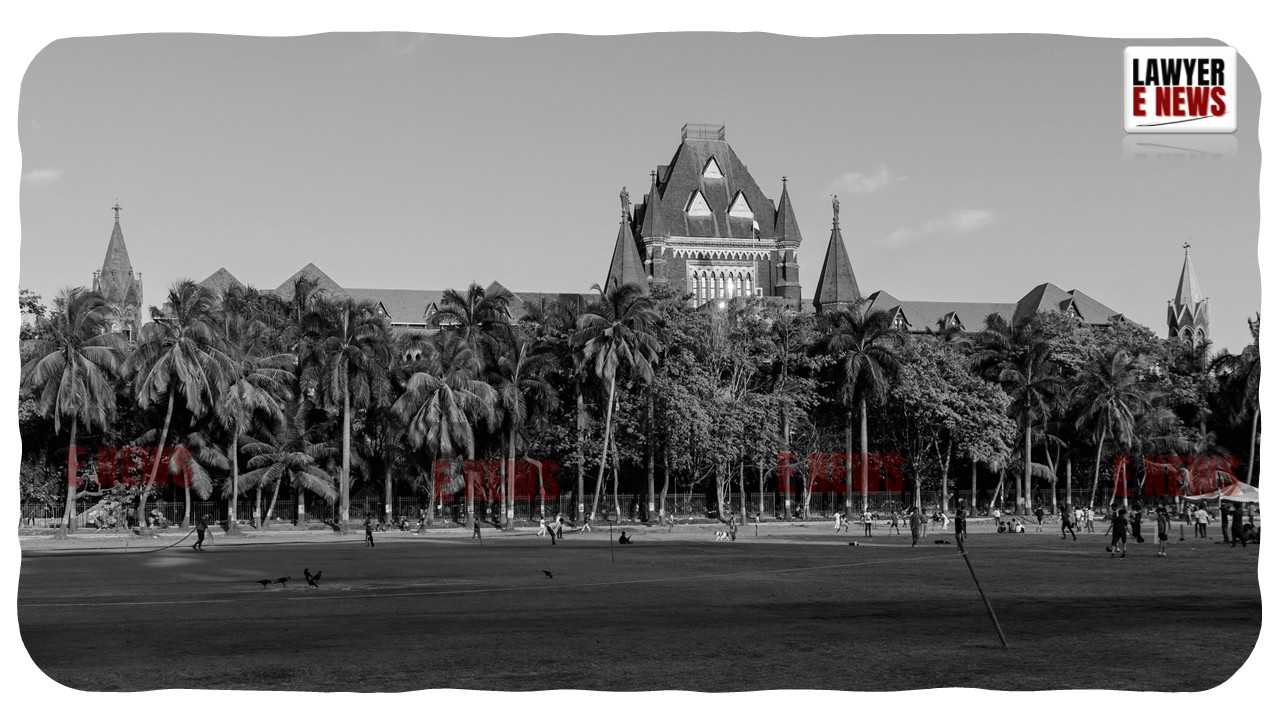
“Shifting All Waste Processing Outside City Limits Is Impractical—Law Only Requires Scientific Processing, Not Removal”, Bombay High Court declining to order the shifting of solid waste processing activities at Hadapsar Industrial Estate, Pune, outside city limits. The Court held that the existing processing facilities by Pune Cantonment Board (PCB) and Pune Municipal Corporation (PMC) are in conformity with the Solid Waste Management Rules, 2016 (SWM Rules), and State Government directions. The judgment clarifies the legal framework, limits of public nuisance claims, and statutory obligations of local bodies.
“No citizen wants a dump site or a garbage processing plant near their residence. It is a typical ‘not in my backyard’ syndrome. The present Petitions arise out of the same syndrome… We see no reason to put the individual rights of the local residents to have garbage processing units away from their homes over the statutory obligations of PCB and PMC to provide for waste disposal facilities within city limits under the SWM Rules, 2016.” (Para 45)
The petitioners—local residents, industry associations, and societies—sought directions to shift the waste processing operations at Hadapsar Industrial Estate to locations outside Pune, citing foul odour, air pollution, and health hazards. They relied heavily on a 2018 Urban Development Department (UDD) order, claiming it mandated closure and relocation.
The contested site, used for waste processing for over a century, is jointly managed by PCB (a statutory military cantonment board) and PMC (the municipal corporation), with 28 acres used for various solid waste management activities. Earlier litigation had already led to judicial and administrative scrutiny. Importantly, the State Pollution Control Board (MPCB) had authorized the operation, and its approval had not been challenged in the current petitions.
Was There a Mandatory Duty to Shift the Facility?
The petitioners’ case hinged on the assertion that the Secretary, UDD’s order dated 11.09.2018 and previous court directions mandated closure and shifting. The Court, however, observed:
“What is expressed in direction No. 6 [of the 2018 order] is merely a need for exploration of alternate land and observations in para-6 cannot be treated as a direction for shifting of garbage depot… Those observations cannot be the basis for directing shifting of the current waste processing facility.” (Paras 45, 56)
The Court explained that only recommendatory language had been used regarding exploring alternate sites, and the same did not amount to a binding mandate to close or relocate the Hadapsar facility.
Interpretation of the SWM Rules, 2016
The Court extensively analyzed the SWM Rules, especially Rule 11 (duties of State UDD Secretary) and Rule 15 (duties of local bodies):
“Under Rule 15(i), it is the duty of the local bodies to establish waste deposition centres for domestic hazardous waste and such facility needs to be established in a city or town in a manner that one centre is set up for the area of twenty square kilometers or part thereof… Thus, the waste disposal centers need to be established not only within the city or town limits but there needs to be one waste disposal unit for every area of 20 sq. kms.” (Para 45)
The Court emphasized that the law does not require all waste processing to be outside city limits. It acknowledged the challenges of urban expansion, transportation, and the practicalities of municipal waste management:
“To expect that all waste processing units must be located outside city limits is something, which is difficult to achieve in respect of large sized urban agglomerations. Petitioners’ prayer… needs to be considered in the light of this difficulty in efficient waste handling goal of municipal administration.” (Para 21)
Environmental Safeguards and Compliance
While denying the main relief, the Court was clear that statutory compliance and technological upgrades are essential:
“If PCB and PMC scrupulously follow provisions of SWM Rules, 2016 and the directions issued in order dated 11 September 2018, the same would not result in accumulation of waste, which is complained of by the Petitioners and the ill effects of accumulation of waste such as toxic gases, foul odour, dust, etc. affecting the health of nearby residents would be mitigated to a large extent.” (Para 49)
The Court outlined ongoing and proposed measures—such as bio-mining, composting, odour suppression, enclosure of plants, and heightening boundary walls—and directed their expeditious implementation.
“Statutory Duty Outweighs NIMBY Concerns”—On Duties of Local Bodies
The judgment highlights the statutory obligations under SWM Rules and the Cantonments Act, 2006:
“It is incomprehensible that PCB and PMC can be directed to discontinue the existing waste processing and disposal facility located within the city limits and scout for alternate sites. Fortunately, a large chunk of land is already available which is being used for over a century for waste disposal.” (Para 45)
The Court also found the joint arrangement between PCB and PMC for waste processing to be lawful and long-standing.
Role of the Pollution Control Board
The MPCB’s authorisation, monitoring, and regulatory oversight were central to the Court’s reasoning:
“The State Pollution Control Board is required to monitor the compliance of the standards as prescribed or laid down and treatment technology as approved and the conditions stipulated in the authorisation… The authorization granted by MPCB on 16 July 2018 has not been challenged in the present petitions.” (Para 40, 33)
Any breach of authorisation terms or statutory provisions would warrant regulatory action.
Summing up, the High Court refused to direct the shifting of the facility, reiterating:
“Operation of waste processing facilities at the site of Hadapsar Industrial Estate is in consonance with the SWM Rules, 2016 and also the order passed by the Principal Secretary, UDD on 11 September 2018. This Court in fact does not appreciate repeated attempts being made for closure and shifting of the waste processing facility.” (Para 60)
The Court, however, issued strict directions to ensure:
No dumping of mixed waste,
Scientific processing and disposal,
Technological measures for odour and dust control,
Continuous MPCB oversight,
Freedom for PCB/PMC to seek additional land if needed.
Both the writ petition and PIL were dismissed.
Date of Decision: 05 August 2025