-
by sayum
28 August 2026 10:07 AM







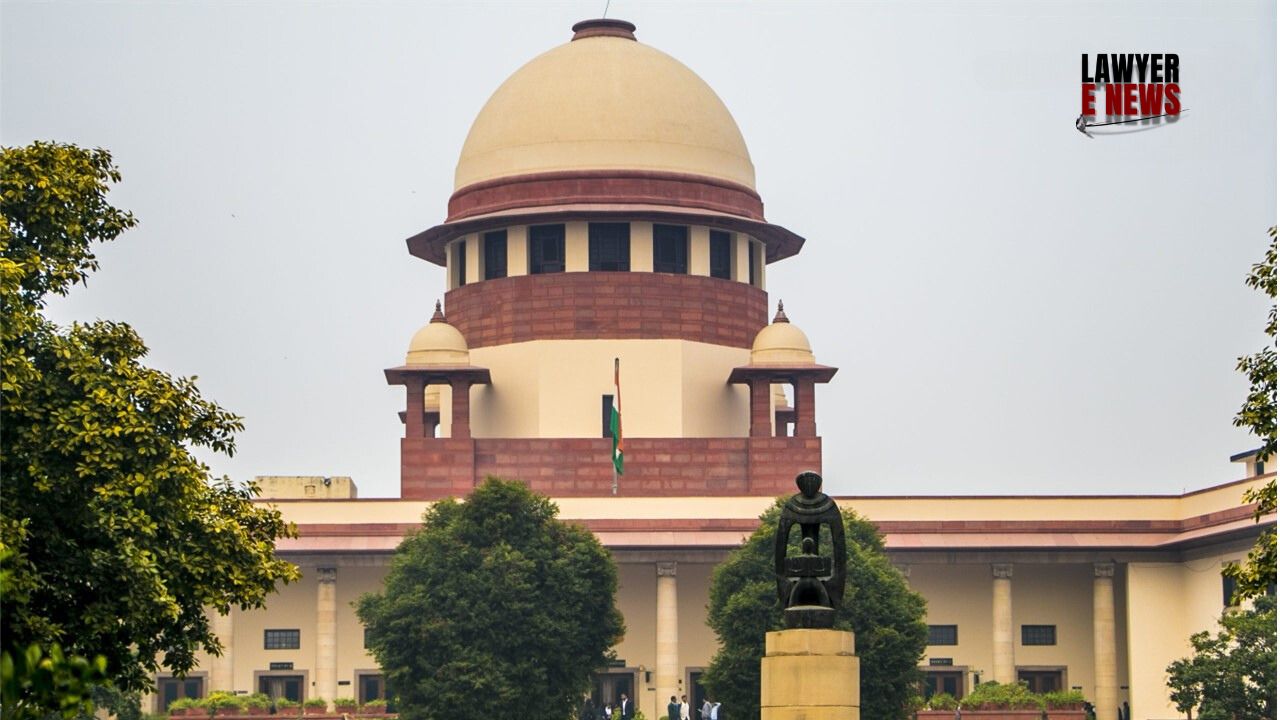
“Why Should the High Court Ask Why Accused Was Not Arrested for Four Years? That Is a Ground to Grant Bail, Not a Question to Be Raised” — Supreme Court of India delivered a significant judgment in the case of Gursewak Singh vs. State of Punjab, where it intervened in a pending anticipatory bail matter and directly granted relief, criticizing the High Court’s handling of the bail plea.
The case, arising out of FIR No. 05/2021 registered under Sections 7 and 7A of the Prevention of Corruption Act, 1985 and Section 120B IPC with the Economic Offences Branch, Ludhiana, addressed a troubling issue — a pending FIR with no arrest for four years, and a High Court order that neither granted nor rejected anticipatory bail but rather called for a status report from the police.
The petitioner, Gursewak Singh, had moved the Punjab and Haryana High Court seeking anticipatory bail, apprehending arrest in the corruption case registered in 2021. According to submissions, Singh was placed under suspension but later reinstated in service on September 27, 2023, indicating that the government itself did not consider him a threat or active accused. No arrest had been attempted by the investigating agency in four years.
Despite this, when he recently received a summons from the Deputy Superintendent of the Economic Offences Branch, he approached the High Court out of fear of imminent arrest.
Instead of deciding the anticipatory bail plea, the High Court passed a cryptic and evasive order, directing the Director General of Police (DGP), Punjab to explain why the petitioner had not been arrested in four years, and also why the chargesheet under Section 173(2) CrPC had not yet been filed.
The matter was simply adjourned to August 11, 2025, without granting any protection or deciding the application on its merits.
The core issue was whether the High Court had properly exercised its jurisdiction under Section 438 CrPC while considering the petitioner’s plea for anticipatory bail.
The Supreme Court sharply criticized the High Court’s approach and made several crucial legal observations:
“We do not approve the manner in which the High Court has dealt with the plea of anticipatory bail.”
“Either the High Court should have allowed the application granting anticipatory bail or should have declined it on its own merits.”
Significantly, the Court underscored that the High Court granted anticipatory bail to a co-accused who was allegedly the bribe recipient, further questioning the denial of relief to the current petitioner.
Most importantly, the Supreme Court held:
"The fact that the petitioner was not arrested for four years by itself was a good ground for the High Court to exercise its discretion and order grant of anticipatory bail."
This remark goes to the heart of jurisprudence on Section 438 CrPC, as the Court recognized long-standing non-arrest as an implicit indication that custodial interrogation was not necessary, and thus anticipatory bail could be justified.
Despite the matter being sub judice before the High Court, the Supreme Court invoked its extraordinary jurisdiction under Article 136 and decided the anticipatory bail plea itself.
It directed: "In the event of the arrest of the petitioner in connection with FIR No.05/2021, he shall be released on bail subject to terms and conditions that the Investigating Officer may deem fit to impose."
The Supreme Court’s decision in Gursewak Singh vs. State of Punjab stands out for its reaffirmation of the principles underlying anticipatory bail, and more importantly, for emphasizing judicial responsibility in such matters.
Rather than allowing vague adjournments or indirect procedures, the Apex Court made it clear that bail applications must be decided on merits — either granted or denied — but not left in limbo.
The Court’s sharp remark that “non-arrest for four years is itself a valid ground for bail” now sets a firm precedent on how prolonged inaction by the police should be treated during anticipatory bail proceedings.
Date of Decision: September 3, 2025