-
by sayum
30 August 2026 4:28 AM







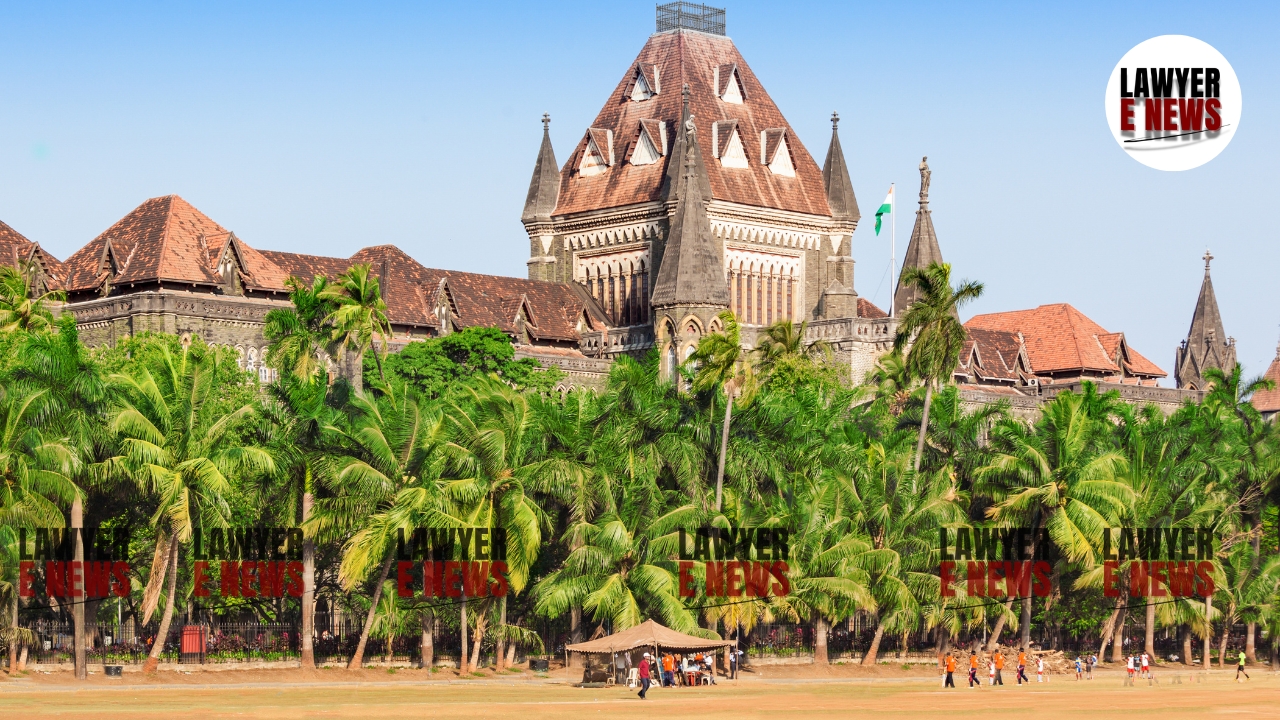
“Justice Denied by Haste is Justice Denied Completely”, In a significant ruling safeguarding the foundational principles of natural justice, the Bombay High Court on 17th July 2025, set aside an order of the Hon’ble Minister (Revenue), Maharashtra State, which had abruptly cancelled a mutation entry after over four decades without giving proper notice or reasons. Justice Prafulla S. Khubalkar, while delivering judgment , held that “administrative expediency cannot be a license for judicial casualness” and quashed the impugned order as an arbitrary exercise of power.
The High Court reiterated that quasi-judicial decisions must reflect proper application of mind and ensure fair opportunity of hearing, especially where substantive property rights are at stake.
Court Condemns Absence of Reasoning in Decision Affecting Property Rights
Justice Khubalkar lambasted the casual manner in which the long-standing mutation entry in the petitioners' name was reversed after 40 years. The Court observed:
“It is an elementary principle of fair adjudication that any authority, while setting aside well-reasoned orders of subordinate authorities, must provide cogent reasons. The order under challenge is bereft of any reasoning, reflecting a clear case of arbitrariness.”
The Court sharply criticized the Hon'ble Minister’s order for being a “non-speaking order,” noting that it simply parroted the submissions of one party and jumped to conclusions without examining the previous reasoned findings of the subordinate authorities.
The Court warned against such mechanical overturning of long-standing entries:
“An order cancelling ownership rights in revenue records after four decades cannot be passed like a routine administrative note. Justice demands transparency and logical reasoning.”
Short Notice to Parties Amounts to Denial of Hearing: “Fairness Was Sacrificed at the Altar of Haste”
In scathing remarks on the procedural irregularity, the High Court highlighted how the petitioners were served notice on 11/08/2014 for a hearing scheduled the very next day at Mumbai—despite residing in Kopargaon, District Ahmednagar, about 250 km away. The Court declared such notice as an egregious violation of natural justice.
“Notice that effectively provides no opportunity to appear is no notice in the eyes of law,” Justice Khubalkar ruled. The judgment firmly stated:
“Justice cannot be made a mockery by reducing hearing into a mere formality. Short notice of one day for a matter pending for 40 years indicates a clear intent to circumvent fair hearing.”
Despite the respondents' submission that the hearing was adjourned later, the Court emphasized that repeated short notices of just three to four days demonstrated systemic disregard for fairness.
Quoting the Supreme Court: “Reasons are the Soul of Orders”
The High Court drew strength from the Supreme Court’s celebrated dictum in Kranti Associates v. Masood Ahmed Khan that “reasons are the soul of orders” and reiterated:
“Recording of reasons operates as a valid restraint on arbitrary exercise of power. Any decision affecting legal rights without reasons is bound to be struck down.”
Justice Khubalkar aligned the judgment with recent Supreme Court precedent in State Project Director, UP Education vs. Saroj Maurya (2024) which reiterated that orders sans reasoning and reasonable opportunity are fundamentally unsustainable.
Merits Deferred, Justice to Be Done Through Fresh Hearing
Notably, the Court refrained from entering into the merits of the mutation dispute, focusing solely on the procedural illegality. The Court clarified that the Revenue Minister must consider afresh the claims and objections, but only after providing adequate notice and passing a speaking order within three months.
“In a contest of claims over land ownership, substantive justice can only be delivered when procedural justice is ensured first,” the Court reminded.
In conclusion, the Bombay High Court struck down the order cancelling the mutation entry and remanded the matter for fresh adjudication. The judgment sends a clear message to administrative authorities:
“When rights crystallised over decades are overturned overnight without hearing or reasoning, courts will intervene to safeguard constitutional guarantees of fairness and transparency.”
Date of Decision: 17th July 2025