-
by sayum
23 August 2026 9:32 AM







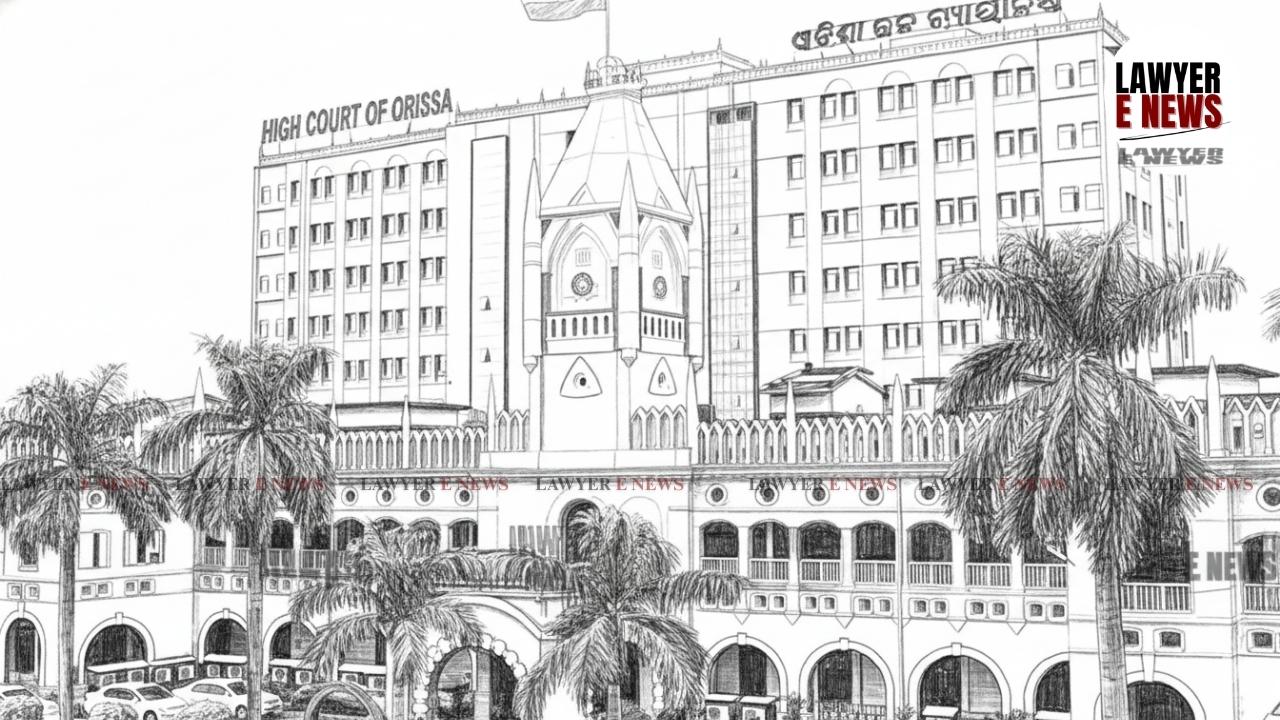
In a judgment reinforcing the settled principle that a person not party to a suit must establish a clear right adversely affected by a decree to maintain an appeal, the Orissa High Court ruled that mere encroachment or assertion of an independent claim does not confer locus standi to file an appeal under Section 96 CPC against an ex parte decree.
Justice Sashikanta Mishra, exercising civil supervisory jurisdiction under Article 227 of the Constitution, set aside a cryptic and unreasoned order of the District Judge, Cuttack, which had allowed the legal representatives of a non-party to file a regular first appeal against a decree that had been passed ex parte in a suit for declaration of title and possession.
"Mere Encroachment Is Not Proof of Being Adversely Affected by Decree" – High Court Emphasises Limited Locus Under Section 96 CPC
The dispute arose from C.S. No. 20 of 2011, a suit filed by the petitioner Gagan Chandra Rout before the Civil Judge (Senior Division), 1st Court, Cuttack, seeking declaration of right, title, and confirmation of possession over the suit property. The suit was decreed ex parte on 17.02.2012, and the decree followed on 25.02.2012.
Opposite Party No.1 (now deceased) had not been a party to the suit but sought leave to appeal against the decree, claiming that she had been adversely affected by the judgment. The First Appellate Court allowed the application by order dated 28.01.2020, prompting the plaintiff to challenge the same before the High Court.
The High Court took strong exception to the perfunctory approach adopted by the First Appellate Court.
“The impugned order is cryptic and non-speaking, inasmuch as it does not specify the reasons for which the application seeking leave to appeal was allowed,” observed Justice Mishra, holding that judicial discretion must be exercised with reasoning, especially when allowing non-parties to enter appellate proceedings.
Crucially, the appellate court had relied on an Amin’s report dated 20.12.2010, which noted that the applicant had encroached upon a portion of the plaintiff’s land prior to the filing of the suit. But the High Court made it clear that:
“Encroachment or assertion of an independent claim does not ipso facto make such person ‘adversely affected’ by the decree.”
Rather, the proper course for the applicant was to either seek impleadment during the trial or file a separate suit for adjudication of title or possessory rights.
Fraud Allegation Without Pleading of Lack of Knowledge Insufficient to Sustain Appeal
The Court also noted a fatal omission in the application seeking leave to appeal.
“It is not stated that she was not aware of the filing and pendency of the suit by the plaintiff. All that has been said is that the suit was filed by practising fraud,” the Court observed.
Citing established principles, the High Court held that a mere allegation of fraud, unaccompanied by any pleading of lack of knowledge of the suit, does not suffice to grant leave to appeal to a non-party.
“The appellant was not a party to the suit. The decree was for declaration of title and confirmation of possession. In the absence of any claim showing that she was bound by or prejudicially affected by the decree, no right to appeal can be presumed,” the Court reasoned.
High Court Invokes Article 227 to Correct Jurisdictional Error and Preserve Judicial Discipline
While ordinarily supervisory jurisdiction under Article 227 is sparingly exercised, the Court found that intervention was warranted because the District Judge had failed to apply the relevant legal tests for granting leave to a non-party.
“Supervisory jurisdiction can be exercised where the subordinate court fails to consider relevant legal parameters while granting leave to appeal,” the Court held, underlining that judicial orders must not be casual when they have the effect of unsettling final judgments.
Right Remedy Lies in Independent Suit, Not Appeal
Importantly, the High Court clarified that its decision does not preclude the legal representatives of the non-party from asserting any legitimate claim over the property.
“If the Opposite Party No.1-appellant has any valid claim over the property encroached by her, it is open to her to get the same adjudicated by seeking appropriate legal remedy,” the Court noted, leaving the door open for a fresh, independent civil suit.
Leave to Appeal Set Aside; Independent Remedy Not Barred
Holding the District Judge's order legally unsustainable, the High Court allowed the Civil Miscellaneous Petition and quashed the leave to appeal:
“In the result, the CMP is allowed. The impugned order is hereby set aside,” Justice Sashikanta Mishra concluded.
The decision reaffirms a fundamental procedural safeguard: only those persons who are parties to the suit or can demonstrate being bound by or adversely affected by a decree may maintain an appeal under Section 96 CPC. Non-parties with independent claims must pursue their rights through appropriate proceedings, and not by inserting themselves into concluded litigation through appellate backdoors.
Date of Decision: 24 December 2025