-
by sayum
23 August 2026 2:56 PM








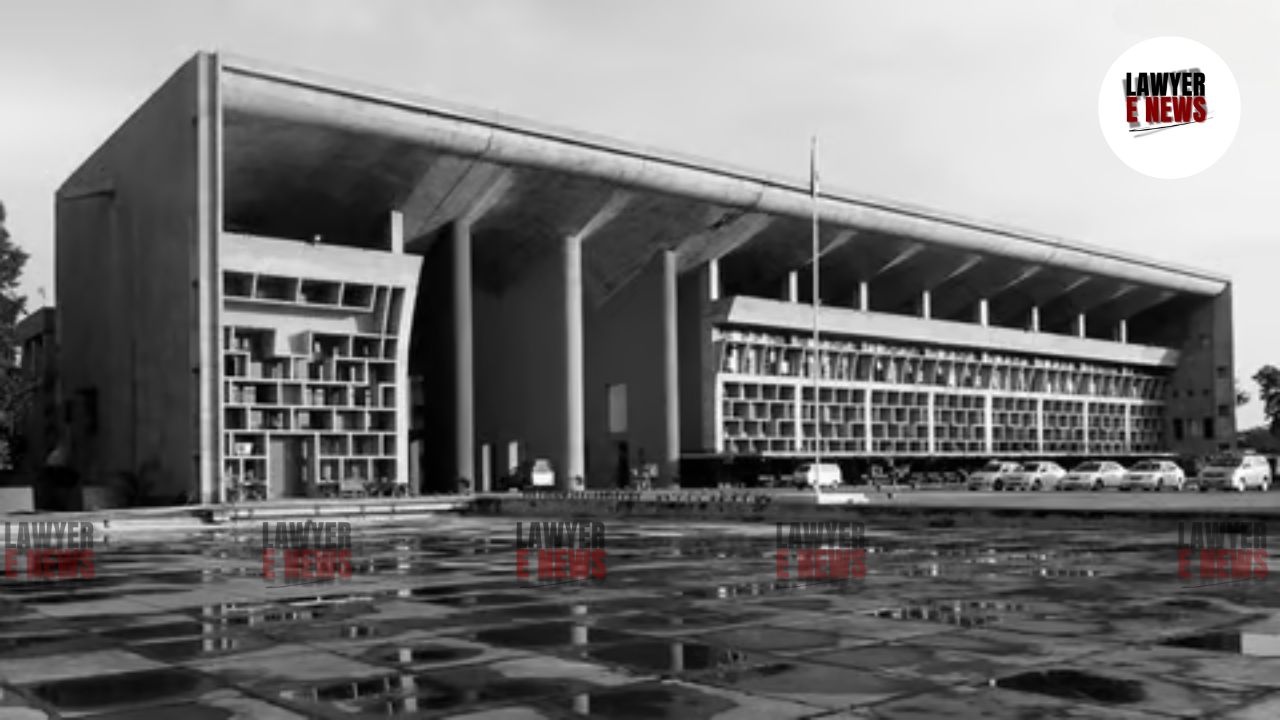
"Once the Efficiency Bar Is Crossed, Prior Adverse ACRs Are Washed Off" — In a significant pronouncement reinforcing constitutional protections in public employment, the Punjab and Haryana High Court dismissed a long-pending Regular Second Appeal filed by the State of Haryana against the grant of selection grade to a government pharmacist, holding that “non-communication of even average entries in the Annual Confidential Reports (ACRs) renders any adverse employment decision arbitrary and illegal under Article 14 of the Constitution.”
Delivering a detailed judgment in State of Haryana and others v. Dalip Singh (deceased) through his wife Suman Khanna, Justice Vikas Bahl held that “all ACRs, whether adverse, average, or even good, must be communicated to the employee, failing which they cannot be relied upon to deny promotions or selection grades.”
Denial of Selection Grade Based on Uncommunicated ACRs Is Arbitrary and Illegal
At the heart of the legal dispute was the denial of selection grade to Dalip Singh, a pharmacist appointed in 1970, from the date of 13.04.1977—while several of his juniors had already been granted the benefit. The denial was premised on “average” ACRs recorded between 1970 to 1973. However, these entries were never communicated to the employee.
The trial court, as well as the first appellate court, had ruled in favour of the employee, holding that non-communicated average ACRs could not be used to deny selection grade, particularly when juniors had been promoted. The State’s second appeal filed in 1993 was finally dismissed in 2025, putting to rest a dispute spanning more than three decades.
Justice Bahl, placing reliance on a catena of Supreme Court decisions including Dev Dutt v. Union of India [(2008) 8 SCC 725] and Abhijit Ghosh Dastidar v. Union of India [(2009) 16 SCC 146], reiterated that non-communication of even seemingly innocuous ACR entries can affect promotion prospects and hence must be treated as adverse in effect, if not in terminology.
Citing Dev Dutt, the Court emphasized:
“Nomenclature is not relevant, it is the effect which the entry is having which determines whether it is an adverse entry or not… Non-communication of the said entry could also adversely affect the employee’s chances for promotion or for getting some other benefit.”
Further, the Court underscored that government memoranda limiting communication only to “adverse” entries are contrary to constitutional mandates:
“No Rule or Government instruction can violate Article 14 or any other provision of the Constitution, as the Constitution is the highest law of the land.”
"Washed-Off Theory" Applied: Pre-Efficiency Bar ACRs Cannot Be Relied Upon
The Court added another layer of protection by applying the “Washed-Off Theory”—a judicial doctrine that adverse entries recorded prior to the crossing of an efficiency bar lose their relevance.
Justice Bahl pointedly observed:
“It is not in dispute that the plaintiff-respondent had crossed efficiency bar w.e.f. 01.11.1976… Alleged average ACRs were prior to the said date and thus, the trial Court as well as Appellate Court have rightly held that those entries could not be considered while evaluating eligibility for selection grade.”
The Court placed reliance on the Supreme Court’s judgment in Pyare Mohan Lal v. State of Jharkhand [(2010) 10 SCC 693], and State of Punjab v. Dewan Chuni Lal [AIR 1970 SC 2086], which recognised that once an employee crosses the efficiency bar, it indicates the authority's acceptance of satisfactory service, thereby rendering prior adverse remarks inconsequential for further service benefits.
Limitation Plea Rejected — State Barred from Raising New Grounds After Waiver Before Lower Courts
In a detailed and categorical rejection of the limitation argument raised belatedly by the State, the Court ruled that the plea of limitation had been consciously waived at both the trial and first appellate stage, and could not be introduced for the first time in a second appeal.
“A perusal of the judgment of the First Appellate Court would show that no argument challenging the finding on issue No.6 [limitation] was raised before the First Appellate Court. Even a perusal of the grounds of appeal in the present Regular Second Appeal would show that no ground challenging the finding on issue No.6 has been raised.”
The Court further clarified that even on substantive merits, the suit filed by the employee in 1990 was well within the limitation period, as the cause of action arose only after the partial grant of benefits through a communication dated 21.07.1987. The Court noted the absence of any earlier communication denying the full claim:
“In the said facts and circumstances, it is apparent that the cause of action would arise to the plaintiff… after the issuance of the letter dated 21.07.1987 when only part relief was granted to the plaintiff.”
Quoting the Harwinder Singh v. Gurpreet Singh decision (RSA-74-2021, P&H HC), Justice Bahl held:
“Once the appellant did not choose to argue the same before the First Appellate Court, it was observed that the appellant had waived the plea of limitation and could not be permitted to raise the same in the Regular Second Appeal.”
Concurrent Findings Reaffirmed — No Substantial Question of Law Raised
Upholding the concurrent findings of the lower courts, the High Court refused to interfere under Section 100 CPC:
“The findings of the trial Court as well as the First Appellate Court on the aspect that average ACRs were not communicated to the plaintiff-respondent could not be disputed before this Court nor could be shown to be either perverse or against the record.”
The Court concluded that no substantial question of law arose in the appeal and summarily dismissed the same.
Date of Decision: 23.12.2025