-
by sayum
29 August 2026 3:15 PM







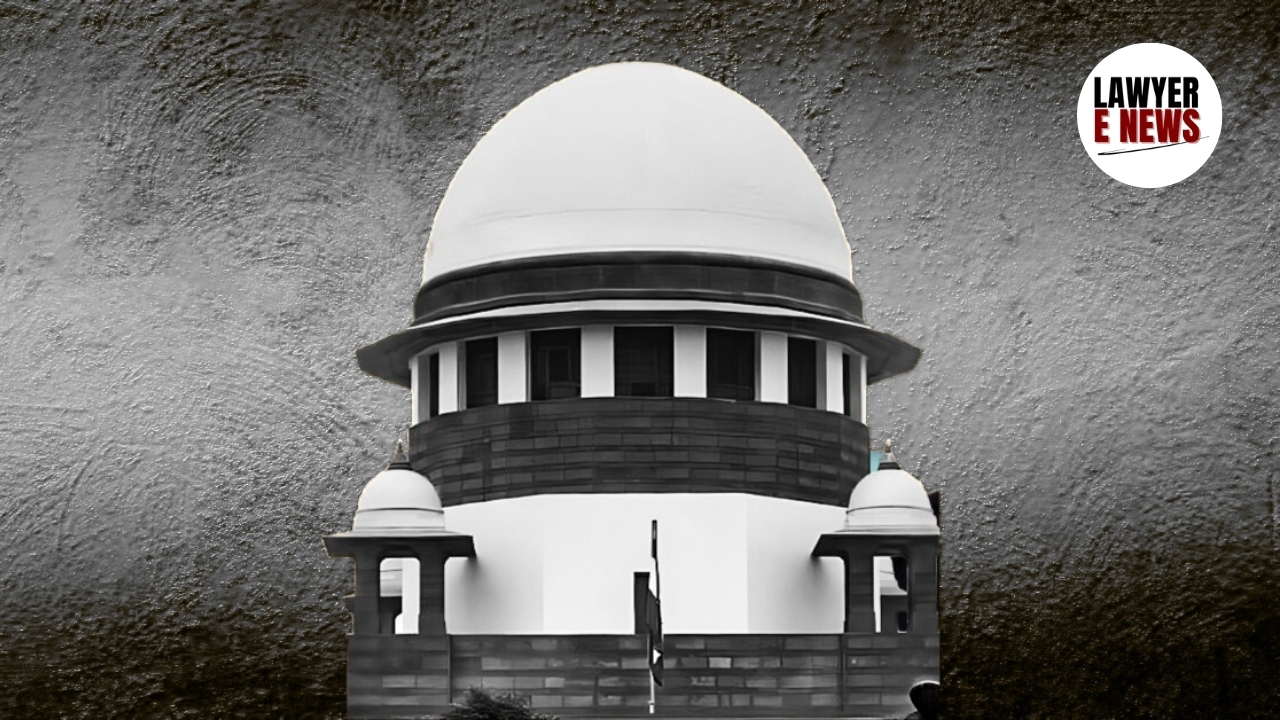
Supreme Court Slams Karnataka State Bar Council Over Illegal Fee Collection During Enrolment Supreme Court of India came down heavily on the Karnataka State Bar Council for violating its earlier judgment that prohibited excessive enrolment fees from new law graduates.
A Bench comprising Justice J.B. Pardiwala and Justice R. Mahadevan made it unequivocally clear that no fees beyond what is permitted under Section 24(1)(f) of the Advocates Act can be collected—even if they are termed “optional.”
“We make it clear that there is nothing like optional. No State Bar Council(s) or Bar Council of India shall collect any fees of any amount as optional.”
Gaurav Kumar Judgment and Non-Compliance Allegation
The present contempt proceedings stem from a landmark judgment dated 30 July 2024 in Writ Petition (C) No. 352 of 2023 – Gaurav Kumar v. Union of India, where the Court held:
“The SBCs cannot charge enrolment fees beyond the express legal stipulation under Section 24(1)(f)… Any such decision violates Articles 14 and 19(1)(g) of the Constitution.”
That decision had prospective effect, relieving State Bar Councils (SBCs) from refund obligations for earlier collections, but binding them to comply henceforth.
The contempt petition was filed by K.L.J.A. Kiran Babu, alleging continued overcharging by the Karnataka State Bar Council, contrary to the Court’s judgment.
No Additional or Optional Fees Permitted
In response to the notice, the Bar Council of India (BCI), through its senior official Awanish Kumar Pandey, filed an affidavit assuring the Court that:
“All State Bar Councils are collecting only Rs. 750/- for General/OBC and Rs. 125/- for SC/ST candidates, in full compliance with the Supreme Court’s judgment.”
However, the petitioner countered that Karnataka State Bar Council was still collecting optional fees totalling ₹6,800 and ₹25,000 for items such as ID cards, certificates, welfare funds, and training.
BCI Chairman Mr. Manan Kumar Mishra acknowledged the practice but contended these were “optional.”
The Court was categorical in its rejection of that explanation:
“There is nothing like optional… They shall strictly collect fees in accordance with the directions issued by this Court in the main judgment.”
Reaffirming the Law: Excerpts from Para 109 of the Main Judgment
The Court reiterated the operative portion of its 2024 decision:
“The SBCs and the BCI cannot demand payment of fees other than the stipulated enrolment fee and stamp duty, if any, as a pre-condition to enrolment.”
It further declared: “The decision of the SBCs to charge fees and charges at the time of enrolment in excess of the legal stipulation under Section 24(1)(f) violates Article 14 and Article 19(1)(g) of the Constitution.”
Karnataka Bar Council Directed to Stop Illegal Practice
On being informed that the Karnataka Bar Council continues to collect such “optional” fees, the Court issued a clear directive:
“If the Karnataka State Bar Council is collecting any amount in the name of optional, though it may not be mandatory, it must be stopped.”
The Court did not impose any punishment, noting the BCI’s compliance efforts, but closed the contempt petition with stern warnings, making clear that future violations will not be tolerated.
Enrolment Cannot Be a Revenue Mechanism
This ruling underscores the Supreme Court’s commitment to ensuring access to the legal profession remains fair, transparent, and free of arbitrary financial barriers.
By declaring that even “optional” fees are impermissible, the Court has sent a strong message: professional licensing bodies cannot extract money beyond what the law allows.
Date of Decision: 4 August 2025