-
by sayum
29 August 2026 9:28 AM







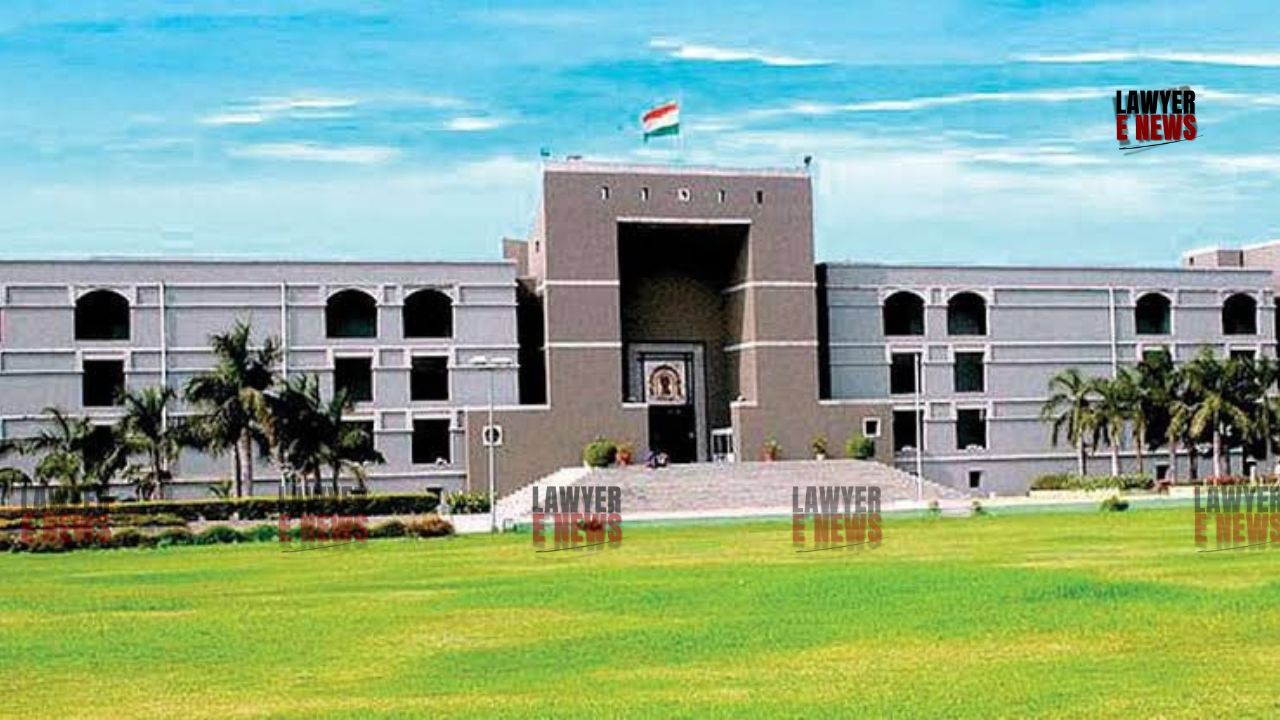
“A Suit Based on a Statutorily Barred Agreement Is a Legal Non-Starter — No Right Can Flow from an Agreement Void ab Initio under Section 43”, In a significant ruling reiterating the supremacy of statutory land restrictions over private contractual arrangements, the Gujarat High Court dismissed a Second Appeal under Section 100 CPC, upholding the rejection of a suit for specific performance of an agreement to sell agricultural land classified as “new tenure” at the time of execution.
Justice Sanjeev J. Thaker, sitting in the Civil Appellate Jurisdiction, confirmed that “an agreement to sell new tenure agricultural land without prior sanction of the Collector is not only unenforceable — it is void in the eyes of law”. The Court observed that “no cause of action can be said to have arisen from such an agreement”, which stood in clear violation of Section 43(1) and (2) of the Gujarat Tenancy and Agricultural Lands Act, 1948.
The appeal challenged concurrent orders of the Trial Court (Olpad) and Appellate Court (Surat) rejecting the suit under Order VII Rule 11(a) and (d) CPC, and was dismissed at the admission stage for lacking any substantial question of law.
“The Statute Speaks in Prohibition: Agreement to Sell New Tenure Land Without Collector’s Sanction is Void by Legislative Mandate” — Court Applies Section 43 in Letter and Spirit
The plaintiff-appellant, Jinabhai Patel, had filed a suit in 2012 seeking specific performance of an agreement to sell executed in 1980, alleging that the father of the defendants had agreed to sell new tenure land, promising to execute the sale deed after obtaining tenure conversion. The agreement itself admitted that the land was new tenure, which under Section 43 of the Tenancy Act cannot be transferred or agreed to be transferred without the prior sanction of the Collector.
Referring to this statutory bar, the Court ruled:
“If the agreement itself is invalid being hit by Section 43 of the Tenancy Act, no cause of action can be said to have arisen asking the defendant to perform his part of the contract. The agreement itself is illegal and invalid.” [Para 20]
Relying on the clear admission in the plaint and the agreement itself regarding the land’s tenure status at the time of contract, the Court observed:
“The admitted position before the Court is that an Agreement that was entered into between the parties was with respect to new tenure land and hence, its sale or agreement to sell was barred by law.” [Para 17]
“Possession Under a Void Agreement Is No Shield — Section 53A of Transfer of Property Act Offers No Protection Against Statutory Illegality”
The plaintiff also claimed that he had been in possession since 1980, and that such possession, coupled with readiness and willingness, entitled him to protection under Section 53A of the Transfer of Property Act, 1882.
The Court, however, held that such a plea was unsustainable in the face of a statutory prohibition. It held that:
“Possession under invalid or illegal agreement not protected under Section 53A — Agreement void from inception due to statutory bar — Ancillary reliefs cannot be granted.” [Summarising Paras 13, 20]
“Limitation Cannot Be Stretched by Silence — No Action Taken for 32 Years; Cause of Action is Illusory”
The plaintiff claimed that the cause of action arose only in 2012 when the land was allegedly converted to old tenure, and the defendants issued a public notice expressing intention to sell.
The Court found this argument completely devoid of merit, noting that:
The agreement was dated 1980
The vendor died in 2009
No communication, demand or readiness was demonstrated for 32 years
The plaintiff slept on his alleged rights
As the Court recorded:
“There is no averment in the plaint that the plaintiff had ever approached the defendant’s father for execution of the sale deed… there is nothing on record to show that the plaintiff was ready to abide by the terms and conditions of the agreement.” [Para 23]
“Order VII Rule 11 Applies Where the Suit Is Doomed by Law — Courts Not Bound to Let Illegal Agreements Reach Trial”
The plaintiff urged that the suit had reached the stage of cross-examination, and issues had already been framed. He argued that the application under Order VII Rule 11 CPC was filed belatedly and the matter should have gone to trial.
The Court rejected this, holding that illegality apparent from the pleadings mandates rejection at the threshold, stating:
“In any case, a suit, the basis of which is an invalid document in the eye of law or where there exists no cause of action to institute the suit on the date of the presentation of the plaint, the Civil Court will have no option but to reject the plaint, at the threshold, under Order VII Rule 11 of the CPC.” [Para 20 quoting Full Bench]
“No Substantial Question of Law Arises When the Legal Position is Settled and the Findings Are Based on Admitted Facts”
The plaintiff attempted to raise eight questions as substantial questions of law. However, the Court found that none of them met the test laid down under Section 100 CPC, observing:
“The substantial questions of law formulated in the memorandum of appeal cannot be considered substantial… the present appeal does not suggest any substantial question of law.” [Paras 24-25]
The Court emphasized that:
There was no perversity
The lower courts had not ignored any material evidence
The law on the issue was settled by the Supreme Court and Gujarat Full Bench
Quoting the Full Bench, the Court reiterated:
“A suit based on an agreement hit by Section 43 of the Tenancy Act, 1948, is not maintainable… the plaintiff would be required to disclose that the agreement is valid, not hit by any statutory provision… if not, the suit must be rejected under Order VII Rule 11 CPC.” [Para 20]
“No Court Can Enforce a Contract Forbidden by Law — Civil Rights Cannot Be Built on Illegality”
Summarising its reasons, the High Court concluded:
“In view of provisions of Section 43 of the Tenancy Act and the admitted position that the suit property was a new tenure land, the plaint was liable to be rejected… the suit for specific performance is based on an illegal and invalid agreement.” [Para 22]
The Second Appeal was accordingly dismissed at the admission stage, with the accompanying civil application for interim relief disposed of as infructuous
Date of Decision: 1st September 2025