-
by sayum
05 August 2026 3:07 PM







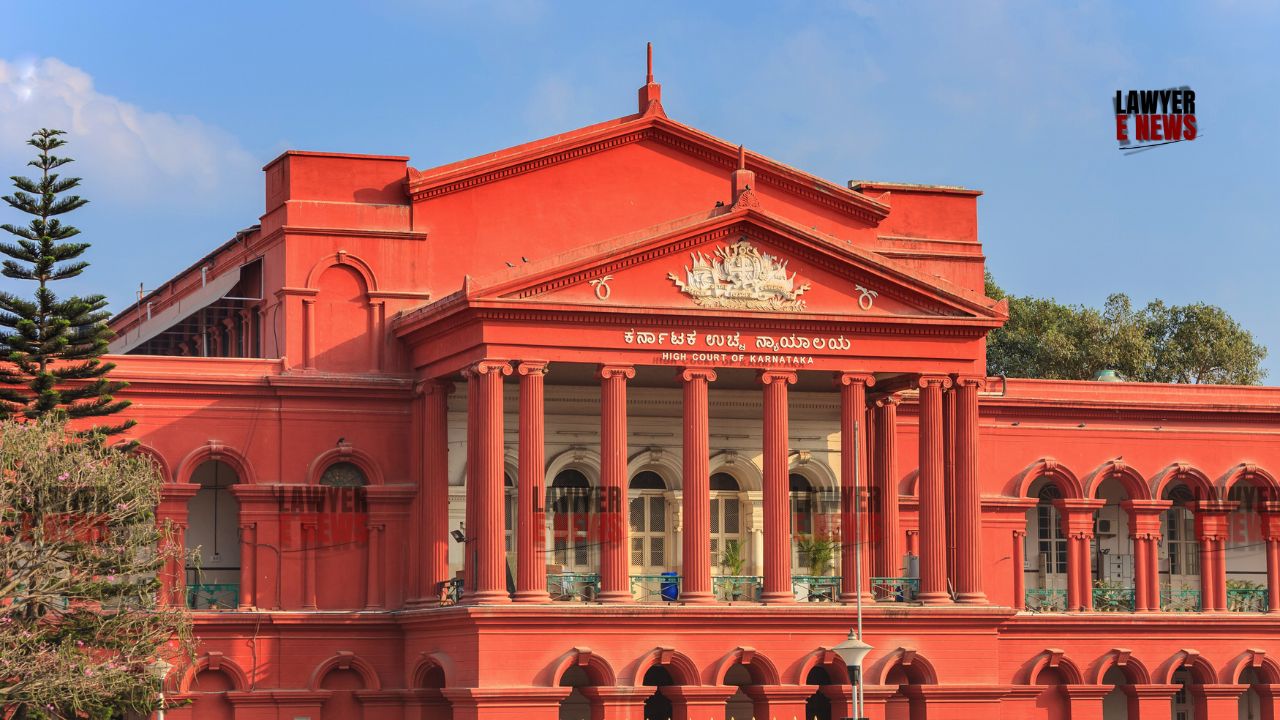
Successive Bail Petitions Must First Lie Before Trial Court, Karnataka High Court refused to entertain a successive bail petition filed by accused Sri. Prajwal Revanna under Section 439 CrPC/Section 483 BNSS, citing a glaring absence of fresh or compelling circumstances. Justice S.R. Krishna Kumar reaffirmed the principle that judicial discipline and procedural fairness necessitate approaching the Sessions Court first, especially after prior rejections by Sessions, High Court, and Supreme Court. The Court ordered the petitioner to first seek relief before the trial court and mandated expeditious disposal within ten days if so filed.
The petitioner, an accused in heinous offences under Sections 376, 376(2)(k), 354 series, 506, 509, 201 IPC and Section 66E of the IT Act, approached the High Court seeking bail despite three successive dismissals: by the Sessions Court, by a coordinate bench of the High Court, and by the Supreme Court.
The prosecution, led by the Special Public Prosecutor, strongly opposed maintainability, submitting that the High Court cannot be approached without exhausting remedies before the Sessions Court unless the petitioner demonstrated special or compelling reasons.
Maintainability of Successive Bail Before High Court After Prior Rejections
Justice Krishna Kumar delved into the foundational question:
“Whether successive bail petitions under Section 439 CrPC are maintainable before the High Court without approaching the Sessions Court first, particularly when prior petitions stand dismissed by all forums?”
Court’s Observations on Judicial Discipline and Forum Hierarchy
The High Court, relying upon a long-standing judicial line, reiterated:
“Though the Sessions Court and High Court have concurrent jurisdiction under Section 439 CrPC, judicial prudence mandates approaching the Sessions Court first unless exceptional circumstances exist.”
Citing Dinesh Gowda v. State of Karnataka and Savitri Samson v. State of Karnataka, the Court held that without extraordinary reasons, bypassing the Sessions Court directly burdens the High Court and circumvents judicial hierarchy.
The Court added: “Whenever concurrent jurisdiction vests with two courts of unequal authority, propriety dictates first approaching the subordinate court. This preserves the appellate structure and judicial discipline.”
No Proof of Exceptional Circumstances: High Court Rejects Bail on Maintainability
Justice Krishna Kumar found that: “The petitioner neither pleaded nor established any compelling circumstances that would justify entertaining this petition without first resorting to the Sessions Court.”
Emphasising the absence of special grounds, the Court observed that repeated filings without fresh grounds amounts to forum shopping and procedural abuse.
The Bench firmly declared: “Without cogent change in circumstances, judicial time cannot be consumed by repetitive bail pleas. The High Court is not a forum for re-litigation of identical contentions.”
On Prolonged Custody Argument
The Court acknowledged the petitioner’s argument on “prolonged incarceration” but clarified: “Mere passage of time in judicial custody, absent new facts or infirmities in prosecution, does not by itself constitute a compelling reason to bypass the Sessions Court.”
The Court drew a distinction with precedents like Kanumuri Raghurama Krishnam Raju, Manish Sisodia, and Arvind Kejriwal, stating:
“In those cases, bail was entertained owing to unique circumstances such as medical grounds, failure of investigation timelines, or explicit liberties granted by the Supreme Court. Such features are conspicuously absent here.”
Clarification on Roster System and Listing of Bail Applications
Addressing the procedural issue of listing before a coordinate bench, the Court clarified, “In light of the Supreme Court’s ruling in Shekhar Prasad Mahto’s case and our Circular RJ No.28/2025, this petition is maintainable before this roster due to judicial rotation, but merits demand relegation to the trial court.”
Refusing to entertain the petition, the Court ruled:
“In the absence of any new facts or exceptional grounds, this Court cannot be converted into a revolving door for bail applications.”
Accordingly, the Court directed the petitioner to first approach the Sessions Court. To safeguard liberty and prevent undue delay, the Sessions Court was directed to dispose of any such bail plea within ten days of filing.
This judgment serves as a critical reaffirmation of procedural discipline in bail jurisprudence. It clarifies that while bail is a matter of personal liberty, abuse of process through repetitive petitions without fresh grounds is impermissible. The ruling ensures that High Courts remain reserved for appellate scrutiny rather than being the primary arena for successive bail pleas.
Date of Decision: 9th July 2025