-
by sayum
05 August 2026 3:07 PM







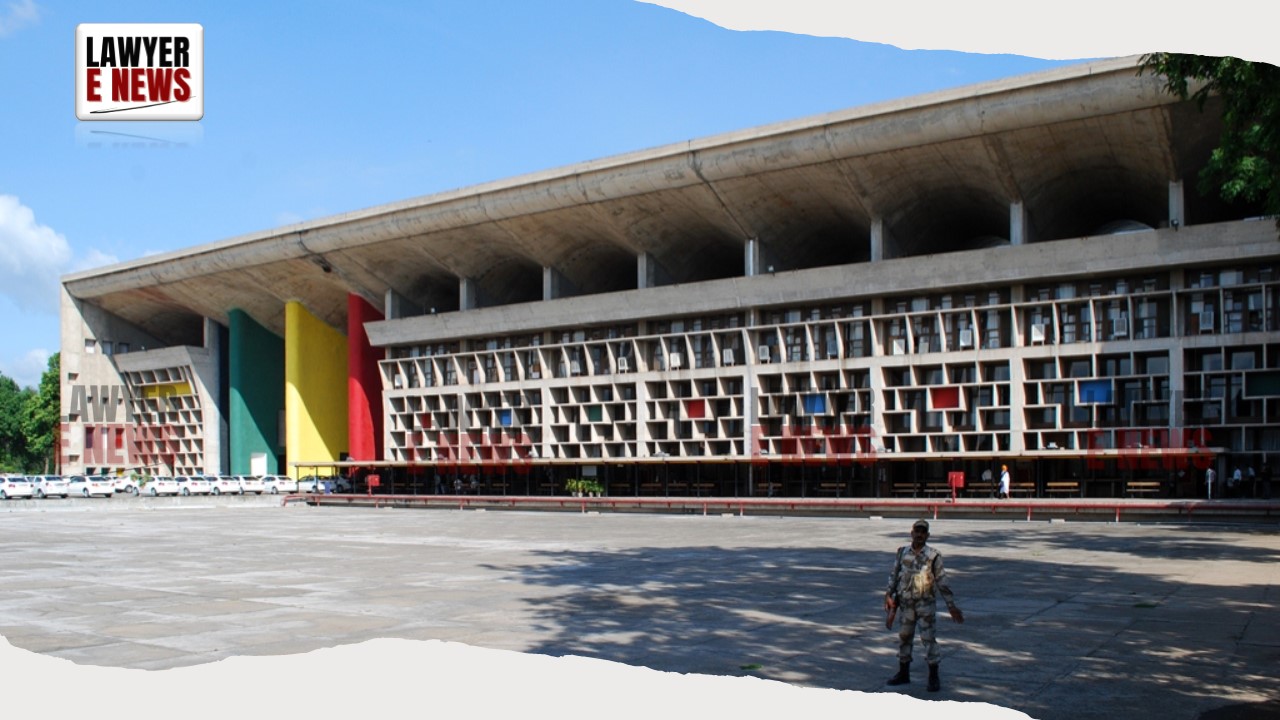
“Duty of the Electricity Board to Ensure Public Safety is Paramount—Negligence Proved Through Unchallenged Witnesses and Medical Evidence”: Justice Deepak Gupta of the Punjab and Haryana High Court delivered a significant judgment reinstating the trial court’s decree awarding damages to the family of Naresh Kumar, a young man who tragically died due to electrocution from a stray live wire attached to an electric pole. The Court condemned the reversal by the First Appellate Court and firmly reaffirmed the liability of electricity authorities to maintain public safety under the law of torts and the Fatal Accidents Act, 1855.
“No person passing near the electric pole would imagine that it may have electric current. It is the duty of the electricity department to properly insulate wires and prevent fatal accidents,” observed Justice Deepak Gupta, categorically rejecting the defence of contributory negligence.
Fatal Accident Near Soma Tea Stall—Trial Court’s Finding of Negligence Vindicated
The case stemmed from an incident dated 16 June 1989, where Naresh Kumar, a young man employed at a TV and Radio repair shop, was electrocuted when passing by Soma Tea Stall due to a live stray wire hanging from a pole. His family, including his elderly parents and dependent handicapped siblings, had sought damages of ₹2 lakhs on account of negligence by the Haryana State Electricity Board.
While the Trial Court found negligence and awarded the damages, the First Appellate Court shockingly reversed this, holding that there was no conclusive proof of electrocution and suggested Naresh Kumar should have exercised caution.
Justice Deepak Gupta dismantled this reasoning, emphasizing that the plaintiffs were not required to prove electrocution beyond reasonable doubt in civil matters:
“The Appellate Court applied an erroneous standard of proof, akin to criminal trials, in a civil liability case under tort law and the Fatal Accidents Act,” the Court held.
Medical Evidence Establishes Electrocution Despite Absence of Burn Marks
A key ground for rejecting the claim was the absence of burn marks. The High Court robustly rejected this ground, noting established medical jurisprudence:
“As per Modi’s Medical Jurisprudence, absence of burn marks does not rule out electrocution,” the Court observed, relying on the testimony of Dr. Swaran Wadhwa, who conducted the postmortem and clearly opined death was due to electrocution.
The viscera report ruled out poisoning, leaving electrocution as the only scientific cause. Witnesses including Gurshan Kumar (PW1), a friend accompanying the deceased, corroborated the narrative of electrocution at the spot.
Electricity Board’s Gross Negligence in Maintaining Safety Proven
The High Court noted with concern that there was a stray live wire on a public path near Soma Tea Stall. The site plan (Ex.P7) prepared by the Draftsman confirmed the existence of a dangerously exposed wire. Justice Gupta observed:
“It is inconceivable that the deceased could be blamed for the accident when the electricity department allowed live wires to remain unsecured, exposing unsuspecting citizens to mortal danger.”
The Court underlined that public safety in maintaining electricity infrastructure is a non-delegable duty of the department.
Appellate Court’s Findings on Contributory Negligence Termed a Grave Error
Justice Deepak Gupta pointedly criticized the First Appellate Court for wrongly attributing negligence to the deceased:
“There is no contributory negligence when the public passes a road unaware of hidden dangers. The First Appellate Court gravely erred by burdening the deceased with an unreasonable duty of foresight,” the judgment declared.
Compensation Restored with Costs Throughout
Allowing the Regular Second Appeal, Justice Deepak Gupta set aside the First Appellate Court’s judgment and restored the decree of the Trial Court awarding ₹2 lakh in damages to the bereaved family with costs throughout the litigation.
“The successor entity of the defendant electricity board shall comply with the decree,” the Court directed.
High Court Sends Strong Message on Public Accountability
This ruling serves as a significant reiteration of the accountability of public authorities, especially electricity departments, in maintaining civic infrastructure safely and diligently. The judgment clarifies that negligence in handling hazardous utilities like electricity cannot be brushed aside on flimsy technicalities like absence of burn marks, and victim blaming will not be tolerated.
Date of Decision: 18 July 2025