-
by sayum
13 August 2026 11:02 AM







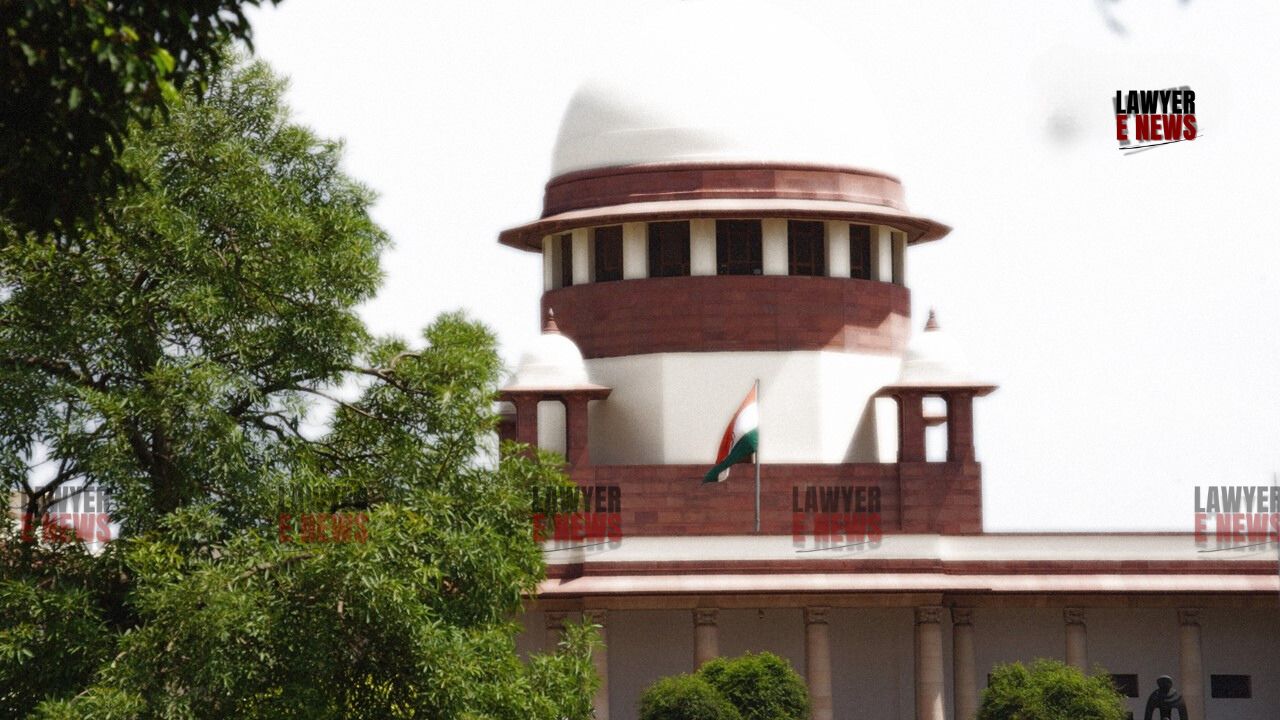
Government Cannot Be Bound by an Unauthorized NOC—Illegal Grants Can Be Withdrawn Anytime – Supreme Court, in a significant ruling , held that a No Objection Certificate (NOC) issued without following due procedure does not create an indefeasible right, and the State is well within its powers to withdraw it. The Court dismissed the appellant’s claim that the withdrawal of an NOC for setting up an Ayurvedic Medical College and Hospital violated promissory estoppel and natural justice.
Justice K. Vinod Chandran, writing for the Bench, categorically stated: "There can be no indefeasible right claimed on the basis of a grant issued in violation of legal procedures. The government is not bound by the unauthorized actions of its officers."
The case arose after Jagdish Chand Memorial Trust, which sought to establish an Ayurvedic Medical College and Hospital, was granted an NOC by the Department of Ayurveda on February 20, 2017. Relying on this NOC, the Trust claimed that it had set up a 60-bed hospital and secured an affiliation from Himachal Pradesh University on March 2, 2017. However, on March 14, 2017, the State Government withdrew the NOC, citing irregularities in its issuance.
The Trust approached the High Court, arguing that once the NOC was issued, the State was estopped from withdrawing it, and the Trust had already acted upon it by investing in infrastructure. The High Court dismissed the petition, holding that the NOC was issued without Cabinet approval, making it invalid from the outset. The Trust then appealed to the Supreme Court.
Supreme Court Holds NOC Issued Without Cabinet Approval is Invalid
Upholding the High Court’s ruling, the Supreme Court ruled that the issuance of the NOC was in clear violation of the Rules of Business, which required approval from the Council of Ministers before granting such permissions.
Rejecting the appellant’s claim that the government was bound by the NOC, the Court declared: "The issuance of the NOC was contrary to the Rules of Business of the Government. It was granted unilaterally by the Minister for Ayurveda without Cabinet approval, even though the matter had been placed before the Chief Minister and the Cabinet. An NOC issued without following legal procedure confers no legal right on the recipient."
The Court referred to Rules 14 and 16 of the Rules of Business, which explicitly state that important policy decisions must be taken by the Council of Ministers. The Bench found that the Minister for Ayurveda acted beyond his authority by unilaterally approving the NOC without placing it before the Council of Ministers.
Promissory Estoppel Does Not Apply to Illegal Acts
The appellant argued that promissory estoppel applied, as the Trust had already begun construction and secured loans based on the NOC. The Supreme Court rejected this claim, holding that promissory estoppel cannot be invoked to uphold an illegal act.
The Court referred to M/s Jit Ram Shiv Kumar v. State of Haryana (1980), where it was held that "when government officers act outside the scope of their authority, the doctrine of ultra vires overrides any claim of promissory estoppel, and the government cannot be held bound by the unauthorized actions of its officers."
Dismissing the appellant’s argument, the Bench ruled: "There is no promise offered by the State or the Government that can override the legal requirement of Cabinet approval. Promissory estoppel cannot be applied when the act itself is ultra vires. The Trust cannot claim legal protection for an NOC issued without authority."
No Violation of Natural Justice—Useless Formality Doctrine Applied
The Trust also argued that the withdrawal of the NOC was done without granting them a hearing, violating natural justice. The Supreme Court rejected this contention, holding that even if a hearing had been granted, the outcome would have been the same since the NOC was legally invalid from the beginning.
The Bench applied the "useless formality" doctrine, stating: "Even if the Trust had been given a hearing, it would not have changed the legal reality that the NOC was issued without following due process. When a government decision is based on legal infirmity, procedural fairness does not require an empty formality of a hearing."
Supreme Court Rejects the Trust’s Claim of Prejudice Due to NOC Withdrawal
The Court further noted that the timeline of events disproved the Trust’s claim that it had made substantial investments based on the NOC. The NOC was issued on February 20, 2017, and withdrawn on March 14, 2017—a gap of just three weeks. The Trust claimed it had already constructed a hospital and secured loans, but the Court found this assertion unbelievable.
Disregarding the Trust’s plea, the judgment stated: "We cannot accept the contention that, based on the grant of the NOC, the appellant constructed a hospital in less than a month’s time. The claim is neither credible nor supported by evidence."
The Court also noted that the Trust had secured a loan of ₹5 crore on March 3, 2017—just 11 days before the NOC was withdrawn, which undermined the argument that the withdrawal caused financial ruin.
No Right Can Flow From an Illegal NOC
With this ruling, the Supreme Court has reaffirmed a crucial principle of administrative law—that government approvals granted in violation of legal procedures can be withdrawn at any time, and recipients of such approvals cannot claim an indefeasible right.
Justice K. Vinod Chandran, concluding the judgment, made it clear: "The State cannot be bound by an unauthorized NOC issued in violation of the Rules of Business. No right flows from an illegal grant, and the government retains the power to correct its errors. The appeal stands dismissed."
This ruling sets a strong precedent that private entities cannot claim vested rights from legally flawed government approvals and that promissory estoppel cannot protect an act that was ultra vires from the outset.
Date of Decision: 17/02/2025