-
by sayum
26 August 2026 12:18 PM







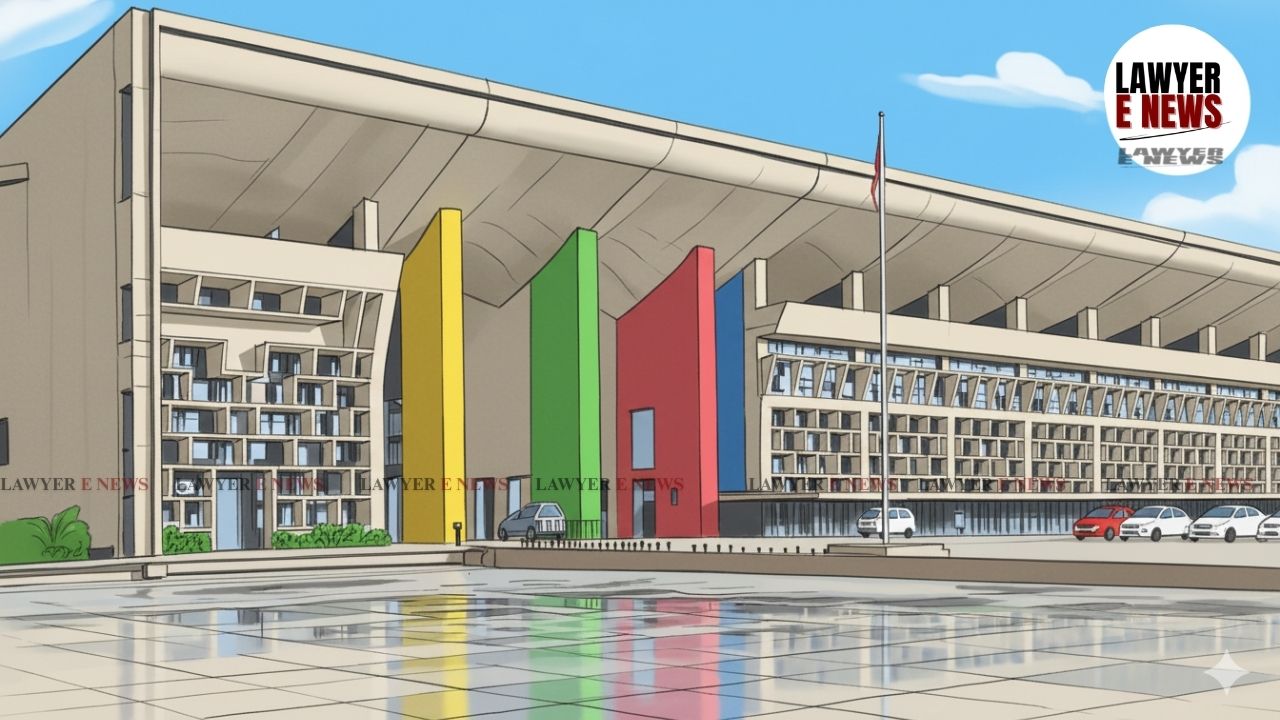
“Plaintiff Failed to Prove His Vendor Ever Owned the Land” - Punjab and Haryana High Court dismissed a Regular Second Appeal filed by a plaintiff who sought ownership and injunction over a 2.5 marla plot allegedly purchased in 2011. Justice Nidhi Gupta ruled that the plaintiff had completely failed to establish his title, could not prove the authenticity of his vendor’s ownership, and had also failed to demonstrate possession of the suit land. The Court found no legal error in the concurrent findings of the trial court and the first appellate court and held that no substantial question of law arose, thus barring interference under Section 100 of the Code of Civil Procedure, 1908.
“A Sale Deed Cannot Confer Title Where the Vendor Has No Right to Sell”: Court Finds Plaintiff’s Claim Fundamentally Flawed
The dispute stemmed from plaintiff Anil Singh's claim that he had purchased the disputed 2.5 marla plot on 07.03.2011 from one Nanak Singh, who allegedly was in possession of the land and had inherited it from his family. The plaintiff asserted that he was placed in possession of the property and had laid the foundation for construction. On this basis, he sought a declaration of ownership and a permanent injunction to restrain the defendants from interfering.
However, the defendants led by Kuldip Singh rebutted these claims, producing an earlier registered sale deed dated 13.02.1998 (registered on 20.02.1998) executed by Dharam Singh—allegedly the real owner of the plot—in Kuldip Singh's favour. The defendant further argued that Nanak Singh, the plaintiff’s vendor, had no title, and that the 2011 sale deed was fraudulent and without consideration. The trial court and the first appellate court both found in favour of the defendants, and the plaintiff’s suit was dismissed.
“Plaintiff's Own Evidence Fails to Establish Either Possession or Title”
Justice Nidhi Gupta critically examined the plaintiff’s assertions and rejected his version, observing:
“Plaintiff has failed to produce any proof whatsoever that his vendor Nanak Singh was ever in possession of the suit property, let alone owner thereof. The only witness to prove the possession of the plaintiff over the suit plot is the plaintiff himself, which needless to say, is not sufficient.”
The plaintiff also attempted to question the validity of the 1998 sale deed, arguing that Dharam Singh had died in 1996, rendering the sale deed forged. However, the Court categorically rejected this plea, noting that the Death Certificate (Ex.P4) relied upon by the plaintiff was not duly proved and could not be relied upon.
Further, DW1, a chowkidar who brought the official death register for 1996-1998, confirmed that Dharam Singh's death was not found in the village records. The Court held that the plaintiff’s allegations of forgery were baseless.
“Execution and Authenticity of Defendant’s Sale Deed Proven by Official Witnesses”
In contrast to the plaintiff's vague claims, the defendant Kuldip Singh had duly proved the execution and registration of his sale deed. The Court recorded that:
“Defendant had duly proved the execution of Sale Deed Ex.D1 in his favour by examining DW2 Tilak Raj, HRC, D.C. Office, Pathankot… DW5 Mohinder Singh, who was familiar with the writing and signature of Dharam Singh… DW9 Raj Kumar had proved that the Sale Deed was scribed by him… and identified the photographs and endorsement on the deed.”
The Court further noted that the plaintiff had neither challenged the 1998 sale deed nor proved any competing claim to the title. In fact, the plaintiff’s own witness, PW3 Narinder Saini (Draftsman), had admitted that the house of defendant Kuldip Singh exists at the location shown in the photographs filed on record.
Consequently, the Court found that the defendant’s possession over the land was established, while the plaintiff's possession remained unproven.
“Concurrent Findings on Title and Possession Cannot Be Disturbed in Second Appeal”
Reiterating the limited scope of interference under Section 100 CPC, Justice Nidhi Gupta observed:
“In view of the discussion above, no ground is made out to interfere in the impugned judgments and decrees of the learned Courts below. The present Regular Second Appeal is hereby dismissed.”
The Court emphasised that findings of fact recorded by both the lower courts—particularly on issues of title, possession, and genuineness of the sale deed—could not be reappreciated or disturbed unless a substantial question of law was raised, which was not the case here.
This judgment stands as a reaffirmation of key principles in property law and civil procedure: a plaintiff must prove not only the legitimacy of their title but also the title of the vendor they claim under. Where the foundation of such title is infirm, mere possession—if even proven—is insufficient to claim ownership or seek injunctive relief.
The High Court made it clear that unproven allegations of forgery, contradictions in pleadings, and speculative claims are insufficient to unsettle a registered document backed by credible testimony and public records.
In words that are likely to resonate in future land title disputes:
“No declaration of ownership can be granted where the plaintiff's own title is built on a foundation he cannot prove, and the rival claim is supported by registered documents and possession”
Date of Decision: 16 October 2025