-
by sayum
28 August 2026 10:07 AM







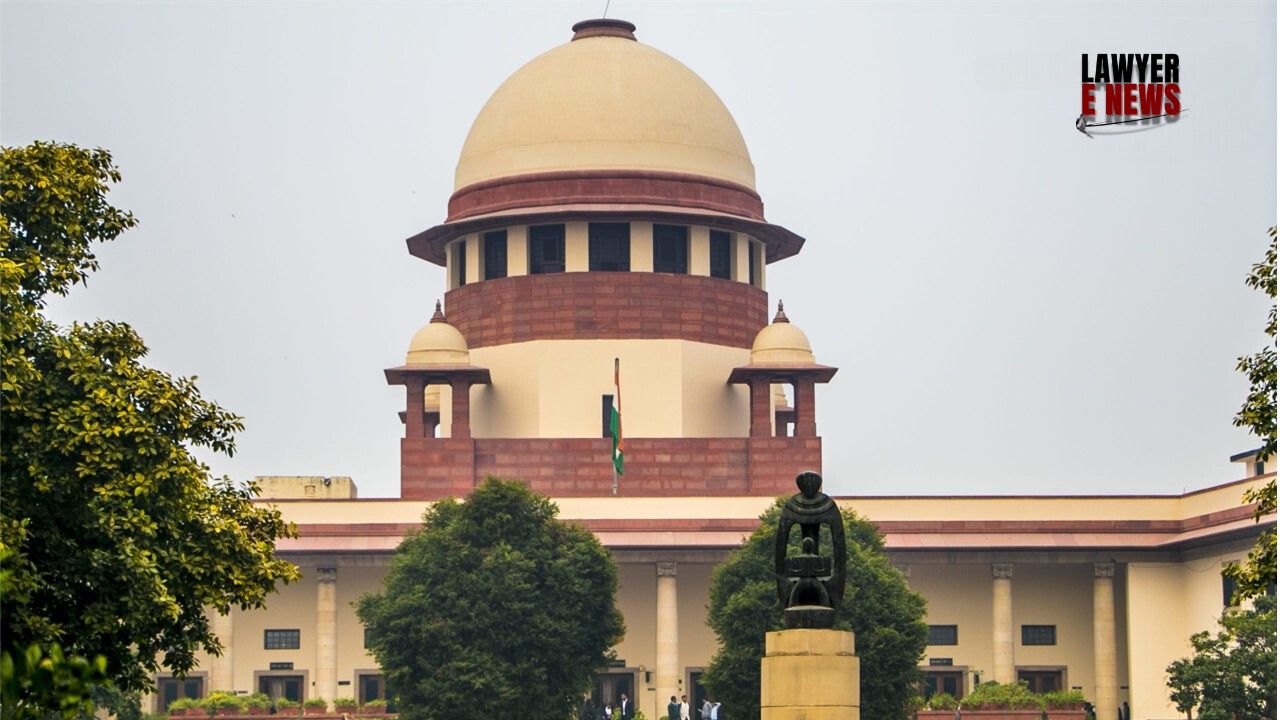
“Absence of Bank Record Doesn't Cancel a Cash Transaction — Once Promissory Note Is Signed and Unchallenged, Debt Stands Proved” — In a significant ruling that reaffirms the enforceability of promissory notes, even when part of the payment was made in cash, the Supreme Court of India restored a full decree of ₹35,29,680 to a lender after finding the High Court’s deduction of the cash portion from the total amount “clearly erroneous and unsustainable”.
The Bench of Justice Ahsanuddin Amanullah and Justice Vipul M. Pancholi, deciding Civil Appeal, overruled the Kerala High Court’s modification of a Trial Court decree by observing that “just because a person is not able to prove the transfer through official modes… would not lead to the conclusion that such amount was not paid through cash”.
The Supreme Court held that when a promissory note is admitted and not disputed, it gives rise to a legal presumption of enforceable debt under the Negotiable Instruments Act, and that burden shifts upon the borrower to disprove the transaction. In this case, the borrower never even appeared before the Supreme Court to contest the appeal, despite being served twice.
“Courts Cannot Split a Promissory Note Into Bank and Cash Segments” — Supreme Court Slams High Court’s Bifurcation of Debt
The appellant, Georgekutty Chacko, had filed a recovery suit claiming he lent a total of ₹30.80 lakhs, part through bank and part in cash, and the Trial Court had passed a decree for ₹35.29 lakhs including interest. The Kerala High Court, however, arbitrarily reduced the amount to ₹22 lakhs, accepting only the part evidenced by bank instruments and disregarding the cash component.
The Supreme Court emphatically rejected such reasoning, observing: “The bifurcation made by the High Court is clearly erroneous and therefore, unsustainable.”
The Court remarked that once the promissory note was signed, and not denied by the respondent, the entire transaction must be taken as accepted:
“The document i.e., the promissory note, as a whole has to be taken, especially when there was no complaint by the respondent that the promissory note, though signed by him, contained incorrect fact and/or there was manipulation in the same.”
“Cash Payment is Not Illegal — And Absence of Receipt Doesn’t Mean It Didn’t Happen”
In a hard-hitting affirmation of legal realism, the Court observed that courts cannot ignore the reality of cash-based lending merely because such payments do not leave a bank trail:
“It is not uncommon that in money transactions, there is a component of cash also involved… just because a person is not able to prove the transfer through official modes… would not lead to the conclusion that such amount was not paid.”
The Court emphasized that documentary proof of cash is rarely available, and that cannot by itself negate the transaction:
“A person who gives cash obviously would not be having any documentary proof per se. Sometimes there may be an occasion where even for a cash transaction, a receipt is taken, but absence of the same would not negate and disprove the stand.”
“Presumption Under Negotiable Instruments Act Supports the Creditor Unless Refuted by the Debtor”
With no appearance or defence from the respondent despite multiple opportunities, the Court said the presumption of legally enforceable debt under Section 118 of the Negotiable Instruments Act stood unrebutted:
“The onus would be on the respondent to dispel such fact… the initial presumption of legally enforceable debt comes from the Negotiable Instruments Act, 1881… Only because documentary proof was not available, we find such view taken to be erroneous.”
The Supreme Court’s decision delivers a strong message to courts not to treat cash elements in admitted promissory notes as suspicious or inadmissible solely due to lack of bank records. The ruling restores the Trial Court’s full decree in favor of the lender and sets a precedent that contractual acknowledgments in the form of promissory notes cannot be dissected or reduced by judicial speculation.
The judgment reestablishes legal trust in negotiable instruments, provides clarity for civil recovery suits, and reflects a real-world understanding of private monetary dealings.
Date of Decision: September 1, 2025